Showing posts with label Murder. Show all posts

Thursday, 30 March 2023

Uncle who murdered niece and dumped body 'like rubbish' jailed for life


An uncle who murdered his 20-year-old niece before dumping her body "like rubbish" has been ordered to serve a minimum of 25 years of a life sentence behind bars.

Repair man Mohammed Taroos Khan, 53, killed Somaiya Begum in an attack at her home in Binnie Street, Bradford, on June 25 last year, Bradford Crown Court was told.

Her decomposing body was found 11 days later wrapped in a rug, tied up with string, on land used as a dumping ground on Fitzwilliam Street, Bradford.

Prosecutor Jason Pitter KC  said she was “dumped and left to rot and decompose on wasteland like rubbish, such that she was not recognisable”.


He said her body was so decomposed it was not possible to find a cause of death but there was an 11cm long metal spike embedded in her chest which had punctured her lung.


Miss Begum had been living at the property with another of her uncles and her grandmother under the terms of a forced marriage protection order, following attempts by her father, Mohammed Yaseen Khan, to force her to marry a cousin from Pakistan “by threat of violence”, a jury heard.

However, the judge refused to speculate on the motive behind the brutal killing.

Khan had denied murder but admitted a charge of perverting the course of justice by disposing of Miss Begum’s body and burning her mobile telephone.


However, he was found guilty of murdering her on Tuesday.

Sentencing Khan to life in prison on Wednesday, Mr Justice Garnham said: “It is not possible to identify a motive for this dreadful attack by you on an innocent young woman.

“It is said you did not support her forced marriage to the cousin in Pakistan.

“It is said you did not share the view of your brother, Yaseen, about the role of women or the obligation of Somaiya to obey her father.


“Moreover, it is pure speculation to consider whether this murder was part of some appalling family agreement.”

He told Bradford Crown Court: “All that matters for present purposes is that the jury have found you guilty of the heinous crime of murder.

“I decline to speculate on your motive and I reject the prosecution’s suggestion that I should treat this as any form of so-called honour killing."

The grey-haired defendant sat in the glass-fronted dock wearing a grey fleece and a black body-warmer and flanked by two security officers as the judge outlined the callousness with which he disposed of his niece’s body.

Mr Justice Garnham told him: “You showed absolutely no respect for the dead body of your niece in the way you dumped it unceremoniously, wrapped in carpet and covered in scrap material, amongst rubbish on waste ground.

“You left it there to rot in the summer heat and, when it was found, Somaiya’s face had been eaten away by maggots.

“Inevitably the loss of this bright, vibrant young woman is felt acutely by other members of her family.”

The judge described Miss Begum as “an intelligent young woman of real spirit and courage” and recalled that her uncle, Dawood Khan, had referred to her in court as the “light of his life”.

The jury heard that Miss Begum’s family had already been split in two by a previous dispute before her father’s attempts to force her to marry when she was 16.

Link

Friday, 31 May 2019

Farishta: Outrage over Pakistan child murder


The family of a 10-year-old Pakistani girl who was abducted and murdered have said they were ignored by police when they tried to report her missing.

They say police told them the child might have eloped, and they were made to carry out errands for officers


Farishta vanished in Islamabad on 15 May and a body believed to be hers was found on 20 May.

Police are investigating if she was raped and tortured, and protests are being held to demand justice.

The individual police officers involved deny wrongdoing.

Hundreds protested in central Islamabad on Tuesday calling for justice.

The case has been compared to the rape and murder of six-year-old Zainab Ansari in January 2018 - which sparked outrage and protests across the country. Calls for action are being made on social media, under the hashtag #JusticeFor Farishta.

What do the family say?
"The police didn't help us at all," Farishta's father Ghulam Nabi told the BBC at Tuesday's protest, which blocked a major intersection. "They would ask me to clean their office, to move their furniture, and to go get fruit for their Iftar [fast-breaking] dinner from the market.

"I was so distressed during those [four] days that I couldn't tell night from day."

Farishta's father says police did not take the case seriously
On Wednesday, a case was formally registered against several police officials, alleging negligence. The chief of Shahzad Town police station, Muhammad Abbas Rana, has been suspended.

But he defended his and his officers' conduct, saying they had pursued the case and interviewed the family and neighbours on 16 May. He said the family were responsible for the delays in registering the case and that they did not follow it up properly. He denied they had been made to clean the police station.

Separately three people have been arrested in connection with Farishta's disappearance, Dawn newspaper reports.

A formal investigation was only launched on Sunday after a politician raised the case with the inspector general of Islamabad police.

The mutilated body of Farishta was found the following evening, triggering complaints that her life could have been saved had the police acted promptly.

Mr Nabi said that Mr Abbas Rana had initially refused to register a case - known as an FIR - telling him that his daughter might have "eloped with someone of her own free will". Mr Rana denied this.

Farishta went missing on Wednesday 15 May after she went out to play in the eastern Islamabad neighbourhood where her family lives. She did not return as expected when the evening call for prayer began at the local mosque - signalling the breaking of the daily fast.

At that time, families gather for a meal known as Iftar - and Farishta's absence triggered a panic.

After scouring the neighbourhood and checking with friends, her family went to the police to file a missing person report.


On Monday evening, their worst fears were realised when Farishta's body was found. After being told that the doctor meant to conduct the autopsy was on leave - and so it would be delayed - the family decided to stage a sit-in at the hospital.

They were joined by leaders and activists from the Pashtun Protection Movement (PTM), a group which advocates for the rights of Pakistan's minority Pashtun community, to which Farishta's family belongs.

They come from Mohmand, in north-west Pakistan, and are among tens of thousands of families displaced by Pakistan's war on terror in that region.

"The dead body lying in this coffin is not just mine but everybody's daughter," said Mr Nabi.


Link

Thursday, 23 May 2019

Pakistan authorities record a dozen cases of 'honour' killing in a fortnight


The killer was unrepentant.

“I killed my sister because she brought [a] bad name for the family,” he told neighbours in the Kachi district of Balochistan, Pakistan.

“I killed her and her lover for family honour. I want it to be a lesson for all girls in the town.”

Locals believe other members of the man’s family may have been involved but, a fortnight after the bodies were found , no arrests have been made, although police are aware of the allegations.

On Tuesday, the Dawn newspaper reported that a woman from Lahore had been shot dead, allegedly by her son, brother and brother-in-law, after leaving her husband and taking refuge at the house of a friend.

Police said they found the body of Arooj Shahzad a day after she approached officers over fears that her family would come after her. Chutala police have registered a case against five suspects.

Shahzad’s killing was the 12th in a fortnight linked to “honour” recorded by the Pakistan authorities.


Link

Monday, 22 April 2019

Nusrat Jahan Rafi: Burned to death for reporting sexual harassment


Nusrat Jahan Rafi was doused with kerosene and set on fire at her school in Bangladesh. Less than two weeks earlier, she had filed a sexual harassment complaint against her headmaster.

Her courage in speaking out against sexual assault, her death five days after being set alight and everything that happened in-between has gripped Bangladesh and brought attention to the vulnerability of sexual harassment victims in this conservative South Asian country.

Nusrat, who was 19, was from Feni, a small town 100 miles (160km) south of Dhaka. She was studying at a madrassa, or Islamic school. On 27 March, she said the headmaster called her into his office and repeatedly touched her in an inappropriate manner. Before things could go any further she ran out.

Many girls and young women in Bangladesh choose to keep their experiences of sexual harassment or abuse secret for fear of being shamed by society or their families. What made Nusrat Jahan different is that she didn't just speak out - she went to the police with the help of her family on the day the alleged abuse happened.

At the local police station she gave a statement. She should have been provided with a safe environment to recall her traumatic experiences. Instead she was filmed by the officer in charge on his phone as she described the ordeal.

In the video Nusrat is visibly distressed and tries to hide her face with her hands. The policeman is heard calling the complaint "no big deal" and telling her to move her hands from her face. The video was later leaked to local media.

Nusrat Jahan Rafi was from a small town, came from a conservative family, and went to a religious school. For a girl in her position, reporting sexual harassment can come with consequences. Victims often face judgement from their communities, harassment, in person and online, and in some cases violent attacks. Nusrat went on to experience all of these.

On 27 March, after she went to the police, they arrested the headmaster. Things then got worse for Nusrat. A group of people gathered in the streets demanding his release. The protest had been arranged by two male students and local politicians were allegedly in attendance. People began to blame Nusrat. Her family say they started to worry about her safety.

Nevertheless, on 6 April, 11 days after the alleged sexual assault, Nusrat went to her school to sit her final exams.

"I tried to take my sister to school and tried to enter the premises, but I was stopped and wasn't allowed to enter," said Nusrat's brother, Mahmudul Hasan Noman.

"If I hadn't been stopped, something like this wouldn't have happened to my sister," he said.

According to a statement given by Nusrat, a fellow female student took her to the roof of the school, saying one of her friends was being beaten up. When Nusrat reached the rooftop four or five people, wearing burqas, surrounded her and allegedly pressured her to withdraw the case against the headmaster. When she refused, they set her on fire.

Police Bureau of Investigation chief Banaj Kumar Majumder said the killers wanted "to make it look like a suicide". Their plan failed when Nusrat was rescued after they fled the scene. She was able to give a statement before she died.

"One of the killers was holding her head down with his hands, so kerosene wasn't poured there and that's why her head wasn't burned," Mr Majumder told BBC Bengali.

But when Nusrat was taken to a local hospital, doctors found burns covering 80% of her body. Unable to treat the burns, they sent her to Dhaka Medical College Hospital.

In the ambulance, fearing she might not survive, she recorded a statement on her brother's mobile phone.

"The teacher touched me, I will fight this crime till my last breath," you can hear her say.

She also identified some of her attackers as students at the madrassa.

News of Nusrat's health dominated Bangladeshi media. On 10 April, she died. Thousands of people turned out for her funeral in Feni.

Police have since arrested 15 people, seven of them allegedly involved in the murder. Among those arrested are the two male students who organised the protest in support of the headmaster. The headmaster himself remains in custody. The policeman who filmed Nusrat's sexual harassment complaint has been removed from his post and transferred to another department.

Prime Minister Sheikh Hasina met Nusrat's family in Dhaka and promised that every person involved in the killing would be brought to justice. "None of the culprits will be spared from legal action," she said.

Nusrat's death has sparked protests and thousands have used social media to express their anger about both her case and the treatment of sexual assault victims in Bangladesh.

"Many girls don't protest out of fear after such incidents. Burqas, even dresses made of iron cannot stop rapists," said Anowar Sheikh on BBC Bengali's Facebook page.

"I wanted a daughter my whole life, but now I am afraid. Giving birth to a daughter in this country means a life of fear and worry," wrote Lopa Hossain in her Facebook post.

According to women's rights group Bangladesh Mahila Parishad, there were 940 incidents of rape in Bangladesh in 2018. But researchers say the real number is likely to be much higher.

"When a woman tries to get justice for sexual harassment, she has to face a lot of harassment again. The case lingers for years, there is shaming in society, a lack of willingness from police to properly investigate the allegations," said Salma Ali, a human rights lawyer and former director of the Women Lawyers' Association.

"It leads the victim to give up on seeking justice. Ultimately the criminals don't get punished and they do the same crime again. Others don't fear to do the same because of such examples."

Now people are asking: Why did Nusrat's case only get attention after she was attacked? And will her case change the way people view sexual harassment in Bangladesh?

In 2009, the country's Supreme Court passed an order to establish sexual harassment cells in all educational institutions where students can take their complaints, but very few schools have taken up the initiative. Activists are now demanding the order be implemented and enshrined in law to protect students.

"This incident has shaken us, but as we have seen in the past, such incidents get forgotten in time. I don't think there will be a big change after this. We have to see if justice gets done," said Professor Kaberi Gayen of the University of Dhaka.

"Change has to come in, both psychologically and in implementing the rule of law. Awareness about sexual harassment should be raised from childhood in schools," she said.

"They have to learn what is right and wrong when it comes to sexual harassment."


Link

Wednesday, 1 August 2018

Ilford 'Snapchat queen' guilty of manslaughter of her boyfriend


A “Snapchat queen” who posted a video of her boyfriend dying in a pool of blood has been found guilty of orchestrating his killing.
Fatima Khan, 20, plotted with a love rival to kill Afghan asylum seeker Khalid Safi, 18, whom she had been seeing for two years.
Safi was repeatedly stabbed in the chest by Raza Khan in North Acton, west London, on the evening of 1 December 2016, jurors were told.
Fatima Khan filmed him as he lay dying in the street and posted it on Snapchat with the caption: “This is what happens when you fuck with me.”
The self-confessed Snapchat addict denied murder and alternative counts of manslaughter and conspiracy to cause grievous bodily harm, saying she was ashamed of the video.
But a jury at the Old Bailey deliberated for 18 hours and eight minutes to find her guilty of manslaughter by a majority of 10-1 on Tuesday.
During the trial, jurors were shown the disturbing footage as well as CCTV images of the fatal confrontation between Safi and 19-year-old Raza Khan.
Prosecutor Kate Bex QC said the two men had fought over Fatima Khan a few years earlier, at which time Safi had been injured. And in the runup to the killing, Fatima Khan had been in daily contact with Raza Khan via Snapchat, jurors heard. She became upset when Safi bought her a watch and presented it to her at her home five days before his death, jurors heard.

Monday, 25 June 2018

Toxic Masculinity Took Another Woman’s Life And No, Thoughts And Prayers Don’t Help Anymore


Recently, a bus hostess was shot dead in Faisalabad after she turned down a man.
Mehwish Arshad, a bus hostess, was shot dead at Faisalabad’s Kohistan Terminal. She was murdered for refusing to marry a security guard – a classic case of toxic masculinity running its course. After her father’s death, she was the only financial support of her family. It is important to point out that bus hostesses are harassed on a daily basis. The man who shot her was also an employee.
In the CCTV video, the man can be seen talking to her as he forcibly grabs her hand and she visibly looks disturbed and tries to pull her hand away. She succeeds in pulling her hand away and there is a two-second pause before he shoots her, and runs away. There is no one around to witness the incident, save a person or two in the background, but would that really have stopped the man?
In the harrowing footage, the woman can be seen sliding down the steps in pure agony, with no one to help her as she took her last breath.
For most Pakistani men, women can exist either as homemakers or as sexual toys, with zero agency of their own. This leads to the development of the thought process where they are the “alpha males” whom no one dares to turn down. It is important to point out that socio-economic aspects do not really matter when it comes to mindset.
And let me stop you before you say “not all men.” That’s truly besides the point.
Feminism is made fun of in Pakistan, by men and women alike. Yet, we’re the ones who need it the most.
However, it is imperative to point out that these cases are why we need feminism in Pakistan. The emancipation of women as individuals with their own agency over their thoughts, bodies, lives, and decisions is of the utmost importance.
All these women who suffer, or lose their lives due to the inability of men to understand the word ‘no’, rarely get justice.

Monday, 5 March 2018

A gunman killed his brother. Now Farris Barakat is on an American journey.


On the house that Farris Barakat built, the words of Martin Luther King Jr. wrap around the porch overhang, as though they were protection from the outside world: "Darkness cannot drive out darkness; only light can do that. Hate cannot drive out hate; only love can do that."
It took his brother's death for Farris to fully embrace those words.

In February 2015, Deah Barakat was gunned down along with his wife of six weeks, Yusor Abu-Salha, and her sister Razan.


News of the triple slaying at a Chapel Hill apartment complex reverberated here and around the world as another instance of hatred toward Muslims. A neighbor was charged with three counts of murder but not a hate crime -- sparking further outrage.
The deaths yanked Farris from his life's trajectory and set him on one he had not anticipated.
At 24, he abandoned his courier business and everything else to speak out against hate. He devoted much of his time to renovating a 105-year-old rental house his brother had owned in a rundown neighborhood east of downtown Raleigh.
Farris named it for his brother. Deah means "light" in Arabic, and The Light House now serves as a center for youth, a gathering place Farris hopes will further Deah's dreams for a more tolerant America.


Here, at this house, Farris hopes to find the light that was so cruelly snuffed out.


Monday, 1 January 2018

'Honour' killings in Karachi shock Pakistan's largest city

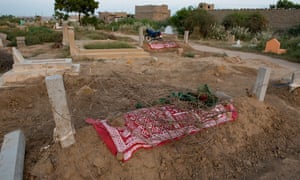
The graves of Ghani Rehman, 17, and Bakhtaja, 15, in Ali Brohi Goth, Karachi

Ghani had tried several times to get permission to marry her, but was rebuffed. Eventually, the pair fled, with cash and jewellery she had stashed away.

They had made it to Hyderabad, three hours west, when Bakhtaja’s father called and said the families had agreed to the marriage and would let them return safely. It was a trick.
The fathers had, in fact, come to a settlement. Muhammad Afzal, Ghani’s father, had pledged to give Hikmat Khan, Bakhtaja’s father, two of his own daughters, a cow, and PKR 500,000 (£3,538) for the wedding. They meant to keep the agreement a secret.
But an older relative, Sirtaj Khan, got wind of the deal and exposed it to the community, insisting that the couple be put to death. Instead of braving the supposed public embarrassment, the fathers agreed with Khan to make an example of their children.

“He is an evil-minded person,” one local resident said of Khan.
While the fathers and two uncles were subsequently arrested, Khan fled for Kunar in Afghanistan. Ghani and Bakhtaja’s story was retold by neighbours, relatives and police.
In Karachi, murders within the family, though rarely publicised, are becoming more common, said Zia Ur Rehman, a journalist with the News who broke the story.
Advertisement
“Immigrants bring their own culture, rules and other things with them when then they move to urban centres,” he said. “In Karachi, instead of going to regular courts, some tribal people adopt their own traditional way of justice.”

Bakhtaja and Ghani are buried 10 metres apart in the local cemetery, their graves dug between shrubs and covered with red cloth still not faded by the sun and dust. Ataullah, a gravedigger, said the bodies were charred from burns when they were lowered into the ground.
Female relatives of the couple, who were not available for interviews, were “removed” from their houses when punishments were meted out, neighbours said. After the murder, Bakhtaja’s mother told human rights defenders: “I forgive him,” meaning her husband.
“The women are vulnerable and scared. They want their men back,” said Rahman, of Aurat Foundation. The arrest of the culprits left the women without financial support. Yet they don’t seem to condone the actions of their husbands.

“The girl’s mother is in a very bad state. She has stopped speaking,” said one relative who wished to remain anonymous.
Ten days after the murders, Karachi was hit by heavy monsoon rains that flooded the streets with muddy water and wrought havoc on the city. Dozens of people were electrocuted. It was God’s punishment for killing the teenage couple, the local women told each other.

Read more.

See more on this at Islam Awareness 

Wednesday, 27 September 2017

Divya, a chartered accountant, was allegedly tortured and murdered by her in-laws after years of dowry harassment.

Heart-breaking :( 

Regret washes over Indira every time she thinks of her 25-year-old daughter. It weighs her down, paralysing her with guilt. She had pushed Divya to return to her husband’s house despite her repeated pleas that she was being tortured and harassed.  
It’s been two months since Divya, a chartered accountant from Mannargudi in Tamil Nadu was allegedly tortured and murdered by her in-laws on July 17.  
Caving into repeated harassment
The dowry harassment had begun weeks before her wedding in 2013 to Elan Cheran, a doctor. While Indira says that Elan’s family demanded Rs 25 lakh, they eventually paid up Rs 15 lakh in cash, and 100 sovereigns of gold in the hope that it would secure their daughter’s future happiness.  But it was never enough.
The harassment began days after the wedding. “Her mother-in-law would scold her for everything. They did not even let her eat food properly. We even tried speaking to her mother-law but nothing changed,” says Indira.
Over the course of four years, Divya returned to her family home multiple times, each time with a plea not to send her back.  
“Divya used to keep coming back home and would tell us that she does not want to go back to her husband’s house. She was tortured there. How could we let her stay at home? She was young and I thought fights are common in every house. I would keep telling her respect your in-laws and do not argue with them,” recalls Indira.
Every time the chartered accountant came home with a fresh list of demands from her in-laws, her family would cave in. They coughed up Rs 7 lakh in cash, sent many gifts including a TV, beds and other household items.  
ge: Divya with her husband and in-laws
Now four years later, Indira admits that her biggest regret is sending her only daughter back to her harassers. She says, “The only mistake we did was to send her back to her in-laws’ house. I want to tell all parents that they should never send their daughters back if they tell them about any dowry harassment.”
The last time Divya had come to her parents’ home was two days before she was allegedly killed. This time she had arrived with her husband Elan and son.
“One month before the murder, her husband’s family treated her very well. They pretended that everything was fine. They did not want us to have any doubts. If I had known that they will murder her, I would have never sent her back. She herself would not have gone back,” laments Indira.
On July 17, Divya’s father-in-law and two other men allegedly hit her and suffocated her to death using a pillow. The father-in-law had allegedly confessed to the crime, telling the police that his wife and him had wanted their son to get married again so they could get more dowry.
Divorce never an option
Although Divya’s family never imagined that her in-laws would murder their only daughter, they admit that divorce was never an option.  
Premkumar says, "We never thought of divorce as an option as we thought everything will be alright in sometime. If we knew it will lead to my sister's death, we would have definitely thought of it."
The social stigma that comes with separation and divorce have forced many families including Divya’s to push for reconciliation, whatever the cost. With their marriage strained, Divya’s family hoped that taking the issue to the panchayat would help resolve their marital problems.  
“Both the families were called, we sorted out the problems and sent my daughter back,” recounts Indira.
But the harassment persisted. Divya would very often return home only to be sent back days later. It became routine, her family admits. “Her in-laws never used to allow her to stay at our house for more than three days. They will have some demand. I will take money or get whatever they want from my son and then we will send her back,” says her mother.
Following Divya’s murder, the police arrested five people in the case, including her husband Elan Cheran, his parents, and two other men - Shivakumar and Senthil. All five accused have been remanded to Trichy central prison, and a case has been filed under Section 498A (Husband or relative of husband of a woman subjecting her to cruelty) and Section 302 (Punishment for murder) of the Indian Penal Code.
“Around 10.30pm that night, her mother-in-law called me and asked me to come to their house, saying that Divya is unwell. By the time, I reached their home, they had taken her to a government hospital. When I reached the hospital, I realised she was murdered by her in-laws,” Premkumar recalls.
With Divya’s face covered in marks, Premkumar filed a complaint with the Mannargudi town police station the next day.
Her story, however, is hardly the first in Tamil Nadu or in India.
In 2015, Tamil Nadu reported 65 dowry deaths while across the country 7634 women had died following dowry harassment. In other words, according to  National Crime Records Bureau dowry claims at least 21 lives every day. The conviction rate, however, remains abysmally low at 34.7%.   
But Premkumar hopes and prays that justice will prevail and that Divya’s killers will be brought to book. “In most of the cases, the accused are out on bail. The court must punish them, so that, no one else does the same,” he says.

Monday, 25 September 2017

Christian teenager beaten to death by classmates in Pakistan

mc-moden-boys-government-school.gif

Pakistan hang your head in shame! Utter disgrace!


A Christian teenager has been beaten to death by his classmates in Pakistan. 
Sharoon Masih was the only Christian in his year and was attacked after he apparently drank from the same glass as a Muslim.
The 17-year-old had only been at MC Model Boys Government School Burewala in Punjab for three days before the incident. 

Tuesday, 5 September 2017

Gang Rape and murder in Bangladesh


From Faceboook of @taqbirhuda
This woman, Rupa, was gang raped in a moving bus by 5 bus helpers near Mymensingh, Bangladesh. Because she had the audacity to scream the rapists broke her neck, killed her and threw her body out of the bus when passing a secluded area. She was on her way back home after giving a registration exam in a neighbouring city.
At one point when all passengers got down from the bus helper Shamim dragged Rupa to the back and attempted to rape her. In a state of utter helplessness, she offered Shamim all the money she had and her mobile phone and desperately pleaded to be let go. Shamim accepted her offerings but still went on to rape her. Then, two other helpers, Akram and Jahangir, also decided to join in and took turns raping her while the bus driver Habib kept on driving without a care as Rupa's horrendous ordeal unfolded.
This is almost identical to the notorious 2012 Delhi rape case which sent shockwaves around the world. Yet Rupa's horrific gang rape and murder incident is barely sending shockwaves in her own country. A few impersonal and perfunctory news-reports here and there, a few words of anger in response to them but nothing we won't eventually forget in a day or two because that's how desensitised we've become to the ever frequent phenomenon of violence against women.
She was an aspiring lawyer working for an MNC, with hopes and dreams she couldn't live to fulfil. Where is her story? Where is the nonstop coverage? Where is her photo in the leading English dailies? Where is her basic right to safety in something as ordinary and routine as bus travel? Most importantly, where is the outrage and impetus for change?

Thursday, 1 June 2017

Portland victims of white supremacist killer identified

Taliesin Myrddin Namkai Meche and Ricky John Best stepped in to defend two girls being bullied by a white supremacist [Facebook]
These men are heroes and martyrs, so heartbroken for their families.

US police have identified the two men killed by a white supremacist on a train in Portland as they attempted to defend passengers the suspect was bullying.

On Friday, Jeremy Joseph Christian - a 35-year-old who was known to authorities - stabbed to death 53-year-old Ricky John Best and Taliesin Myrddin Namkai Meche, 23, after they stepped in to defend two girls Christian was bullying.
At least one of the girls was wearing a headscarf and is believed to be Muslim.
Christian is reported to have shouted Islamophobic slurs at the girls, as well as other hate speech.
Police said on Saturday that Best died at the scene and that Meche succumbed to his wounds at a hospital after Christian slit their throats.
A third victim, 21-year-old Micah David-Cole Fletcher, was also stabbed in the attack and is in serious condition at a hospital in Portland, Oregon. Police say his injuries are not believed to be life-threatening.

'Heroes'

The attack happened on the first day of Ramadan, the holiest time of the year for Muslims, and sent shockwaves through a city that prides itself on its tolerance and liberal views.
Meche's mother, Asha Deliverance of Ashland, Oregon, confirmed on Facebook that her son had been killed.
"He was a hero and will remain a hero on the other side of the veil. Shining bright star I love you forever," she wrote.
Dyjuana Hudson, a mother of one of the girls, told The Oregonian/OregonLive that the man began a racial tirade as soon as he spotted the girls. Her daughter is African-American and was with a friend who was wearing a hijab, she said.
"He was saying that Muslims should die," Hudson said. "That they've been killing Christians for years."
According to The Portland Mercury, Christian was a "known local white supremacist", while his Facebook posts were reportedly replete with far-right themes.
In April, local reporter Mike Bivins filmed Christian at a march by the far right.
In the footage, Christian is draped in an American Revolutionary War flag and can be seen performing a Nazi salute and heard shouting "Die Muslims. Die fake Christians. Die Jews", as police watch on.
Source

Friday, 28 April 2017

Ross Kemp Extreme World - India


This was hard to watch, because well it is India. The way women are dehumanized and murdered for the pleasure and profit of men, yet another side of the evil that is patriarchy. The trafficker admits he targets Advasi and Muslim girls, it made me think all the men that care so much about cows or are obsessed with hijab/purdah why does this not concern you? 

Thursday, 13 October 2016

Carer murdered by husband over her work with men

Imran Khan
A disgraceful munafiq murderer who orphaned his own children!
A man who told his wife it was "not halal" for her to work with other men as a carer has been jailed for life after admitting her murder.
Manchester Crown Court heard Imran Khan, 38, stabbed Nasreen Khan, also 38, at their home in Cheadle Hulme, Stockport on 18 April while five children were in the house.
Khan was extremely controlling of his wife, the court heard.
He was sentenced to life in prison with a minimum of 20 years.
Khan had sent his wife angry text messages which said "leave the job" and "I don't give permission", the court heard.
The court was told the couple had a volatile relationship and frequently split up.

'Nothing to lose'

Khan complained they had no physical intimacy and did not like that her job as a care assistant because it involved one-to-one contact with other men, even though she was not bathing them, the court heard.
Judge Patrick Field said it was a "merciless attack" and described Khan as a "selfish and controlling man" who "did little to support" his wife and family.
He told Khan there was "an element of jealousy of your wife's independence of mind".
"She was a devoted mother. She worked hard to support her family and she was good at that job", he said.
"Unless anyone should think there was a cultural clash, let it be said the evidence shows your parents and sister were entirely supportive of Nasreen's choice."

Mrs Khan told a colleague she was going to confront him and stand up for herself, the court heard.
On the night of her death, the court heard the couple had been arguing at their home on Cheadle Road.
The court learned when Mrs Khan told her husband she wanted him to leave, he said: "I've got nothing to lose now have I?"
He then phoned his father and the court heard he told him "I've got no choice. I'm going to kill her and kill myself."
There were five children in the house who the court was told heard her screams as he repeatedly stabbed her in the kitchen. He then phoned his father again, saying "I did it" before hanging up.
He discarded the knife on the driveway of their house before driving off.
Mrs Khan died later in hospital.
The court heard he told police: "I always loved her. I never meant to do nothing."
His lawyer told the court Khan was "genuinely remorseful".

Monday, 29 September 2014

ISIS kills Iraqi woman activist in Mosul


Militants with the Islamic State of Iraq and Syria (ISIS) group publicly killed a rights lawyer in the Iraqi city of Mosul after their self-styled Islamic court ruled that she had abandoned Islam, the U.N. mission in Iraq said Thursday.

Samira Salih al-Nuaimi was seized from her home on Sept. 17 after allegedly posting messages on Facebook that were critical of the militants' destruction of religious sites in Mosul.

According to the United Nations Assistance Mission in Iraq, al-Nuaimi was tried in a so-called "Sharia court" for apostasy, after which she was tortured for five days before the militants sentenced her to "public execution."

She was killed on Monday, the U.N. mission said. Her Facebook page appears to have been removed since her death.

"By torturing and executing a female human rights' lawyer and activist, defending in particular the civil and human rights of her fellow citizens in Mosul, ISIL continues to attest to its infamous nature, combining hatred, nihilism and savagery, as well as its total disregard of human decency," Nickolay Mladenov, the U.N. envoy to Iraq, said in a statement, referring to the group by an acronym.

The militant group captured Iraq's second largest city Mosul during its rapid advance across the country's north and west in June, as Iraqi security forces melted away. The extremists now rule a vast, self-declared caliphate straddling the Syria-Iraq border in which they have imposed a harsh version of Islamic law and beheaded and massacred their opponents.

In the once-diverse city of Mosul, the group has forced religious minorities to convert to Islam, pay special taxes or die, causing tens of thousands to flee. The militants have enforced a strict dress code on women, going so far as to veil the faces of female mannequins in store fronts.

In August, the group destroyed a number of historic landmarks in the town, including several mosques and shrines, claiming they promote apostasy and depart from principles of Islam.

Among Muslim hard-liners, apostasy is considered to be not just conversion from Islam to another faith, but also committing actions that are so against the faith that one is considered to have abandoned Islam.

The Gulf Center for Human Rights said Wednesday that al-Nuaimi had worked on detainee rights and poverty. The Bahrain-based rights organization said her death "is solely motivated by her peaceful and legitimate human rights work, in particular defending the civil and human rights of her fellow citizens in Mosul."

In the nearby town of Sderat, militants on Tuesday broke into the house of a female candidate in the last provincial council elections, killed her and abducted her husband, the UN also said. On the same day, another female politician was abducted from her home in eastern Mosul and remains missing.

The ISIS extremists' blitz eventually prompted the United State to launch airstrikes last month, to aid Kurdish forces and protect religious minorities in Iraq.

This week, the U.S. and five allied Arab states expanded the aerial campaign into Syria, where the militant group is battling President Bashar Assad's forces as well as Western-backed rebels.

Nearly a dozen countries have also provided weapons and training to Kurdish peshmerga fighters, who were strained after months of battling the jihadi group.

In other developments Thursday, German Defense Minister Ursula von der Leyen visited northern Iraq for talks with Kurdish leaders about the fight against ISIS extremists and Berlin's efforts to help with arms deliveries.

Thursday also marked the start of German arms deliveries to the semi-autonomous Kurdish region, with the ultimate goal of supplying 10,000 Kurdish fighters with some 70 million euros ($90 million) worth of equipment.
Source