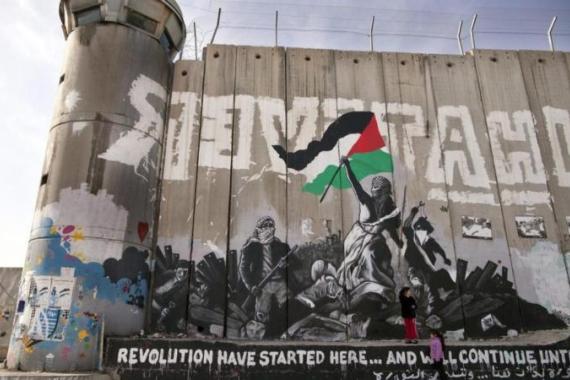
Showing posts with label Israeli oppression. Show all posts

Friday, 18 July 2025

Alon Mizrahi: 'Israel Must Be Dismantled'


Alon Mizrahi is an Arab Jewish writer and activist who left Israel over the genocide it has perpetrated in Gaza. He now resides in the United States.

On January 21, 2025, Dimitri Lascaris spoke with Alon about his experiences as an Arab Jew in Israel, his abandonment of Zionism, and the future of the 'Jewish state'.

According to Alon, Israel's political elite and society have become so infused with hatred of Arabs, and have enjoyed impunity for so long, that the region cannot achieve a lasting and just peace unless Israel is dismantled.

Thursday, 23 January 2025

Israelism: How Young American Jews’ Views of Israel Are Shifting


The critically acclaimed feature-length documentary ‘Israelism’ investigates a movement of young American Jews who are campaigning to redefine Judaism’s relationship with Israel.

At the heart of the documentary are Simone Zimmerman, who grew up in Los Angeles and visited Israel on an exchange programme; and fellow American Eitan, who joins the Israeli military after graduating high school. Simone and Eitan are raised to defend the state of Israel at all costs but their lives are changed when they witness the mistreatment of Palestinians with their own eyes.

Their stories reveal a generational divide in the American Jewish community as more young Jews question the narratives their synagogues and Hebrew school teachers gave them as children.

‘Israelism’ features interviews with academics and political activists, including Noam Chomsky, Cornel West, Lara Friedman and a former director of the Anti-Defamation League, Abe Foxman. The film was initially released in February 2023, generating significant debate across American campuses.

Friday, 18 October 2024

Ta-Nehisi Coates on Israel’s apartheid: “We need more Palestinians telling the story”


“When you see segregation. I don't need more time to understand what it is.”

Award-winning author and journalist Ta-Nehisi Coates joins ‘Mehdi Unfiltered’ to discuss his latest book’s focus on Palestine, and the reception it has received from the mainstream media – including a shocking interview on CBS.

In this exclusive interview, Coates discusses topics for the first time since the start of his book tour – including his view of President Biden’s Zionism, and his advice to Vice President Kamala Harris on arms sales to Israel.

His new book, The Message, explores how mainstream narratives shape and sometimes distort our experience. To write the book, Coates traveled to Senegal, South Carolina, and the occupied West Bank.

Friday, 19 April 2024

Israeli woman explains why she went to prison instead of joining the IDF


Sofia Orr is the first Israeli woman since October 7th to be jailed for refusing military service. She's just been released, and tells James O'Brien that she believes it is ‘wrong to take children and make them into soldiers’. Six months on from the start of the war in Gaza, are young Israelis becoming more anti-war?


Wednesday, 13 March 2024

Palestine Talks | An Anti-Zionist Roundtable with Miko Peled and Sami Al-Arian


In this exclusive TRT World roundtable discussion featuring Israeli American activist and writer, Miko Peled, and Palestinian activist and professor Sami Al-Arian, who is the director of Center for Islam and Global Affairs based in Istanbul, Zionism is explored as a means of developing anti-Palestinian fear in its followers, a persecutory force against those who – in accordance with key moral principles and international law – stand up for the rights of Palestinians, and, finally, is embedded within American institutions of power.

Monday, 4 March 2024

On 1948 | Ilan Pappe | Part I | 2018 interview


What happened to the Palestinians when Israel declared its independence in 1948?

Was it ethnic cleansing? Chaos? Legitimate Jewish self-defense?

Prof. Ilan Pappe is perhaps the most contentious Israeli historian of this question.

Decidedly left-wing in his outlook, Pappe is both an historian, and a social activist. He's perhaps most famous for his book "The Ethnic Cleansing of Palestine," in which he lays out a case that the war for the creation of Israel in 1948 is best understood as an ethnic cleansing of the native Palestinian population by primarily European Jews.

Unsurprisingly, Pappe's scholarship is widely derided in Israel. Yet his work is often celebrated by many pro-Palestinian activists in the Middle East and abroad.

Tuesday, 20 February 2024

I was an IDF soldier stationed in Gaza in at the end of 1992


From @alon_mizrahi

Let me share with one of the most surreal and sobering moments of my life, that happened to me while I was an IDF soldier stationed in Gaza in at the end of 1992.

That kind of moment could only happen to a Mizrahi, or Arab-jewish soldier. You'll see why I say it. And I could swear to you that every word of it is true. No embellishments, no filling in missing pieces of memory. All truth.
-
In the summer of 1992 I finished basic and some advanced infantry training, and my platoon was ready to partake in combat function, which really was just (same as for generation of young Israeli men and women before and after that) enforcement of Israel's occupation of the West Bank and the Gaza Strip.
 
The unit I was joining at this stage had under its responsibility (for purposes of overt occupation activities) the Al-Shati refugee camp and some of the adjacent Rimal neighborhood, on the northwestern part of the Strip.

At the end of 1992, Israel's leadership decided that the (Zionist and brilliant) solution for the growing discontent, or resistence, in the Strip, was removing 400 Hamas 'leaders' from Gaza and sending them into exile in Lebanon.

As many of those Hamas figures lived in and around the area designated for my unit to handle, we were appointed with making dozens of arrests, or maybe hundreds (Israel would always arrest additional people for more information, as a form of pressure and to prevent an eruption of a violent reaction).

For weeks in November of 1992 I would spend whole nights of my very young life walking from house to house in the dead of night in Gaza, knocking on doors, threatening family members of missing wanted people and handing over those who were home to the representatives of the security services, who were always with us, and always in plain cloths.

As part of my service there, I was in hundreds of Palestinians homes in Gaza, many of them during that month of endless nocturnal search and arrest hours.
Some nights we would take in 10 different people from same numbers of homes.
-
I was too young and shocked to understand anything, though it was clear to me that this was not the hero's service fighting evil I spent the months and years before joining the IDF hoping for and fantasizing about.

Those people in Gaza were normal in a way that no part of me could align with evil. And I could never bring myself to become that natural lord and master that colonial and racist regimes always expect their soldiers and cops to be. I was too soft.
-
The people we took in never cried, begged for forgiveness or claimed it was a mistake. They would climb up and sit in the military vehicle with their hands tied behind their backs and their eyes covered in a kind of quiet that was more thunderous, more painful for me to remember all those years later, than any other act would be.
-
One man in particular I remember. A big, sombre man in his 30', who looked untouchable in a big, thick black coat. But as he sat in the military vehicle with his hands tied behind his back his coat slipped over his shoulders, revealing a tank top and a body and skin that did not look invincible, or untouchable. He was human.

And he sat there, staring into space, in total quiet. Back then I had no idea where these men were taken, and what was going to be unleashed upon them. Only many years later did I discover how extensive Israel's use of torture was, and how horrible.

But the big, somber, fragile man sat there, quiet, and, like any other Palestinian I saw in this situation, with  what I can best describe as dignity in brokenness, that was astonishing. I have never seen anyone with more dignity in my life than a hand-tied, eyes-covered Palestinian detainee.
-
Towards the end of those weeks of knocking on doors and arresting people, one morning, around 7AMm after a long long bight, that moment happened to me. It was something that I never forgot and never will forget.

It was the last arrest for that night, which already becade day. We stood there, a small band of soldiers, and knocked on the door of what looked like a well built, well kept house. It was not fancy, but it surely not the house of poor people.

We waited for someone to come and open the door. After a minute or so, someone did.

If you ever felt like reality around you had its fundamentals twisting and changing, or like the layer of meaning that enveloped reality was torn, revealing another layer of deeper meaning, but in a way that makes you dizzy and dumbfounded - if you know that feeling you'll know what I went through that moment.

Because the person that opened that door at that house that morning in Gaza was my very own and only sister.

The door opened and the actual, precise, living and breathing image of my sister, identical as any identical twin ever was, stood in the doorway. It was her face. her expression, her hair, her highet, her age, her build, her movement, her skin tone accurate to the 1000th degree.

I didn't know what was going on, or what kind of insane trick was being played on me. I gasped, lost for words. I stood a meter away from her, and my very wanted to call her by my sister's name.   
-
Not long after this, after that whole period, I started cracking. I could not take it anymore, though I never could tell myself what it was that I couldn't take. I went to see a psychologist and got restationed to a non-combat unit.

It took me many years to start to appreciate the damage done to me by what I was sent to do and see in Gaza. I don't think that even today I have completely processed it.
-
She stood at the door and was a little puzzled, bot not panicked. She was wiping the floor, and it was still wet. A bucket with a rug in it stood by. It was a clean house, with a shining clean floor. The officer told her to get out and speak to us from street level, as the house was one stair up from that.

But the street was dirty and sandy, and she couldn't bring herself to step outside barefoot. Her foot (my sister's foot) ventured out for a second, not actually stepping, just hovering, but then was drawn in.

The officer pretended to not notice. He didn't insist, and she remained inside. By not insisting and not becoming violent, I think, he saved my actual sanity, and never knew it.

Monday, 12 February 2024

Israeli women soldiers give shocking testimonies


A personal account of female soldiers about their life in the Israeli Army, the only one to draw women for mandatory military service.
A female point of view on the drama of an unending war, on the moral challenges they faced at the encounter with the Palestinian population. Questions that were not dealt with during the service are raised today with great pain - and courage. A female point of view on the drama of an unending war, on the moral challenges the soldiers faced at the encounter with the Palestinian population. The young women look back critically at the way they handled the power that was placed in their hands at the young age of eighteen. Did they really smile in the pictures?


In 1988 the filmmaker served herself in the Israeli Defence Force in the Occupied Territories. 'How could I ever think I'd forget...' is what one of the young women asks herself at then end of this film.

Friday, 26 January 2024

Life in Jerusalem under Israel's military dictatorship

Journalist Jeremy Loffredo visits the occupied East Jerusalem neighborhood of Sheikh Jarrah, a climate of unprecedented repression has descended since October 7. Loffredo documents settler terror attacks on businesses and speaks to local activists who tell him they fear arrest and beatings from Israeli police if they speak out against the assault on Gaza.

Wednesday, 24 January 2024

Meet Meital Yaniv, Former Israeli Soldier Turned Anti-Zionist Organizer


Democracy Now speaks with anti-Zionist organizer and former IDF soldier from Tel Aviv Meital Yaniv, who joined hundreds of Jewish activists and their allies to shut down the California state Capitol in Sacramento Wednesday to demand a ceasefire in Gaza and condemn the roughly $600 million in California taxes that is used annually for U.S. military aid to Israel. Yaniv recalls how they were raised "extremely Zionistic," their experience in the Israeli Air Force and eventual turn to fight for Palestinian rights. "What Israel is doing right now has nothing to do with antisemitism. What Israel is doing right now is a genocide. What Israel has been doing for the past 75 years is apartheid, is occupation," Yaniv says. "There is no need for any one of us to serve in the IDF. The IDF should not exist. The state of Israel should not exist."

Friday, 19 January 2024

When Laws Are Held Hostage | Khutbah by Dr. Omar Suleiman


The historical manipulation of sacred months in Makkah for unholy purposes and their weaponization against Prophet Muhammad ﷺ draws parallels with contemporary events involving ICJ judges, the UN Security Council, and US hegemony. Delve into the strategic misalignment of principles for political gain in both past and present times.

Monday, 4 December 2023

Hebron: The Reality of Israeli Settlement in Palestine // Behind The Wall


It’s widely known that there are Jewish settlements in Palestinian territory, but very few people know what the lives of people are actually like in these isolated districts.This vlogger traveled to Hebron, a Palestinian city that has Israeli settlements right in the middle of the city itself, and managed to enter a Jewish neighborhood surrounded by barbed wire fences and checkpoints.
he shares what he saw and experienced in this controversial section of Hebron.

Friday, 17 November 2023

My Life in Gaza with Amr Abdul Latif


The death toll in Gaza has reached above 10,000, yet the so-called international community, in reality, the Western nations, are deaf to the cries under the rubble. The Israeli war machine no longer worries about redlines as they act in complete impunity. If the hypocrisy of the West was not evident before this crisis, it is clear now that the Liberal World Order was never meant to safeguard the lives and honour of those it deems lesser people.

Amr Abdul Latif was, until recently, a resident and citizen of Gaza. He came to the UK to study for his postgraduate degree at St Andrews University and now works as a software developer. The Western press, even those that show little empathy, present the people of Gaza as lesser human beings who do not have dreams and aspirations. Who are either to be pitied or presented as subhuman. I want to understand what life has been like since 2007, when Israel announced its siege and what the average Gaza actually believes.

Wednesday, 1 November 2023

The Israelites and the Pharaoh | Khutbah by Nouman Ali Khan


Reflecting on current events, Ustadh Nouman draws comparisons from the verses that describe Firawn's 'media propaganda' strategy against Musa (as) and the Israelites.

Running the most powerful and influential military force at the time, Firawn made sure that he did what he could to break the spirit of the Israelites and turn everybody against them through manipulative fearmongering and lies. Afterall, they are a "lesser" people.

In these eye opening ayat, Allah is showing us not just the plan of Firawn at the time of Musa (as), but the plans of future tyrants to come and how the schemes of the disbelievers will always go to waste.

Friday, 26 May 2023

OUR MOST DIFFICULT DAY IN OCCUPIED PALESTINE | LIFE IN HEBRON & BETHLEHAM | PAKISTANI IN ISRAEL VLOG


We are IMMY AND TANI- A full time travel family. Today was difficult day for us to share in our Pakistan To Saudi Arabia series. We explore the cities of Hebron and Bethlehem with you all and what we witnessed was extremely sad and unbearable.

Tuesday, 8 June 2021

A Threshold Crossed Israeli Authorities and the Crimes of Apartheid and Persecution


 About 6.8 million Jewish Israelis and 6.8 million Palestinians live today between the Mediterranean Sea and Jordan River, an area encompassing Israel and the Occupied Palestinian Territory (OPT), the latter made up of the West Bank, including East Jerusalem, and the Gaza Strip. Throughout most of this area, Israel is the sole governing power; in the remainder, it exercises primary authority alongside limited Palestinian self-rule. Across these areas and in most aspects of life, Israeli authorities methodically privilege Jewish Israelis and discriminate against Palestinians. Laws, policies, and statements by leading Israeli officials make plain that the objective of maintaining Jewish Israeli control over demographics, political power, and land has long guided government policy. In pursuit of this goal, authorities have dispossessed, confined, forcibly separated, and subjugated Palestinians by virtue of their identity to varying degrees of intensity. In certain areas, as described in this report, these deprivations are so severe that they amount to the crimes against humanity of apartheid and persecution.

Several widely held assumptions, including that the occupation is temporary, that the “peace process” will soon bring an end to Israeli abuses, that Palestinians have meaningful control over their lives in the West Bank and Gaza, and that Israel is an egalitarian democracy inside its borders, have obscured the reality of Israel’s entrenched discriminatory rule over Palestinians. Israel has maintained military rule over some portion of the Palestinian population for all but six months of its 73-year history. It did so over the vast majority of Palestinians inside Israel from 1948 and until 1966. From 1967 until the present, it has militarily ruled over Palestinians in the OPT, excluding East Jerusalem. By contrast, it has since its founding governed all Jewish Israelis, including settlers in the OPT since the beginning of the occupation in 1967, under its more rights-respecting civil law.

For the past 54 years, Israeli authorities have facilitated the transfer of Jewish Israelis to the OPT and granted them a superior status under the law as compared to Palestinians living in the same territory when it comes to civil rights, access to land, and freedom to move, build, and confer residency rights to close relatives. While Palestinians have a limited degree of self-rule in parts of the OPT, Israel retains primary control over borders, airspace, the movement of people and goods, security, and the registry of the entire population, which in turn dictates such matters as legal status and eligibility to receive identity cards.

A number of Israeli officials have stated clearly their intent to maintain this control in perpetuity and backed it up through their actions, including continued settlement expansion over the course of the decades-long “peace process.” Unilateral annexation of additional parts of the West Bank, which the government of Prime Minister Benjamin Netanyahu has vowed to carry out, would formalize the reality of systematic Israeli domination and oppression that has long prevailed without changing the reality that the entire West Bank is occupied territory under the international law of occupation, including East Jerusalem, which Israel unilaterally annexed in 1967.

International criminal law has developed two crimes against humanity for situations of systematic discrimination and repression: apartheid and persecution. Crimes against humanity stand among the most odious crimes in international law.

The international community has over the years detached the term apartheid from its original South African context, developed a universal legal prohibition against its practice, and recognized it as a crime against humanity with definitions provided in the 1973 International Convention on the Suppression and Punishment of the Crime of Apartheid (“Apartheid Convention”) and the 1998 Rome Statute of the International Criminal Court (ICC).

The crime against humanity of persecution, also set out in the Rome Statute, the intentional and severe deprivation of fundamental rights on racial, ethnic, and other grounds, grew out of the post-World War II trials and constitutes one of the most serious international crimes, of the same gravity as apartheid.

The State of Palestine is a state party to both the Rome Statute and the Apartheid Convention. In February 2021, the ICC ruled that it has jurisdiction over serious international crimes committed in the entirety of the OPT, including East Jerusalem, which would include the crimes against humanity of apartheid or persecution committed in that territory. In March 2021, the ICC Office of Prosecutor announced the opening of a formal investigation into the situation in Palestine.

The term apartheid has increasingly been used in relation to Israel and the OPT, but usually in a descriptive or comparative, non-legal sense, and often to warn that the situation is heading in the wrong direction. In particular, Israeli, Palestinian, US, and European officials, prominent media commentators, and others have asserted that, if Israel’s policies and practices towards Palestinians continued along the same trajectory, the situation, at least in the West Bank, would become tantamount to apartheid.[1] Some have claimed that the current reality amounts to apartheid.[2] Few, however, have conducted a detailed legal analysis based on the international crimes of apartheid or persecution.[3]

In this report, Human Rights Watch examines the extent to which that threshold has already been crossed in certain of the areas where Israeli authorities exercise control.

Definitions of Apartheid and Persecution
The prohibition of institutionalized discrimination, especially on grounds of race or ethnicity, constitutes one of the fundamental elements of international law. Most states have agreed to treat the worst forms of such discrimination, that is, persecution and apartheid, as crimes against humanity, and have given the ICC the power to prosecute these crimes when national authorities are unable or unwilling to pursue them. Crimes against humanity consist of specific criminal acts committed as part of a widespread or systematic attack, or acts committed pursuant to a state or organizational policy, directed against a civilian population.

The Apartheid Convention defines the crime against humanity of apartheid as “inhuman acts committed for the purpose of establishing and maintaining domination by one racial group of persons over any other racial group of persons and systematically oppressing them.” The Rome Statute of the ICC adopts a similar definition: “inhumane acts… committed in the context of an institutionalized regime of systematic oppression and domination by one racial group over any other racial group or groups and committed with the intention of maintaining that regime.” The Rome Statute does not further define what constitutes an “institutionalized regime.”

The crime of apartheid under the Apartheid Convention and Rome Statute consists of three primary elements: an intent to maintain a system of domination by one racial group over another; systematic oppression by one racial group over another; and one or more inhumane acts, as defined, carried out on a widespread or systematic basis pursuant to those policies.

Among the inhumane acts identified in either the Convention or the Rome Statute are “forcible transfer,” “expropriation of landed property,” “creation of separate reserves and ghettos,” and denial of the “the right to leave and to return to their country, [and] the right to a nationality.”

The Rome Statute identifies the crime against humanity of persecution as “the intentional and severe deprivation of fundamental rights contrary to international law by reason of the identity of the group or collectivity,” including on racial, national, or ethnic grounds. Customary international law identifies the crime of persecution as consisting of two primary elements: (1) severe abuses of fundamental rights committed on a widespread or systematic basis, and (2) with discriminatory intent.

Few courts have heard cases involving the crime of persecution and none the crime of apartheid, resulting in a lack of case law around the meanings of key terms in their definitions. As described in the report, international criminal courts have over the last two decades evaluated group identity based on the context and construction by local actors, as opposed to earlier approaches focused on hereditary physical traits. In international human rights law, including the International Convention on the Elimination of All Forms of Racial Discrimination (ICERD), race and racial discrimination have been broadly interpreted to include distinctions based on descent, and national or ethnic origin, among other categories.

Link