
Showing posts with label Rumi. Show all posts
Showing posts with label Rumi. Show all posts
Wednesday, 15 January 2025


Thursday, 22 June 2023
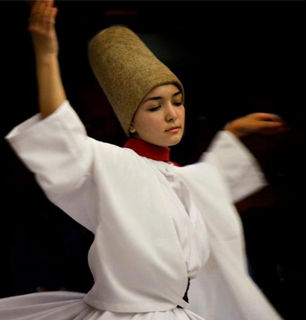
Rumi and the Divine Journey of Love
.jpg)
Love has been an eternal source of inspiration for humanity, captivating poets and philosophers throughout the ages. One of the most renowned voices on the subject is the 13th-century Persian poet, Jalāl ad-Dīn Muhammad Rūmī, commonly known as Rumi. Rumi's profound and evocative poetry has touched the hearts of people across cultures and generations, resonating with the timeless essence of love. In this blog post, we will delve into Rumi's profound wisdom and explore his insights into the transformative power of love.
Love as a Spiritual Journey:
Rumi believed that love is not merely an emotion shared between two individuals but a spiritual journey that leads us closer to the divine. He often used metaphors and imagery to convey the idea that love is a transformative force, capable of awakening the soul. According to Rumi, love serves as a path to connect with the divine and discover our true selves.
The Beloved as a Mirror:
In Rumi's poetry, the beloved is often portrayed as a mirror that reflects our own inner beauty and flaws. Through this metaphor, Rumi invites us to look beyond superficialities and embrace a deeper understanding of ourselves. He encourages us to recognize that the love we seek in others is ultimately a reflection of the love within us.
The Union of Lover and Beloved:
Rumi's poetry frequently explores the concept of the union between the lover and the beloved. He emphasizes that this union is not limited to human relationships but extends to a mystical union with the divine. Rumi believed that love dissolves the boundaries that separate us, allowing us to merge with the essence of the beloved and experience a sense of oneness.
Love as a Healing Balm:
Rumi saw love as a healing balm that has the power to soothe the wounds of the soul. His poetry often speaks of the transformative nature of love, capable of turning pain into joy and darkness into light. Rumi encourages us to embrace love as a means of healing and finding solace in times of despair.
Love's Endless Depths:
Rumi's poetry conveys the boundless nature of love, transcending societal norms and limitations. He believed that love knows no boundaries and should not be confined by fear or judgment. Rumi urges us to dive deeper into the depths of love, shedding our inhibitions and embracing its vast expanse.
Conclusion:
Rumi's poetry continues to resonate with readers worldwide due to its profound insights into the nature of love. His words inspire us to embark on a spiritual journey where love becomes a transformative force, connecting us with the divine and our true selves. Rumi teaches us that love is not simply an emotion but a path to understanding, healing, and transcendence. As we explore Rumi's poetry, we are invited to open our hearts and experience the boundless depths of love that reside within us and the world around us.
Friday, 12 May 2023
What do you "gain" from praying to Almighty Allah regularly?

Rumi was once asked:
What do you "gain" from praying to Almighty Allah regularly?
He replied: Usually "I don't gain anything", but rather "I lose certain things".
And he quoted everything he lost praying to Allah Almighty regularly:
1 - I lost my pride
2 - I lost my arrogance
3 - I lost my anger
4 - I lost stress
5 - I lost greed
6 - I lost the pleasure of lying
7 - I lost the taste of sin
8 - I lost impatience
9 - I lost despair and discouragement
Thursday, 7 December 2017
Muhammad and Rumi on Sexual Harassment
It is a time of reckoning for men around the world who have disrespected and brought distress and harm upon women. Rumi, writing about what could be called the “sacred feminine,” quotes the Prophet Muhammad (peace be upon him):
“The Prophet said, “Woman
prevails over the wise man,
while the raw and ignorant prevail over her.”
Those men who lack tenderness and affection
are animals, not men.”
[see: [Mathnawi I 2421-2437]
To paraphrase: woman can dominate a wise man who can recognize the creative power and divine quality vested in the feminine and willingly choose to serve and protect that beauty, while the ignorant and insensitive man imposes his crude desires upon her. Such a man is actually enslaved to the power of woman, but is deaf, dumb, and blind to what woman might offer willingly if her freedom and beauty were respected.
Or as Rumi says it:
If outwardly you dominate your wife,
inwardly you are dominated,
seeking her love.
What pleasure can a man receive from “groping” a woman (or worse), oblivious to the fact that the greatest pleasure of human relationship is in reciprocity? These are some of the spiritual secrets that have been lost to worldly societies, East, Middle East, and West. Too many men, emotionally crippled by both Puritanism and salaciousness, enslaved to lust, numb to intimacy, violate the sacredness of eros.
Again, from Rumi:
She is not that kind of beloved most imagine;
she is a ray of God.
She is not just a created,
she is creative.
All Rumi quotes from Love’s Ripening, Rumi on The Journey of the Heart, Kabir Helminski and Ahmed Rezwani.
Sunday, 4 May 2014
The path of love....

On the path of Love we are neither masters nor the owners of our lives. We are only a brush in the hand of the Master Painter.
~Rumi
Monday, 10 March 2014
Loving the Prophet is the essence of Islam
.jpg)
Wonderful blog post from Dr Musharraf Hussain:
The Persian poet Saadi Shirazi sang a eulogy of the Prophet: “Thousand times was I to wash my mouth with rose water it would still be insolence to utter your beautiful name.”
The Quran describes the Prophet Muhammad’s (peace be upon him) beautiful, loving, compassionate and caring character in these glowing words: “He is ever yearning for your welfare and very compassionate and beneficent towards the believers”. He loves us and Muslims in return love him too. Loving is this intense feeling of affection, fondness, delight and admiration for the most magnificent person who ever lived in human history. History has produced many great leaders who have left their marks on different walks of human life. There have been great philosophers, scholars, pious saints, conquerors, poets, musicians, inventors and doctors, all these great men have changed the course of human history for better one way or another.
However, the life of the Prophet Muhammad (peace be upon him) is unique and has certain outstanding features, which set it apart from the rest of the leaders. William Draper in his book “history of the intellectual development of Europe” said “four years after the death of Justinian A.D. 569, was born in Makka the man who of all men exercised the greatest influence upon the human race, Muhammad“. Similarly la Martin in ‘Histoire de la Turquie’ says “philosopher orator, apostle, legislator, conqueror of ideas, restorer of rational dogmas of cult without images, the founder of 20 terrestrial empires and of one spiritual empire that is Muhammad as regards all standards by which human greatness may be measured. We may well ask is there any man greater than him.”
The Quran describes the messenger of God’s (peace be upon him) special role; “There is a beautiful role model for him who wishes and hopes to meet his Lord” (33:21). Therefore the Prophet Muhammad (peace be upon him) is really a role model and exemplary person. We recognise the need for role models, children imitate their parents, students copy their teachers and those who yearn for perfection, he is a role model for all in beliefs, behaviour and lifestyle.
Love is an intense feeling of deep affection and fondness for someone. It’s a transitive verb which requires an object, so you love something, you love someone, you delight in them, you admire them and cherish them. Muslim poets have expressed their love for the Prophet (peace be upon him) in various ways.
For a Muslim the Prophet (peace be upon him) is really the centre of his life, of his attention and of his very being. So if you imagine Islam is the name of a body then Muhammad (peace be upon him) is the spirit of that body and if you imagine Islam is a tree then Muhammad (peace be upon him) is the leaves and the fruit of that tree, if Islam is a flower then Muhammad (peace be upon him) is the scent and that beautiful colour. In brief whatever image of Islam you can conjure and imagine, then Muhammad (peace be upon him) is the lifeblood of that. Loving the Prophet (peace be upon him) is really the very essence of believers life and the early Muslims displayed this deep affection and this intense love of the Prophet (peace be upon him) openly. Here is a description of their passion for the Prophet (peace be upon him): Urwa bin Masood Saqafi was the ambassador of the Quraish at the time of the treaty of Hudabiya on his return to Makkah he said to them “I witnessed some amazing scenes, when Muhammad washes himself, his disciples do not let a drop of water fall on the ground, they take it in their hands, whatever he says they obey him, I have visited the courts of the Roman and Persian emperors but nowhere have I seen such scenes of loyalty and dedication to their leader”.
Even the world of kufr knows that in order to defeat and divert the Muslims from their religion. They have to weaken this link with the Prophet (peace be upon him). Iqbal the great poet of Islam reveals this conspiracy of the non-Muslims in this couplet. He said “this starving man who does not fear a bit, take away from him the spirit of Muhammad and give him Western ideals and it will be then it expelled and then you will be able to easily expel Islam from the Muslims”.
In another place Iqbal attributes his own fondness and love of Islam and his deep understanding of the message and the meaning of the religion of Islam to this deep love. He says “the dazzling Western intellect did not impress me at all since my eyes were filled with the dust of Medina and Najaf.” He believed that the love of the Prophet (peace be upon him) was his powerful shield against the influences of the Western culture. He said “the Western culture corrupts the mind and heart because it is no longer chaste and pure and when the salt is no longer pure then it is impossible to have even a clean conscience, lofty ideals good taste.”
So we see that the love of messenger (peace be upon him) is the energy that drives the believers on the straight path, it is the shield, which protects them from the evil influences of a society and the deceptions of his own ego and the snares of satan. Let me give you another example of the disciple’s love for the messenger (peace be upon him). Aisha the mother of believers reported that one day Sauban a disciple came to the messenger (peace be upon him) and he looked quite sad and the messenger (peace be upon him) said ‘why are you gloomy and sorrowful?’ He replied I love you more than myself and my family and whenever I miss you I visit you, but now my anxiety is increasing that in the hereafter when I die you will be in a very lofty place near your Lord, but I don’t know where I will be, this worries me, this thought of being detached from you and not being able to visit you makes me miserable. The Prophet (peace be upon him) on hearing this was very moved and was quiet for a while then this verse was revealed from God: “whoever follows God and his messenger these are the people, whom God has blessed they are the prophets , the truthful, the martyrs and the righteous people. What a wonderful group of friends” (4:69).
Love of the Prophet (peace be upon him) is a basic ingredient of Islam. The Prophet (peace be upon him) himself declared that “none of you can be a believer until I am more dear to you that your parents, children and the rest of humanity”. The love of the Prophet (peace be upon him) has to be more intense, deeper, stronger than love for anything else. In another hadith it is reported that a man once came to the messenger (peace be upon him) and asked “when is the last day coming and the messenger (peace be upon him) asked him ‘what have you prepared for it?’ He said I haven’t prepared a lot but I do love God and his messenger and the Prophet (peace be upon him) replied well if that’s the case then remember a person will be with the one who he loves.” This is why Iqbal very poetically said “the essence of the Quran, the spirit of faith and the secrets of religion all lie in the love of the mercy for universe.”
Another poet eloquently puts this point when he says: ”the love of Muhammad is the first requirement of religion if this is lacking then everything is incomplete”. Love is the intense feeling of fondness for someone who has outstanding qualities, he has force field of energy about him which attract others. It is difficult to pin down what love is precisely. However, we can identify two reasons for loving someone; his special quality of attractiveness due to his power or knowledge and secondly a favour that he has done to us making us indebted for the protection and security whether it is financial assistance, when we look at the life of Muhammad (peace be upon him), we see in him the most wonderful qualities of generosity, kindness, compassion and forgiveness. Another immense favour on mankind is delivering mankind from the darkness of ignorance to the light of deen.
Sunday, 2 October 2011

Sunday, 3 July 2011
Quotes from Rumi

"Human beings are created from the dust of the earth; but do they resemble dust? Grapes come from vines; but do grapes look like vines? Does theft have the same shape as gallows? Does piety resemble eternal life? Nothing resembles its consequences. So the root of pain and torment is not evil." - Mevlana Rumi (RA)
Subscribe to:
Posts (Atom)