Showing posts with label Resistance. Show all posts

Monday, 14 July 2025

Zaynab bint Ali (ra): A Voice of Courage | The Firsts | Sahaba Stories | Dr. Omar Suleiman


A granddaughter of the Prophet ﷺ, exemplary for her patience, courage and generosity. She established institutions to support the poor, elderly, and disabled. She persevered after the painful massacre of her family at Karbala, and eloquently spoke truth to power. 

Zaynab bint Ali (ra) is from the great women of the Ahl al-Bayt and is an enduring role model for every generation of Muslims.

Friday, 6 December 2024

Lowkey EXPOSES Donald Trump


 “Donald Trump has assembled the most pro-Israel cabinet in the history of the United States, I’ve investigated his funders and it all makes sense”

Monday, 11 November 2024

Norman Finkelstein debates Elijah Magnier on resistance of Hamas and Hezbollah against Israel.


This show opens up a lively debate between Prof. Norman Finkelstein and Elijah Magnier about what is the implication of the narrative of effective resistance by Hamas and Hezbollah in the face of an ongoing genocide in Gaza and tremendous destruction and displacement in Lebanon. Prof. Finkelstein argues that the narrative of effective resistance is factually wrong, and strategically lends support to Israeli propaganda about the need to further intensify their atrocity. Elijah insists that while the destruction by Israel is definitely of an unprecedented scale, the resistance has not surrendered in Gaza and certainly not in Hezbollah. This means that there are military reasons behind some of the actions we see in Palestine and Lebanon. Prof. Finkelstein contends that the actions of the Israeli state are less driven by military compulsion of stiff resistance and more driven by Israeli intent of genocide, ethnic cleansing, and establishment of deterence.

Tuesday, 13 August 2024

Fighting Oppression: An Islamic Perspective


Oppression, in any form, is a grave injustice that Islam strongly condemns. Rooted in the principles of justice, equality, and compassion, Islam provides a comprehensive framework to combat oppression, whether it is inflicted on an individual, a community, or a nation. Below is an exploration of how to fight oppression from an Islamic perspective.

1. Understanding Oppression (Ẓulm) in Islam
In Islamic teachings, oppression, or ẓulm, is one of the gravest sins. The Quran explicitly warns against ẓulm, stating that "Allah does not guide the wrongdoing people" (Quran 2:258). Ẓulm is not limited to physical harm but encompasses any form of injustice, be it social, economic, or political. The Prophet Muhammad (peace be upon him) emphasized that all forms of oppression, whether against humans, animals, or even the environment, are forbidden.

2. The Importance of Justice (ʿAdl)
Islamic teachings place justice at the core of all human interactions. The Quran commands believers to stand firmly for justice, even if it is against themselves or their kin (Quran 4:135). This principle is vital in the fight against oppression. Muslims are encouraged to support the oppressed, regardless of their race, religion, or background. Injustice anywhere is seen as a threat to justice everywhere, and Muslims are urged to actively oppose it.

3. Patience and Perseverance (Ṣabr)
Patience (Ṣabr) is a crucial virtue in Islam, especially in the face of oppression. The Quran frequently mentions the rewards of those who remain patient during trials and hardships. However, patience in Islam does not mean passivity. Rather, it means steadfastness and resilience in pursuing justice. The Prophet Muhammad (peace be upon him) endured years of persecution in Mecca but remained patient and persistent in spreading the message of Islam, ultimately leading to the establishment of a just society in Medina.

4. Speaking Out Against Injustice
Islam encourages believers to speak out against oppression and injustice. The Prophet Muhammad (peace be upon him) said, "Whoever among you sees an evil action, let him change it with his hand; if he cannot, then with his tongue; and if he cannot, then with his heart – and that is the weakest of faith" (Sahih Muslim). This hadith highlights the importance of taking action against wrongdoings, whether through direct intervention, advocacy, or at least denouncing it internally.

5. Supporting the Oppressed
Supporting the oppressed is a fundamental duty in Islam. The Quran calls for collective action to help those who are wronged, stating, "And what is [the matter] with you that you fight not in the cause of Allah and for the oppressed among men, women, and children..." (Quran 4:75). This verse underscores the obligation to protect and assist those who cannot defend themselves. Muslims are encouraged to offer material, moral, and spiritual support to the oppressed, working towards their empowerment and liberation.

6. Peaceful Resistance and Non-Violence
Islam promotes peaceful means of resistance and advocates for resolving conflicts through dialogue and negotiation whenever possible. The concept of Jihad in Islam, often misunderstood, includes striving against one’s own inner vices and working for justice in society through peaceful means. Violent resistance is only sanctioned as a last resort, and even then, it must adhere to strict ethical guidelines, ensuring that no innocent lives are harmed.

7. Collective Responsibility and Solidarity
Islam teaches that the community has a collective responsibility to ensure justice and prevent oppression. The Prophet Muhammad (peace be upon him) compared the Muslim community to a single body; if one part suffers, the entire body feels the pain. This metaphor emphasizes the importance of solidarity in fighting oppression. Muslims are urged to unite against all forms of injustice, supporting one another in their struggles and working together to create a just society.

8. The Role of Dua (Supplication)
Dua, or supplication, is a powerful tool in the Islamic tradition. Muslims believe that turning to Allah in times of distress can bring divine assistance and relief. The Quran encourages the oppressed to seek help from Allah, saying, "And your Lord says, 'Call upon Me; I will respond to you'" (Quran 40:60). While practical efforts are essential, Muslims are also encouraged to seek spiritual strength through prayer, trusting that Allah is the ultimate source of justice.

9. Education and Awareness
Fighting oppression also involves educating oneself and others about the causes and consequences of injustice. Islam encourages the pursuit of knowledge and awareness, as ignorance can often perpetuate oppression. By educating communities and raising awareness about their rights and the principles of justice, Muslims can empower others to stand against injustice and work towards societal reform.

10. Striving for Systemic Change
Finally, Islam advocates for systemic change to eliminate the root causes of oppression. This includes addressing economic disparities, ensuring fair governance, and promoting ethical leadership. The Prophet Muhammad (peace be upon him) laid the foundations for a just society by establishing principles of equality, transparency, and accountability in governance. Muslims are encouraged to work towards similar systemic changes in their own societies, striving to create an environment where justice prevails.

In conclusion, Islam provides a comprehensive framework for fighting oppression, rooted in justice, patience, and active resistance. Muslims are called upon to stand against all forms of injustice, support the oppressed, and work towards creating a just and equitable society. By adhering to these principles, Muslims can contribute to a world where oppression is eradicated, and justice and peace prevail for all.

Tuesday, 15 February 2022

‘Targeted harassment’: Muslim girls in India denounce hijab ban


For four days a group of 28 Muslim girls stood in protest in front of the Junior Pre-University college in the Karnataka state after they were denied entry for wearing hijab – an issue that has snowballed to other colleges in the southern state.

On Monday morning Farheen (name changed) and her friends were allowed to enter the premises of the college located in the coastal town of Kundapur in Udupi district, but they were in for a shock after college authorities did not allow them to sit in their respective classrooms with other students.

On the same day, the college officials posted a notice outside the gate declaring prohibition of hijab in classrooms as part of the college uniform code.

“Our teachers told us they will not allow our entry in classrooms or teach us without government orders”, Farheen, a commerce student, told Al Jazeera.

It left Farheen and her friends “hurt and humiliated”.

An official from the education department visited the girls while they were seated in a separate classroom. “Give up on your hijab. If you hold on to this, you will lose out on your education’, he told us,” Farheen recounted.

“How is it fair that other students are being taught and we are told to sit separately and self-study just for wearing a headscarf,” said Farheen’s friend, who also wanted to remain anonymous.

“We used to sit in class all these years with hijab. Now suddenly, they are treating us like criminals and keeping us in a separate classroom. We are hurt.”

The decision of the Kundapur college to segregate Muslim girls, however, has angered students and activists who called it a form of “religious apartheid” and “untouchability”, a reference to the banned practice of discrimination against members of lower castes in the Hindu socio-religious hierarchy.

The Campus Front of India (CFI), an organisation of Muslim students active in southern Indian states said in a statement on Sunday that a ban on hijab is “an organised nationwide conspiracy [that] is systematically executed by the right-wing Hindutva [Hindu-ness] groups to dehumanise Muslim women”.

Visuals of students being shut outside the gate by several colleges in the state have caused mounting outrage among the Muslim minority and triggered protests since last week, with rights groups alleging that the move violates the rights of Muslim students to practice their religion and access education.

The tensions escalated after students and activists allegedly backed by Hindu nationalist groups started to wear saffron colour scarves, calling for hijab ban in educational institutions in the state – where Muslims form 12 percent of the population.

On  Tuesday, students and Hindu right-wing activists were seen marching into campuses wearing scarves and turbansin many colleges across the state andin some cases, clashing with police.

A viral video showing a student in hijab being heckled by a group of Hindu men in Mandya district has caused an online outrage, with many hailing the girl for her bravery in standing up to the “mob”.

Karnataka Chief Minister Basavaraj Bommai from the Bharatiya Janata Party (BJP) announced a three-day closure of educational institutes across the state and appealed for calm.

“I appeal to all students, teachers and management of schools and colleges, as well as people of Karnataka, to maintain peace and harmony,” Bomai said in a tweet.

Last week, his government issued a directive that all educational institutions should follow dress codes set by management.

Siddaramaiah, former chief minister and main opposition leader in the state, blamed the government for “trying to create communal disharmony throughout the state in the name of hijab”.

The government was “denying education to Muslim girls”, he said.

On Wednesday, the state high court which is hearing a petition by the Muslim girls to allow the use of hijabs in educational institutions has referred the case to a bigger panel of judges.

The lawyers appearing for the girls on Tuesday argued before the court that the practice of hijab is protected under the right of freedom of religion guaranteed in the Indian constitution and that the state has no power to ban it.

Kaneez Fathima, a member of the state legislative assembly from the opposition Congress party, who led a demonstration in Kalburgi city in support of girls said that she wears a hijab and sees it as an essential part of a Muslim woman’s life.

“We have been wearing hijab for years without any problem but now, the issue has been suddenly taken up by the BJP and Hindutva groups to rake up communal tensions”, she told Al Jazeera, referring to the Hindu far-right groups.

The controversy over hijab first started a month back when a group of six Muslim students at a government-run women’s college in Udupi district was denied entry into their classrooms because the administration alleged they were defying the rules by wearing the hijab.

The girls, however, defiantly resisted the pressure even as they were made to sit outside the classrooms on stairs.

The controversy has reignited the debate about the rights of India’s minorities under the Hindu nationalist government. Activists have said attacks against Muslims and their religious symbols have increased under Prime Minister Narendra Modi.

The hijab ban came as the religious minorities, mainly Muslims and Christians, faced attacks from the right-wing Hindu groups in the state – home to the Indian IT hub of Bengaluru. The state’s Hindu-nationalist BJP government has passed laws against cow slaughter and anti-conversion believed to target minorities.

However, the governing BJP defended the hijab ban, arguing that it violates rules on uniform.

“Educational institutions are not the place to practice one’s religion. The girls must focus on education and come to college to study not to assert identity,” Ganesh Karnik, the party spokesperson, told Al Jazeera.

He said that it was a small group of students stirring up the issue as the government on Monday ordered an investigation into the role of “vested interests” supporting students demanding entry of hijab-wearing girls.

But the girls said they cannot be forced to give up their hijab.

“We can’t just remove it. This is targeted harassment by the authorities,” Al-Rifaa, a student from another college in Kundapur, told Al Jazeera.

“For the last 30 years, the college had no issue with hijab. Why is it suddenly a problem, what has triggered this?,” Rifaa asked.

Link

Thursday, 16 April 2020

In the Footsteps of a Tunisian Hero


Lazhar Chraiti, a legendary figure in Tunisia's resistance to French colonial rule, was executed in 1963. More than 50 years later, Lazhar Chraiti's son goes back to Tunisia to find out more about how his father lived - and how he died.

The story of Lazhar Chraiti is that of an unlikely hero. He had little education, was virtually illiterate, worked as a miner and was a trade union activist. Yet he had a vivid sense of the injustice in his country, particularly the economic and social divide between Tunisians and French colonials.

In the footsteps of a tunisian hero - AJW - DO NOT USE   Lazhar Chraiti's son Slim is on a personal journey to discover more about how his father lived and died [Screengrab/Al Jazeera]
In response, Chraiti joined the Fellagha, bands of rural fighters with a common enemy, the French. He quickly rose up the ranks and took part in several battles against French military units. Eventually in 1956, French colonial authorities - seeing Tunisia slipping from their control - offered nominal independence, but with strings attached. It was about this time that Lazhar Chraiti first encountered Habib Bourguiba, a man who would later become Tunisia's first president. There were tensions between Bourguiba and the Fellagha, many of whom felt the deal did not reflect their struggle.

In the Footsteps of a Tunisian Hero charts the rise and fall of Lazhar Chraiti's fortunes. The early years of Tunisian independence saw Bourguiba consolidate his power as the Fellagha's influence waned. Tensions came to a head when Bourguiba accused Lazhar Chraiti of being part of a coup attempt against the new president. In the film, Lazhar Chraiti's son tells how after his father's arrest, the family had nowhere to turn and were ostracised from Tunisian society.

After a speedy trial, Chraiti was executed on January 24, 1963. To the continuing distress of his family, the site of his burial remains unknown.

Link

Wednesday, 21 February 2018

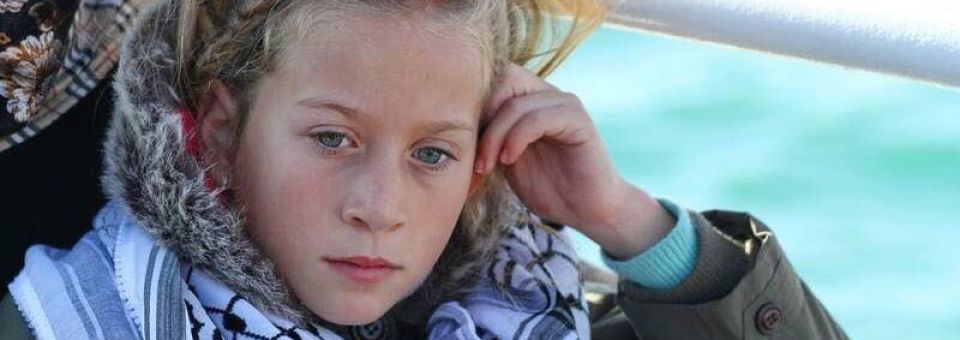
I’m Ahed Tamimi’s cousin. Israel needs to stop imprisoning kids like her


Ahed and I are the second generation of Tamimis to spend our whole lives under Israel’s oppressive 50-year military rule. We grew up under the constant watch and control of Israeli soldiers. At a young age, we had to learn resilience, determination and persistence. In order to survive, we had to be acutely aware of our surroundings at all times. Even the most basic things, such as being able to move freely or take a day trip wasn’t a possibility because of military checkpoints and other impediments. We had no room to breathe — sometimes literally, as clouds of tear gas fired by soldiers engulfed us and filled our homes.
Sadly, we are used to soldiers forcing their way into our homes, their cameras clicking as they take photos of the males in the family, documenting how many windows and doors we have, and stealing and destroying our personal belongings. There is no privacy. In addition to my father, my mother and brother have also been imprisoned. Ahed’s uncle was shot and killed by soldiers during a demonstration in 2012, while her mother was shot in the leg during another march and developed asthma because of the tear gas.

I was released on bail after 16 days, but Ahed has now been languishing in prison for nearly two months, as has her mother. On Jan. 31, she spent her 17th birthday in a cell.  The start of her trial in a military court has been delayed several times. The latest postponement came on Tuesday, when it was rescheduled for March 11. In a blatant attempt to avoid the scrutiny of the international media, the judge also ruled that journalists will be barred from attending. The charges that Ahed faces carry a maximum sentence of 20 years. I still face charges as well.
In prison, we were treated very badly. After being arrested, Ahed was taken into a basement cell and interrogated without a parent or lawyer present. She and I were repeatedly moved from one prison to another, held with regular Israeli criminals, and subjected to sexist and degrading verbal harassment. The army knows how to place psychological pressure to break you. They deprived us of sleep and food, and I was forced to remain seated in a chair unable to move for long hours at a time.

When we were brought to military court for a hearing, it was very hard seeing our parents sitting in the back feeling worried and helpless. My uncle Bassem Tamimi, Ahed’s father, and my own father know firsthand what Israeli prison feels and smells like. Both have been imprisoned multiple times because of their nonviolent resistance to Israel’s occupation. Bassem was named a prisoner of conscience twice by Amnesty International, which has also called for Ahed’s release. They know that we were held in a freezing-cold cell as we waited for our hearing. They know the pain of the handcuffs as they are tightened on our wrists and ankles, and how dirty the cells are, and the smell of rotten food. They understand what it feels like to be isolated in a cell — completely alone, cold and frightened, unsure of what will happen to you. Like her parents and siblings, I fear for the well-being of Ahed and the more than 300 other Palestinian children currently imprisoned by the Israeli army.

We have had our childhood stolen from us, never knowing the feeling of safety, security, and quiet. The unfortunate truth is that this isn’t only the reality of Ahed and I, or of Nabi Saleh. It is the reality of most Palestinians, especially the young ones.


Sunday, 31 December 2017

Ahed Tamimi: Who am I?

Image result for ahed tamimi


Who am I?
I am a Palestinian girl.
Before I was born, the occupation took most of my village’s lands to build a new settlement called Halamish.
Then they arrested my father. When my aunt went to visit him, one of the soldiers pushed her over the stairs of the court and she died.
Since I was little the settlers of Halamish keep stealing more and more of our lands to expand the settlement.

Our home has demolition order because it is in Area C. The settlers are allowed to build on our land, but not us.
In 2005, the settlers made the spring of our village part of the settlement and prevent us from using it, even though many of us are farmers.
All these things happened with great support from the Occupation army and government.
When the people of the my village started to resist the injustices with protest marches, my father was arrested again.

My mother was arrested too. My uncles, aunts, brothers, cousins - all of them were arrested too.
My cousin Mustafa was killed by the Israeli army. My uncle Rushdi was killed by the army too!
Later, an Israeli sniper shot my mom in the leg and she couldn’t move for long time.
Almost every week, the army breaks into our homes to arrest one of my family or to confiscate our laptops or phones.

During our marches, they shoot us with tear gas rubber bullets - my cousin is in hospital badly injured because he was shot in the face the week before.
A few days ago, two soldiers came to our house to take positions to shoot at the demonstrators from my village. I stood with my family to prevent them, the soldier pushed me and I slapped him.
And now I am in jail!

My mother and my cousin are in jail too!
The occupation government and media call me a terrorist.
Do you know who I am?
And what would you do if that was your life? Or the life of your child?


Tuesday, 18 October 2016

What Is Hayaa and Why Is It Being Defined by Men?

tumblr_moze03RI4U1qg50c1o4_r1_1280
Your very existence as a Muslim woman is a form of resistance.
If you’re shy and quiet, you’re a prude. You’re boring. If you’re loud and outgoing, you’re attention-seeking. If you are a Muslim woman that doesn’t don the hijab, you’re asked why you don’t by Muslims — or why you would follow such a barbaric religion by bigots. If you do wear the hijab, every aspect of your hijab is criticized for not being “hijab,” white feminists want to liberate you, men want to test you and see how pure you really are and whether the hijab you’re wearing is just a front.
Because of your hijab, all of a sudden, you become the spokesperson for more than one billion people. Even when you don’t want to answer the questions you’re bombarded with, you feel obligated because the very act of wearing hijab is a form ofdawah, and the words you leave with this person can change their perspective on Islam. And in the middle of all of that, everyone has something to say about your hayaa.
Hayaa isn’t something someone can look at you and see. Similar to your iman(faith), it is purely between you and Allah (SWT). The word hayaa, is derived from the word hayat, which means life.
Hayaa can mean many things, the most popular definition of it is shyness, but it also means modesty, humility and self-respect. There are different types of hayaa, the social one and the one you have with Allah (SWT). The hayaa (shyness) that has to do with Allah (SWT) has to do with feeling embarrassed about committing a sin, no one knows how you feel about committing a sin except for Allah (SWT). That is solely between you and Him.
WHEN IT COMES TO MEN, HAYAA CAN BE TALKED ABOUT WITHOUT BRINGING UP THEIR CHASTITY BECAUSE IN A HETERO-PATRIARCHAL SOCIETY, A MAN’S VIRGINITY ISN’T INTRINSICALLY ATTACHED TO THEIR WORTH.
The societal one is the tricky form of hayaa. When it comes to men, hayaa can be talked about without bringing up their chastity because in a hetero-patriarchal society, a man’s virginity isn’t intrinsically attached to their worth. A woman’s hayaa is always spoken about in connection to her modesty, how appropriately she hides her beauty from the unlawful gaze of men — and after 1400 years of Qur’anic exegesis, it amazes me how hayaa has been reduced to how docile, de-sexed and nonthreatening a woman can be.
Hayaa for the woman in Islam is defined many times by men — and each time, it has something to do with hindering the man’s fragile, ravenous sexual appetites by contorting the Muslim woman into something that’s impossible. Likeable, but not loose or flirtatious. Quiet but not too quiet. Delicate but strong. Confident but not boastful. Intelligent but un-intimidating.
Celibacy until marriage is also stressed when it comes to a woman’s hayaa, along with hijab. Sex before marriage is haram, or forbidden, for both men and women — yet when we speak about a man’s hayaa, this is left out. When you consider how hayaa could also mean self-respect, hayaa is put into a better perspective.
How you treat yourself, your body and the space around you is all a part of your self-respect. As a Muslim, your body has rights over you for you to treat it well while you’re on this earth. One can’t tell someone that they have no self-respect because there is truly no way to know if someone has respect for themselves.
Khawlah bint al Azwar was a warrior, fought alongside the sahabah, or the companions of Prophet Muhammad (PBUH), and they mistook her for a man because of the way she fought. She was confident, fearless and humble about her abilities as a warrior. Prophet Muhammad (PBUH) even recommended that she be in the front lines in the fight against the Romans.
When one of the Roman generals tried to pursue her for marriage she said: “I wouldn’t even accept you to be the shepherd of my camels! How do you expect me to degrade myself and live with you? I swear that I’ll be the one to cut off your head for your insolence.” — and that’s exactly what she did.
THE IDEA THAT WOMEN HAVE TO BE SHY, QUIET AND WEAR AS MUCH CLOTHING BECAUSE WOMEN HAVE TO HIDE THEMSELVES/THEIR BODIES IS NOT ISLAMIC, IT’S PATRIARCHAL.
Many times, when Muslim men and women speak about the great women in Islam, they bring up the loyalty of Khadijah (RA), but they won’t bring up that she was a hustler. They’ll bring up how charitable and softhearted Ayesha (RA) but they don’t bring up how knowledgeable, articulate and intelligent she was. The strength, the intelligence and the might of Muslim women aren’t brought up because that threatens men.
The idea that women have to be shy, quiet and wear as much clothing because women have to hide themselves/their bodies is not Islamic, it’s patriarchal. Our modesty as Muslim women, or our hayaa, is not directly attached to our hijab and how subservient we can be. The moment a woman doesn’t wear hijab or she’s too confident and “loud,” people start questioning her iman (faith).
Women in Islam are given agency over their bodies and whether they wear hijab or not, in the end — it’s a choice. The issue is, hijab is personal. What one considers modest, and what one believes will please Allah (SWT) is different than the next person, regardless of how you interpret the Qur’an and what you believe is right. Not wearing hijab doesn’t diminish one’s hayaa.
When hustlers like Khadijah (RA) existed and warriors like Khawlah fought for Islam, it can’t be more obvious that Islam encourages women to be self-assured and confident — not shy. Hayaa is not about how invisible you can be or how quiet you can be, because all of the great women in Islam have been the exact opposite of that.

Friday, 17 June 2016

Muhammad Ali’s Funeral Was His Last Act of Resistance

Muhammad Ali service

Five hundred thousand people were expected to line the streets for a 23-mile processional, followed by funeral services for Muhammad Ali in front of 22,000 people at the KFC Yum! Center. Former President Bill Clinton delivered the eulogy, which meant the Secret Service was in charge of heavy security. Metal detectors were everywhere.
It was difficult not to feel conflicted about all of this: security perimeters, the Secret Service, the KFC Yum! Center. It’s a painful way to say goodbye to a man who walked the streets in his prime without bodyguards and said, “I’m an easy target. I’m everywhere; everybody knows me. I walk the streets daily, and nobody’s guarding me. I have no guns, no police. So if someone’s gonna get me, tell them to come on and get it over with—if they can get past God, because God is controlling the bullet.”

Bill Clinton’s presence also stung. The signer of the crime bill, the author of the Iraqi sanctions that killed hundreds of thousands of Middle Eastern children, the father of welfare reform, the rebuker of Sister Souljah, said the last good-bye to Muhammad Ali, who for so many remains a towering symbol of resistance to empire, racism, and war.

It hurt, on one hand. But on the other, this entire tableau spoke to something greater. It spoke to the fact that Muhammad Ali was never defeated. They tried to jail him, blacklist him and silence him, and they embraced him only when he lost his ability to speak. But they never beat him. The city of Louisville, whose elected officials condemned Ali when he resisted the military draft, is now the home of Muhammad Ali Blvd and the Muhammad Ali Center, and has just seen a funeral fit for the man who called himself King of the World. Bill Clinton’s central role was really just an extension of every president since Gerald Ford who has tried to bask in Ali’s glow. Lyndon Johnson and Richard Nixon tried to break him, and it didn’t work. So they embraced him.
It’s never pretty to see icons of resistance stripped of their radical content and transformed into something they weren’t. But in a perfectly poetical way, the need to appropriate Ali has given us his last great political statement. In a year when one presidential candidate is a raving bigot who wants Muslims banned from entering this country and the other is a war hawk who has supported every military intervention in the Middle East, one of the reddest states in the union paid homage to the most famous Muslim on earth.
Powerful world leaders tipped their hats and bowed their heads. Warmongers paid respect to the most famous draft resister in the history of war. Bigots were forced to acknowledge the greatness of someone who once said, “The real enemy of my people is here.” And somewhere, someone is going to watch this funeral and feel as proud in their own skin as the black and brown people 52 years ago who felt a new flush of pride the first time they heard the heavyweight champ tell the world that he was “the Greatest.”
It was said by W.E.B. Du Bois that boxing great Jack Johnson was hated for his “unforgivable blackness.” Muhammad Ali—as his funeral will attest—will forever be remembered for a blackness that wasn’t “unforgivable.” It was unbreakable.

Tuesday, 30 June 2015

“THE WORLD EXISTS ON HOPE” – MUKHTAR MAI

 IMG_6635
Ramadan Mubarak.
Many of you know the story of Mukhtar Mai, one of my personal heroes.
In 2002, Mukhtar, a Pakistani village woman, was brutally gang raped by four men of a powerful neighboring tribe, on the order of a local council; the attack was said to be punishment for an alleged affair that her young brother had with a girl from another tribe. To humiliate her further, Mukhtar was forced to walk home, nearly naked, as villagers looked on. People expected her to commit suicide; she thought about it. But instead, Mukhtar took the rapists to court. Initially, six men were sentenced to death for the rape. Then in 2011, the Pakistan Supreme Court overturned all but one of the convictions and the men were freed; they continue to live in her neighboring village.
I first met Mukhtar seven years ago when she was in Washington, D.C. for a Vital Voices event. I was asked to be her translator when she was invited to speak with Hillary Clinton at the inaugural Women in the World Summit in 2010; unfortunately she had to cancel at the last minute due to illness. In April we had the chance to meet again when she was in town for a Developments in Literacy (DIL) fundraiser.
She smiles when she greets me, remembering that we had met before; she laughs as she shares some of her stories; but it’s her eyes – her eyes can’t hide the unfathomable pain that she’s endured. Her voice is soft, I sit right beside her to hear her. She seems timid, a bit withdrawn. But Mukhtar Mai has the courage of a warrior, and a voice that has challenged centuries of brutality and injustice against women.
We talk about her typical day, her schools, her children, life for women in Pakistan, her fears, her dreams, who inspires her, what makes her so strong.
Allah jin sey kaam laina hota hey, leta hey,” (loosely translated, ‘God chooses certain people to do certain things’).
Mukhtar runs the Mukhtar Mai Women’s Organisation. It includes a resource center, which deals with 500 cases of violence against women each year, and includes legal support, a hotline and a mobile emergency unit; a shelter, which started in Mukhtar’s bedroom with women sleeping beside her; and two schools, which provide free education, books, uniforms and supplies; the schools are for both girls and boys until primary, and for girls until high school.
In 2003, she used funds she won from her case to start a school for girls, the first in her village. Illiterate herself, she understood that only education could bring about change.  She laid the bricks with her own hands, she tells me proudly, and enrolled herself as her first student; she made it through primary school, she laughs, then got too busy running her organization. Now the school has 700 children; the second in a neighboring village has 300.
People used to slam the door in her face when she tried to encourage families to send their daughters to her school; now their only wish is for their girls to attend. “If they miss the bus, the parents themselves bring their daughters to school. One way or another, they have understood that girls should get an education,” she says smiling. Visiting the schools is the brightest part of Mukhtar’s day. The kids crowd around her, they all want to shake her hand; sometimes three hands hold on to hers, she says smiling. “The kids love me; the children are very happy at school. And we feel the same way. We consider them our own kids.”
The children of her rapists attend her school too.
Mukhtar got married in 2009, and has two kids of her own, a daughter who is almost five and a son who is three; she also adopted her sister’s daughter, 9. We share stories, and stresses, about our children. She fears for their security. “For myself I don’t worry; whatever happens to me will happen; I worry for my children.” She also worries that her kids are not taking school seriously; since it’s located next to their house and their mother is always there, they don’t see it as a place to study.  Mothers’ worries are always the same – our children’s safety, well being, and education.
Her other big stress is funding for her schools; for the past six years, it’s been very difficult to get funds; DIL helps with some of the teacher salaries. “I’ve been so tense; I don’t want the schools to close down. I hope this mission continues.” She has faith that she will get through this difficult time too.
Mukhtar has big dreams, even if limited resources. “I want to open schools all over Pakistan,” she says, “wherever there isn’t a school.” She also wants to make a college for girls so they can continue studying. “One wishes for so many things, our dreams never stop. But what happens is what Allah wants to happen; if He wishes, then this will happen too.”
We talk about her case, and if things have gotten better for women in Pakistan. She’s frustrated that laws for women are made on paper, but not implemented. “If no one gets punished, there’s no justice. A country that does not have an effective justice system, that country will perish.”  Maybe her kids will see justice, she says, even is she doesn’t. And adds, “Omeed pay dunya kaim hay,” (the world exists on hope).Hakumat mai nai, lekin Allah pey to hai (not in government, but [we have faith] in God).
I ask her what gives her so much strength. “First of all, Allah,” she says, “what Allah wants done, he enables it to happen.” She also gains courage from her mother; and from the support of all of us. “I know that the whole world’s duas are with me,” she says.
I set aside my notebook, hold her hands, and ask her how she’s really doing. She says, unconvincingly, that she’s ok, Allah ka shukr. Adding, “Aik cheez insan key andar ajai, phir wo jatee nahi” (one thing if it gets inside you, then it never leaves you). She hasn’t been able to sleep well in 13 years. “But you have to go on; you still have to laugh; no one likes someone who cries all the time. Zindagi to gozarnee hai”(You have to continue to go on with your life).
I assure her that she’s not alone, that we’re by her side; I tell her that I will share her story during Ramadan, and that we will give generously to make sure her schools stay open; I promise her that I will pray for her children, and ask her to pray for mine.
To learn more about Mukhtar Mai’s work and to donate to her efforts, please visit:http://www.mukhtarmai.org