Monday, 27 January 2025
Monday, 14 October 2024
How Jewish American pedophiles hide from justice in Israel
One woman who helps track suspects down says the little-discussed problem is widespread; "the exact same thing" as the sex abuse scandal in the Catholic Church.
Monday, 17 April 2023
Monday, 3 April 2023
Monday, 3 January 2022
Parents selling children shows desperation of Afghanistan
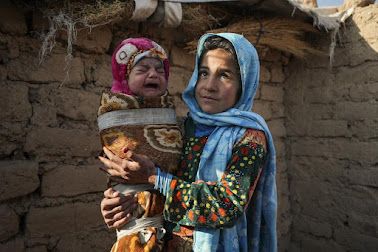
In a sprawling settlement of mud brick huts in western Afghanistan housing people displaced by drought and war, a woman is fighting to save her daughter.
Aziz Gul’s husband sold the 10-year-old girl into marriage without telling his wife, taking a down-payment so he could feed his family of five children. Without that money, he told her, they would all starve. He had to sacrifice one to save the rest.
Many of Afghanistan’s growing number of destitute people are making desperate decisions such as these as their nation spirals into a vortex of poverty.
The aid-dependent country’s economy was already teetering when the Taliban seized power in mid-August amid a chaotic withdrawal of U.S. and NATO troops. The international community froze Afghanistan’s assets abroad and halted all funding, unwilling to work with a Taliban government given its reputation for brutality during its previous rule 20 years ago.
The consequences have been devastating for a country battered by four decades of war, a punishing drought and the coronavirus pandemic. Legions of state employees, including doctors, haven’t been paid in months. Malnutrition and poverty stalk the most vulnerable, and aid groups say more than half the population faces acute food shortages.
“Day by day, the situation is deteriorating in this country, and especially children are suffering,” said Asuntha Charles, national director of the World Vision aid organization in Afghanistan, which runs a health clinic for displaced people just outside the western city of Herat.
“Today I have been heartbroken to see that the families are willing to sell their children to feed other family members,” Charles said. “So it’s the right time for the humanitarian community to stand up and stay with the people of Afghanistan.”
Arranging marriages for very young girls is a frequent practice throughout the region. The groom’s family - often distant relatives - pays money to seal the deal, and the child usually stays with her own parents until she is at least around 15 or 16. Yet with many unable to afford even basic food, some say they’d allow prospective grooms to take very young girls or are even trying to sell their sons.
But Gul, unusually in this deeply patriarchal, male-dominated society, is resisting. Married off herself at 15, she says she would kill herself if her daughter, Qandi Gul, is forcibly taken away.
Gul remembers well the moment she found out her husband had sold Qandi. For around two months, the family had been able to eat. Eventually, she asked her husband where the money came from, and he told her.
“My heart stopped beating. I wished I could have died at that time, but maybe God didn’t want me to die,” Gul said. Qandi sat close to her mother, her hazel eyes peering shyly from beneath her sky-blue headscarf. “Each time I remember that night...I die and come back to life. It was so difficult.”
She asked her husband why he did it.
“He said he wanted to sell one and save the others. ‘You all would have died this way,’ (he said.) I told him, ‘Dying was much better than what you have done.’”
Gul rallied her community, telling her brother and village elders that her husband had sold her child behind her back. They supported her, and with their help she secured a “divorce” for her child, but only on condition she repays the 100,000 afghanis (about $1,000) that her husband received.
It’s money she doesn’t have. Her husband fled, possibly fearing Gul might denounce him to the authorities. The Taliban government recently announced a ban on forcing women into marriage or using women and girls as exchange tokens to settle disputes.
The family of the prospective groom, a man of around 21 or 22, has already tried several times to claim the girl, she says. She is not sure how long she can fend them off.
“I am just so desperate. If I can’t provide money to pay these people and can’t keep my daughter by my side, I have said that I will kill myself,” Gul said. “But then I think about the other children. What will happen to them? Who will feed them?” Her eldest is 12, her youngest - her sixth - just two months.
Now alone, Gul leaves the children with her elderly mother while she goes to work in people’s homes. Her 12-year-old son works picking saffron after school. It’s barely enough to keep them fed, and the saffron season is short, only a few weeks in the fall.
“We don’t have anything,” Gul said.
In another part of the same camp, father-of-four Hamid Abdullah was also selling his young daughters into arranged marriages, desperate for money to treat his chronically ill wife, pregnant with their fifth child.
Abdullah borrowed money to pay for his wife’s treatments and can’t pay it back, he said. So three years ago, he received a down-payment for his eldest daughter Hoshran, now 7, in an arranged marriage to an 18-year-old in their native Badghis province. He’s now looking for someone to buy his second daughter, 6-year-old Nazia.
“We don’t have food to eat,” Abdullah explained, adding he also had to buy medicine for his wife, who soon would need more treatment. “She needs another surgery, I don’t have one afghani to pay for the doctor.”
The family that bought Hoshran is waiting until she is older before the full amount is settled, he explained.
But he needs money now for food and treatments, so he is trying to arrange a marriage for Nazia for about 20,000-30,000 afghani ($200-$300).
“What should we do? We have to do it, we have no other option,” said his wife, Bibi Jan. “When we made the decision, it was like someone had taken away a body part from me.”
In the neighboring province of Badghis, another displaced family is considering selling their son, 8-year-old Salahuddin.
His mother, Guldasta, said that after days with nothing to eat, she told her husband to take the boy to the bazaar and sell him to bring food for the others.
“I don’t want to sell my son, but I have to,” the 35-year-old said. “No mother can do this to her child, but when you have no other choice, you have to make a decision against your will.”
Salahuddin blinked and looked on silently. Surrounded by some of his seven brothers and sisters, his lip quivered slightly.
His father, Shakir, who is blind in one eye and has kidney problems, said the children had been crying for days from hunger. Twice, he said, he decided to take the boy to the bazaar and twice he faltered, unable to go through with it. “But now I think I have no other choice than to sell him.”
Buying of boys is believed to be less common than girls, and when it does take place, it appears to be cases of infant boys bought by families who don’t have any sons. In her despair, Guldasta thought perhaps such a family would want an 8-year-old.
The desperation of millions is clear as more and more people face hunger. By the end of the year, some 3.2 million children under 5 years old are expected to suffer from acute malnutrition, according to the U.N.
Nazia is one of them. The 4-year-old lay listlessly in her mother’s arms after visiting the World Vision health clinic.
Two years ago, Nazia was a plump toddler, her mother Fatima said. Now, her emaciated limbs are just skin covering bone. Her little heart beats visibly beneath her ribcage.
“The prices are high. Flour is expensive, cooking oil is expensive, everything is expensive,” Fatima said. “All day she is asking me to give her meat, yogurt and fruit. We don’t have anything, and we don’t have money to buy it for her.”
Charles, World Vision’s national director for Afghanistan, said humanitarian aid funds are desperately needed.
“I’m happy to see the pledges are made,” she said. But the pledges “shouldn’t stay as promises, they have to be seen as reality on the ground.”
Thursday, 18 November 2021
Patriarchy, give me my country back
I was four years old when it first happened. A middle-aged man, who ran a small departmental store in the Dhaka neighbourhood I lived in, was babysitting me while my mother went out to fetch some notes from her university. It was difficult raising a child all on her own, and my single mother was grateful that she could leave me in safe company.
I was sitting cross-legged on the floor opposite my babysitter when he pulled me close to his body and put his tongue down my mouth. At first, I was fascinated—I had seen adults kiss each other in tv shows and films. Children, at that age, are curious about the liberties that adulthood offers. But soon after, a dirty feeling came over me. My mouth froze. He attempted to force his tongue on me a few more times before I pulled away and rushed to the bathroom. I had a rabid compulsion to clean my mouth; I brushed my teeth, again and again, hoping to remove his traces so that my mother would never know, and I could pretend it never happened.
For all latest news, follow The Daily Star's Google News channel.
Two years later, a security guard at the apartment complex we shared with my aunt groped my chest and motioned that he would put his "thing" inside me. I thought I should stay quiet, because I was ashamed, but the constant touch from him and the resulting pain became so unbearable that I rushed to my mother as she was boarding a rickshaw to go to the supermarket. "He's hurting me," I told her. She looked at me in surprise. Hurting? How? Where? I eventually revealed all the details to her, and he was dismissed shortly after.
I used to be a very talkative child, but with every experience of physical violation, I grew quieter, more watchful of my words, more concerned about what I could talk about to anyone.
When I was seven, I realised that my parents had separated because my father would physically abuse my mother, the floor frequently turning bloody.
When I was eight, a law enforcement officer asked my mother to sleep with him. She refused and was sanctioned.
When I was nine, a male relative lay down beside me while I was resting and put his arms around my waist. He turned me around, and there it was, again, a foreign tongue inside my mouth, unwelcome, unwanted. I flinched and immediately left the room.
When I was eleven, construction workers next door would make untoward gestures every time I went to the veranda, and I eventually completely stopped going outside.
When I was 13, I was severely bullied about my weight and the lack of feminine curves—disparaged for not meeting societal beauty standards.
When I was 14, a teenage crush of mine spread stories about being physically intimate with me, and my classmates hurled numerous insults my way while somehow, in their eyes, he was now "cooler."
When I was 15, my friend's boyfriend locked the room behind us and attempted to pinch my private parts, but I immediately unlocked the door and left the room.
When I was 16, my male cousin confessed that his peers could not see their female counterparts as anything more than sex objects.
When I was 17, a man older than my father proposed a sexual relationship with me in exchange for expensive gifts and financial security.
When I was 18, my school's principal, upon my insistence on wearing shorts while playing sports, gawked at me and said, "What will I do if one of the security guards rapes you?"
When I was 19, I left Bangladesh, and I have not returned since.
Begum Rokeya, the prominent feminist thinker and social reformer, once dreamt of a world led by women in her famous short story "Sultana's Dream." Kazi Nazrul Islam, the national poet of Bangladesh, wrote, "I sing the song of equality; in my view, there is no disparity between man and woman." Why, then, according to Bangladesh Mahila Parishad, were there 2,711 incidents of violence against women and children, including rape, between January and October in 2020?
Why, according to a 2015 survey by the Bangladesh Bureau of Statistics (BBS) and the United Nations Population Fund (UNFPA), did more than 70 percent of married women or girls face intimate partner abuse, including physical violence? Why indeed, according to Ain o Salish Kendra (ASK), were at least 235 women murdered by their husbands or members of his family in the first nine months of 2020? How, in the country of Begum Rokeya, Kazi Nazrul Islam, Raja Ram Mohan Roy and Sufia Kamal, can rape be justified because of what a woman is wearing?
The consequences of patriarchy are a pervasive reality in Bangladesh. According to a 2018 study by Brac, 94 percent of Bangladeshi women report being sexually harassed while commuting via public transport. Poor women, including those from rural areas, face multiple forms of oppression, including lack of access to quality education and unpaid productive work. Women from religious minorities continue to be persecuted for their beliefs. As part of a community facing landlessness issues and a lack of civil rights, non-Bengali indigenous women in particular face further challenges at the intersection of indigeneity, gender, and food insecurity. Gender-variant people are not spared from these challenges either: hijra people are marginalised in social and economic spheres. In 2015, they were denied government jobs because they "failed" a genitalia-based medical examination.
Despite my personal experiences and the grim statistics on gendered oppression in Bangladesh, I have begun to speak up. I am fortunate to have had the opportunities to study around the world and grow as a person, but I still feel the wound of being a second-class citizen in my own country. I want to reclaim my home. I ask the women reading this article, what about you?
Thursday, 15 July 2021
Wednesday, 31 March 2021
Wednesday, 24 March 2021
Wednesday, 10 March 2021
Wednesday, 10 February 2021
Friday, 29 November 2019
Friday, 1 November 2019
As Kashmir’s blackout continues, they wait for word of their son
The ashes are cold in Umar Bashir Naikoo’s domed bread oven, and his family is desolate.
More than two months ago, the 14-year-old boy was seized from his village home here in the middle of the night, bundled into a police van, and driven away, according to his sister.
Since his father’s death, Umar, a newly fledged baker, had been the family breadwinner. But this fall, all his mother knew of her son’s whereabouts was that he was in jail 1,000 miles away, under a law allowing detention without charge or trial for up to two years – a law that prohibits the detention of minors.
“He used to feed the family,” said his mother, Saleema Bano, sitting with other relatives in a dim room of their home last month. “Only Allah knows how he is now.”
Now, after a habeas corpus petition established Umar’s age, the court has ordered his release – though his whereabouts are unclear, amid monthslong restrictions on communications within Kashmir and with the rest of the country. But his family’s experiences highlight the deep suspicion and frustration pent up in Kashmir today, particularly between residents and Indian police, that has dramatically deepened since summer.
A ‘closed-door’ impeachment process: Three questions.
Umar is one of an estimated 4,000 people arrested in Kashmir after the Indian government stripped the partially autonomous region of its special status in early August, provoking violent protests in the Muslim-majority area – including, his family claims, many youth held illegally under the controversial Public Safety Act (PSA).
Government officials say that more than 300 people were booked under the law, and many transferred to jails outside Kashmir, but that several of those detained under preventive custody have been released.
“The detentions are being constantly reviewed. People will continue to be released,” Jammu and Kashmir government spokesperson Rohit Kansal said at a press briefing on Oct. 12.
The government in New Delhi has defended the move to revoke the long-troubled territory’s status as a step to boost the economy, and quell decades of unrest and insurgency, stemming from many residents’ desire for independence or union with Pakistan.
Of the thousands of Kashmiris arrested, most were listed as “stone pelters and other miscreants,” according to a Reuters report. In recent years, a generation of young Kashmiris brought up amid the conflict have become increasingly active in showing their support for separatist rebels: attending protests, lobbing stones at soldiers, and attempting to protect militants. Security force tactics such as firing pellet guns, which have blinded scores of people, have further soured the mood toward Indian rule.
On the evening of Aug. 7, Umar was hard at work in the small bakery he had set up earlier this year, making piles of flatbread ahead of the Muslim festival of Eid al-Adha. He went to bed after supper, only to wake up to odd noises at 2 in the morning.
As he stumbled out of his bedroom he found soldiers and policemen ordering all men in the house to go outside, while his sisters and mother were huddled into a living room, according to his sister Gousia.
“What is your name?” a soldier asked Umar. As soon as he gave it he was whisked away, while the house rang with cries and wails.
Relatives said he was taken for no reason, but the fact that the police were looking for him suggests that they suspected Umar had taken part in protest rallies and perhaps thrown stones at Indian soldiers.
It has been more than ten weeks since his family last saw Umar, in the central jail in Kashmir’s capital, Srinagar, where dozens of families come every day in search of their arrested relatives.
“One of his teeth was broken when we met him,” recalled Gousia. “We took some clothes for him … but the officials said black clothes were not allowed” because of the color’s association with protests. “Next day when we went to see him we were told he’d been shifted to Varanasi jail” in Uttar Pradesh, 1,000 miles south, subject to a PSA detention order.
No member of his family could afford to visit. But they filed a habeas corpus petition in a Srinagar court, supported by a certificate from Umar’s former school bearing his birth date. The district magistrate, who had signed the PSA order, questioned the validity of the certificate, but a court-ordered inquiry confirmed his age. On Oct. 15, the government announced it would drop charges against Umar, and he will be released.
“The inquiry report proved that he was a minor and he can’t be jailed under the PSA [Public Safety Act],” says Mir Shafqat Hussain, who represented the teen in court. “Now, he has to be brought back from the jail and the family would have to receive him.” But even he does not know whether Umar has indeed been released, or where he is.
Link
Monday, 21 October 2019
In Iraq, religious ‘pleasure marriages’ are a front for child prostitution
The investigation took me to Karbala, Shia Islam’s holiest site. An important part of our investigation was to establish the role of the holy city’s religious authorities in all this – particularly whether they condoned the practice of pleasure marriages. At the main marriage office, I spoke to Sheikh Emad Alassady, who insisted the practice was illegal.
But around the corner from the office, we found another cleric who was willing to officiate a pleasure marriage to a child, including giving explicit instructions on how to sexually abuse children without getting caught.
This cleric was clearly not the only one taking part in such abuses. Another of the women I spoke to, “Reem”, accused prominent clerics of being involved in pimping and pleasure marriages. After Reem’s husband was killed by an Isis bomb in 2016, she and her two children became homeless.
Reem said that when she approached a well-known cleric for alms, he had sex with her and pimped her out to his friends. Reem doesn’t name the cleric, but describes him as powerful and well-known in her community.
“He proposed a pleasure marriage with me. I had to do it to survive,” she said. They would have sex once or twice a week in his office. Then he began bringing his friends, including one who, Reem says, was “famous in the region. He forced me to go into a room with this friend.”
Reem then found out the cleric was charging his associates three or four hundred dollars to have sex with her, while she was paid just pocket money. “They were like animals,” she told me. “They have sex with a woman then throw her away.”
But how are clerics able to get away with breaking the law so blatantly? The strength of the Shia religious establishment, backed by the intimidatory weight of armed Shia militias, appears to have given Shia clerics a sense of total impunity. Our investigation has found many of the clerics enjoy powerful political connections. One of them, Karbala-based Sayyed Salawi, boasted to our reporter that he was attached to a Shia militia, a claim which is given credence by photographic evidence we found on social media.
The BBC later approached the clerics for their response. Sayyed Raad denied he performed mutaa marriages. The others did not respond. Sayyed Raad had said he was a follower of Grand Ayatollah Ali Sistani, Iraq’s most influential Shia cleric.
The BBC approached Ayatollah Sistani’s office in the holy city of Najaf with the reporter’s evidence, and asked him to clarify his stance on mutaa marriages.
“If these practices are happening in the way you are saying then we condemn them unreservedly,” his office said. “Temporary marriage is not allowed as a tool to sell sex in a way that belittles the dignity and humanity of women.
“A guardian of a girl should not permit her marriage without her consent… and she is not supposed to marry if it’s against the law, which could bring troubles to her.”
Like some other Shia leaders in Iraq, the 89-year-old Ayatollah Sistani has previously – in a book published 25 years ago titled The Path of the Righteous – written that if a child under nine were promised in marriage or temporary marriage, sexual touching was religiously permitted.
The ayatollah’s office told the BBC times had changed and it had been erased from his current books.
This investigation showed how the hardships of post-conflict Iraq, and the rise of the Shia religious conservative establishment, have turned the clock back on women’s rights. Secular laws designed to protect women and children have been part of the Iraqi legal system for decades, but they have been rendered meaningless in the face of continuous flouting by powerful men backed by the country’s religious and political establishment. Meanwhile, a whole generation of young girls and women are paying a devastating price. As Reem put it, describing the clerics who abused her, “They eat the flesh, then throw away the bones.”
Link
Tuesday, 24 September 2019
Pakistan: Kasur child rapes: We are all responsible!
Kasur—Bulley Shah’s once-famous town, is now the country’s notorious melting pot of frequent incidents of child sexual abuse-cum-murders due to the criminal negligence of the Punjab government, police and local community, in-depth interviews of professionals conducted by Pakistan Today revealed.
The area is in the spotlight for the third time following the rapes and murders of three minor boys whose bodies were discovered on Sept 17. One of the bodies was identified as eight-year-old Faizan while the remains of the other two are believed to be of Ali Hussnain and Suleman Akram.
Police sources said that four children aged between eight and 12 years had been missing since June.
According to the details, Faizan had gone missing on Monday, six-year-old Muhammad Imran went missing on June 3, whereas nine-year-old Ali Hussnain and eight-year-old Suleman Akram went missing on August 8 and August 17, respectively.
Sahil, a local NGO working for child rights, says that over 1,304 children have been sexually assaulted in the entire country within the first six months of the current year with Punjab province taking the top spot with 652 children sexually abused in various districts.
It may be mentioned here that Arif Nawaz Khan, the incumbent Punjab inspector general of police (IGP), was Addl IG Operations when the largest child abuse scandal involving 280 victims took place in Kasur district in 2015.
Talking to Pakistan Today, Punjab Additional IGP Operations Inam Ghani said that a collective effort was needed to ensure the prevention of abduction, sexual abuse and murder of children as it is not the sole responsibility of the police department.
When asked why Kasur’s pedophilia problem had grown over time instead of being curbed, Ghani replied that sexual exploitation of children at this rate was a worldwide phenomenon whereas Kasur had simply become a household name because the reported incidents are seen as a continuity of the 2015 incidents and particularly the Zainab rape case.
“Kasur comes in the limelight owing to previous notoriety otherwise even developed countries face this problem,” Ghani insisted.
The senior police officer was of the opinion that the problem exists in every district of the province at the same scale and that Kasur was simply under the spotlight because of public and social media hype.
However, the police officer failed to answer why the district reported the highest number of rape and murder incidents as compared to the rest of the country.
“I don’t have any data regarding this exactly but the problem is everywhere. The Kasur incidents are nothing more than hype,” said Ghani, who has also been appointed as the focal person of the police department.
‘POLICE HAS NO DNA RECORD’:
To a question on whether the police had any DNA record of previously held suspects in connection with the Zainab rape case and if they would match the recently collected evidence with previous data, Ghani revealed that the law enforcement department was devoid of such a facility.
“Of course, the samples would be matched but the police does not have its own DNA bank. Although one should be established, and in fact, NADRA can do it by managing the data of citizens and mentioning it on ID cards,” he said, adding that the other way DNA could be matched with a criminal record is with data available online.
When asked about the role of police and how child sexual abuse could be prevented and restrained in Kasur as well as other areas, Ghani stated that the solution lay within combined effort by the government as well as civil society. “Parents, civil society workers, teachers; everybody needs to take some responsibility,” he added.
Dr Tahira Rubab, a consultant psychiatrist, said the recent incidents of child abuse in Kasur district are evidence that everyone, including the government, civil society and parents do not take this issue seriously.
“They heard Zainab’s killer was hanged in jail and were pacified. It should have been done publically. It would have sent the psychopaths and pedophiles a message and remained in everyone’s mind,” Dr Tahira said.
She alleged that Kasur had turned into a go-to pornography hub after videos of children being sexually exploited were recovered from the area time and again.
“I fear that there are people who are doing it with a business point of view now. The place is a full-fledged pornography centre,” she added while recalling the couple that was arrested over charges of sexually abusing 137 children in Rawalpindi a few months ago.
“They sexually abused girls and recorded the humiliating videos. The question is why? The answer is: for the international black market,” Dr Tahira further added.
However, the psychiatrist too could not point towards the reason why and how Kasur has become hell for children and heaven for rapists and murderers.
“Most psychopaths and pedophiles are people who were sexually abused or involved in such heinous acts in their own childhood,” she said, suggesting that the origins of the problem may go back a long time ago.
Iftikhar Mubarak, a civil society member, said that he personally attended meetings held by the government and also took part in a number of sessions but it was like putting energy into a black hole.
“The government did not implement any of the policies and plans it had made after the injustice that Zainab Ansari suffered,” he said.
“Child policy is lacking not only in Punjab but also in other provinces but it is also true that prevention of child sexual abuse is the whole society’s responsibility. It is a fact that the police failed; however, everybody, especially parents and teachers should work on it together,” the concerned citizen said.
“This subject must be added to school curriculum to make children aware of sexual abuse and molestation,” he concluded.
LINK
Friday, 31 May 2019
Farishta: Outrage over Pakistan child murder
The family of a 10-year-old Pakistani girl who was abducted and murdered have said they were ignored by police when they tried to report her missing.
They say police told them the child might have eloped, and they were made to carry out errands for officers
Farishta vanished in Islamabad on 15 May and a body believed to be hers was found on 20 May.
Police are investigating if she was raped and tortured, and protests are being held to demand justice.
The individual police officers involved deny wrongdoing.
Hundreds protested in central Islamabad on Tuesday calling for justice.
The case has been compared to the rape and murder of six-year-old Zainab Ansari in January 2018 - which sparked outrage and protests across the country. Calls for action are being made on social media, under the hashtag #JusticeFor Farishta.
What do the family say?
"The police didn't help us at all," Farishta's father Ghulam Nabi told the BBC at Tuesday's protest, which blocked a major intersection. "They would ask me to clean their office, to move their furniture, and to go get fruit for their Iftar [fast-breaking] dinner from the market.
"I was so distressed during those [four] days that I couldn't tell night from day."
Farishta's father says police did not take the case seriously
On Wednesday, a case was formally registered against several police officials, alleging negligence. The chief of Shahzad Town police station, Muhammad Abbas Rana, has been suspended.
But he defended his and his officers' conduct, saying they had pursued the case and interviewed the family and neighbours on 16 May. He said the family were responsible for the delays in registering the case and that they did not follow it up properly. He denied they had been made to clean the police station.
Separately three people have been arrested in connection with Farishta's disappearance, Dawn newspaper reports.
A formal investigation was only launched on Sunday after a politician raised the case with the inspector general of Islamabad police.
The mutilated body of Farishta was found the following evening, triggering complaints that her life could have been saved had the police acted promptly.
Mr Nabi said that Mr Abbas Rana had initially refused to register a case - known as an FIR - telling him that his daughter might have "eloped with someone of her own free will". Mr Rana denied this.
Farishta went missing on Wednesday 15 May after she went out to play in the eastern Islamabad neighbourhood where her family lives. She did not return as expected when the evening call for prayer began at the local mosque - signalling the breaking of the daily fast.
At that time, families gather for a meal known as Iftar - and Farishta's absence triggered a panic.
After scouring the neighbourhood and checking with friends, her family went to the police to file a missing person report.
On Monday evening, their worst fears were realised when Farishta's body was found. After being told that the doctor meant to conduct the autopsy was on leave - and so it would be delayed - the family decided to stage a sit-in at the hospital.
They were joined by leaders and activists from the Pashtun Protection Movement (PTM), a group which advocates for the rights of Pakistan's minority Pashtun community, to which Farishta's family belongs.
They come from Mohmand, in north-west Pakistan, and are among tens of thousands of families displaced by Pakistan's war on terror in that region.
"The dead body lying in this coffin is not just mine but everybody's daughter," said Mr Nabi.
Link
Friday, 15 February 2019
Lawmaker who changed Jordan’s rape law takes on child marriage
A Jordanian lawmaker praised for her role in abolishing a law that let rapists off the hook if they married their victims has set tackling child marriage as her next challenge, reported Reuters.
Nearly 10,500 girls in Jordan were married before reaching their 18th birthdays in 2017, according to the most up to date figures from the UN children’s agency UNICEF.
Girls in Jordan can be married from age 15 with a judge’s approval, even though the legal marriageable age is 18. Lawmaker Wafa Bani Mustafa said that even raising it to 16 would reduce the numbers.
“This is not an exception. This is something that is happening every day, and too many young girls are getting married,” the 39-year-old told the Thomson Reuters Foundation during a recent visit to Beirut, adding:
I am very optimistic child marriage will decrease if we change the age to 16. It doesn’t matter if they are Jordanian or Syrian – we need to protect all girls.
A significant proportion are believed to be Syrian girls after an influx of refugees from Jordan’s war-ravaged neighbour, with families marrying off daughters young to give them financial security and protection from sexual violence.
Hundreds of thousands of Syrians have fled their homeland since the war started in 2011 and there are now more than 670,000 registered Syrian refugees in Jordan according to the United Nations.
“If you are not old enough to vote or drive a car – how can you open a house and build a family,” said Bani Mustafa, one of only 20 women in Jordan’s 130-seat House of Representatives.
“We need to first change the culture by raising the age of exceptions to 16 – then slowly maybe this will be the first step to making it to 18 with no exceptions.”
In 2017 Jordan’s parliament voted to abolish a law that allowed rapists to escape punishment by marrying their victims after a years-long campaign led by Bani Mustafa.
Now she is seeking a change to a section of the law governing inheritance, arguing that it disadvantages women.
As things stand, the children of a father who dies before his own parents will inherit the assets he would have received had he survived them, while the children of a mother who dies before her parents will not.
“If we push changing women’s rights through law it will change the culture of the society to accept women’s rights. The law helps change our society’s mentality,” she said.
Globally, 12 million girls marry before age 18 every year, according to Girls Not Brides, a coalition working to end child marriage.
In Jordan, Bani Mustafa said there were legal provisions to protect child brides – including a maximum 15-year age gap and the requirement that they be allowed to continue their education – but they were not being adhered to.
“I will keep fighting for Jordanian women – nothing will slow me down. We deserve better lives and equal rights to men. It is not easy, but we have to keep fighting,” she said.
“I think women’s rights are slowly changing in Jordan.”
Link


