Showing posts with label Muslim Identity. Show all posts
Showing posts with label Muslim Identity. Show all posts
Friday, 5 July 2019


Monday, 4 February 2019
Thursday, 2 November 2017
Relax, Malala's jeans aren't an assault on your national identity

A new photo of Malala Yousafzai recently surfaced on the internet, in which the 20-year-old education rights activist can be seen wearing jeans and heeled boots. This caused a furor among many Pakistanis, and resulted in personal attacks and criticism online.
This is not the first time Malala, who recently started studying at Oxford University, has been at the receiving end of criticism from people in her home country for supposedly defying cultural norms.
The fact that she is now being lambasted for wearing a Western dress and being unaccompanied by her father should come as no surprise.
Muslim women in Pakistan are perceived by many to be the guardians of culture and honour, without actually being given a choice in the matter.
Their bodies are continuously associated with controversy and shame, as a result of which successful women like Malala are made to carry the weight of the reputation of not only religious values, but also of Pakistan, on their shoulders.
The concept of culture in Pakistan is continuously conflated with a monolithic perception of religion and nation, and a Pakistani woman’s free will to decide what to wear is often demeaned as a result.
The obsession of many Pakistanis to police women and the way they dress stems from their perception of women’s bodies as ‘private’. This is why violence against women is seen as a matter worth concealing in Pakistan.
Women themselves are not even supposed to leave the confines of their home. Overreaching these bounds can always lead to harmful, but justified, repercussions in the eyes of many Pakistanis.
Malala, however, has consistently been seeing as defying such cultural norms, while also challenging the premise of a nationhood that relies on a woman’s honour, thereby breaking out of the notions of chaadar and chaar dewari that so many men in Pakistan hold onto for dear life.
Zia ul-Haq’s policies that served to subjugate Pakistani women have left a lasting impact much to the detriment of the rights of women in the country. This has led to everyday institutional injustices meted out against women, fueled by not only by religious but also jingoistic identity clashes.
That is why even the violence afflicted on Malala five years ago is ignored, as violence against women is seen as something that resides in the private domain of our lives, at the expense of our lives and sanity.
Malala has risen above all this, which gives the men of Pakistan a lot of cause for insecurity. Hence, be it unsolicited advice, widespread criticism, moral and body policing, or even assault, women like Malala are always ‘asking for it’ according to such men.
This goes to show how the Pakistani state has actively encouraged the regulation and surveillance of women’s bodies, be it through the laws imposed through the Hudood Ordinance that have still not been rectified fully to this day, or the dress codes that are now being imposed in universities across Pakistan.
Furthermore, shalwar kameez has grown to become a symbol of a religious form of nationalism. Somehow, it has become a visible marker of a Pakistani Muslim’s identity, a choice emblematic of traditions and honour.
Views echoing such sentiments fail to take into account the malleable nature of culture, and end up promoting cultural homogeneity over diversity. Shalwar kameez was never a quintessentially Muslim dress, but rather its veneration by Pakistani men represents state control over women’s bodies at the expense of their agency.
In fact, the criticism of jeans is not against a kind of fabric; her critics think that her individualistic choices come at the expense of her responsibility as the custodian of the country’s honour.
Thereby, she is walking over the fragile reputation of her countrymen, which rests on Pakistani women maintaining an air of conservatism, as per societal norms, while representing the country abroad.
It is very clear that such narratives of nationhood exist at the expense of the bodily autonomy and mobility of Pakistani women, thereby leading to the politicisation of female bodies.
Pakistanis are prone to using women as easy political targets to vent cultural anxiety, be it towards Mahira Khan smoking or Malala wearing jeans outside of Pakistan. We thrive on not the display, but the decimation of a woman, for the sake of a spectacle.
In conclusion, the autonomy of Pakistani women is perceived to be a threat to the religious and national integrity of Pakistanis for many reasons. This is why Pakistani women’s bodies happen to be where patriarchy is at control the most: at home.
This also holds true in light of the visceral responses often levelled at Malala and her personal choices. Her independence, according to many Pakistanis, comes at the expense of the country’s reputation that rests on many things, including the need to conceal and exercise control over female bodies.
Such reactions speak of the larger cultural anxieties among Pakistanis that lead to violence against women all over the country. Nevertheless, Malala continues to stand tall, above and beyond the country’s patriarchal mindset, wherever she goes.
Monday, 28 August 2017
I Embrace Being Muslim, Mexican & Pakistani; I’m Better for It

I grew up waking up at 7:00 A.M. on Saturdays to the sounds of Spanish music as my mom opened my bedroom door to find my sister and I hiding under the covers in our twin beds. She would yell, “Vamos a limpiar la casa, vamos!” And boy, did we clean.
My mom was born and raised in Leon, Guanajuato, Mexico; one of the most beautiful places in the world. With the sounds of Vicente Fernandez, Alejandro Sanz, and Alejandro Fernandez in our house, it reminded me of the early days (when I was like, 5) in Mexico. It made the cleaning a little more tolerable.
Every afternoon we would get ready and head to my tio’s house where at least 60 family members would gather for pool parties. Tacos and ceviche were obvious to the eye, but so were Coronas and Pacificios in the ice chests near the bar.
We also had a Qur’an teacher come twice a week to teach us how to read, pray, etc. I began reading the Qur’an at the age of 3 or 4 and finished it by the age of 5. I still remember the look on my father’s face when I recited Surah Yasin to the entire mosque. He smiled so bright that day.
***
I grew up with a lot of people who were also mixed; however, a lot of people were judgmental toward my family because my mother was not “raised Muslim.”
My parents always placed a huge emphasis on religion and I always wondered why. I wondered why people looked at me different because I was not fluent in Urdu (and yes, I’m talking about the “aunties” whose daughters were fluent in Urdu.)
I could tell Rasmalay from Barfi and understand my dad when he spoke. I was even fluent in Urdu and Punjabi when I was a kid and would run outside when the airplanes would fly over our house and yell “Ja’has” to my parents in awe. Later in life, I dropped the Urdu and picked up the Spanish.
***
We would not get invited to many parties and as I got older and I understood why. It was because my parents were one of the first mixed-ethnic couples in our area where the wife actually converted.
Though my mother converted to Islam, she never compromised her culture. She still cooked Mexican food, listened to Spanish music, and we would go to church sometimes with our Mexican side of the family. My mom wanted us to understand that although we were Muslim, we had to respect all faiths.
Thursday, 8 June 2017
Moral of Warsi: Tories can't cope with Muslims

Any Muslim politician seeking to rise up the ranks of the Conservative Party has a choice. He or she can emulate Sajid Javid, one of five sons of a Pakistani bus driver who came to Britain in 1961 with one pound in his pocket.
Though brought up a Muslim, Sajid Javid never campaigned on Muslim issues, or even noticed them. He is now a cabinet minister.
Or he or she could emulate Sayeeda Warsi, a taxi driver's daughter who resigned from the David Cameron government over British policy on the Gaza invasion in 2014.
Baroness Warsi has always celebrated her Muslim identity and Pakistani heritage. Her new book, The Enemy Within, shows that she has had to pay a price.
Throughout her political career, which is now finished, she has been subject to abuse on a scale few modern politicians have to cope with.
The Tory Party took her in but refused to fully accept her. The influential ConservativeHome website published an article by Fox News commentator Niles Gardner which argued that her appointment sent "the wrong signal at a time when Britain is fighting a global war against Islamic terrorism".
Senior commentators, like Charles Moore and Tim Montgomerie, sneered at Warsi. She was never trusted. She tells how, when she was appointed Foreign Office minister, the Conservative Central Office tried to hire her special adviser to spy on her, reporting back on who she met and what she said.
Her character, actions and beliefs were repeatedly miscontructed, as I demonstrated last week when I exposed how reviewers such as Col Richard Kemp and Douglas Murray distorted and misrepresented what she had written in order to attack her.
Warsi eventually resigned at the height of the Israeli attack on Gaza in 2014. It was her job to defend British government policy in the House of Lords, and she found she could not support a government that refused to condemn Israeli military action. She has now left politics.
She says she might not have resigned if William Hague was still foreign secretary, and that she found Philip Hammond, foreign secretary at the time of Warsi's resignation (and whom she refers to as a "perfectly competent accountant") unsympathetic. Hers was the most distinguished resignation since Robin Cook over Iraq in 2003.
I think it is a terrible loss because Warsi devoted her 10-year career in frontline politics to arguing that you could be Conservative AND Muslim.
Her powerful Conservative opponents maintained that you could only be Conservative OR Muslim. They won. Hence the infamous 2016 London election campaign when Tory candidate Zac Goldsmith targeted Labour’s Sadiq Khan on the basis that the latter was Muslim, a strategy heavily criticised by Warsi.
Wednesday, 3 May 2017
Omar ibn Said: the Islamic scholar who became a slave

Omar ibn Said was the son of a wealthy father and was born in 1770 in the region of Futa Toro. He would take on Arabic and other Islamic studies and eventually become a teacher of Qur’an in his village. In 1807, he was on a military campaign with a rival tribe and was enslaved. Said, was sent to Charleston, South Carolina; and owned by “Johnson” who, in the words of Said, was “weak, small, and evil”. Said, escaped from Johnson and found himself in the woods of North Carolina where he came upon a house. Omar decided to enter to pray, it can be said Said, had no idea where he was on the social stratification in the United States.
Said would have been familiar with the slave system in Islamic West Africa, which is described by Sylviane Diouf in her book Servants of Allah: African Muslim enslaved in the Americas. According to Diouf, slaves in many African societies lived with the families or in a near by village. This form of slavery resembled European serfdom more so than American chattel slavery. As far as slavery in an Islamic context, Said knew he was a prisoner of war, and never seemed to question his enslavement but only his treatment as a slave.
Returning to Omar ibn Said’s life, after he entered the house he was later arrested and placed in a jail in Fayetteville, North Carolina. In the cell there was a pile of coal. With this coal he would write Qur’an verses on the jailhouse walls. It should be noted that West Africa had no concept of jails, this would be another foreign concept to Omar ibn Said. Said became a local celebrity of sorts and caught the attention of General James Owen of North Carolina. It was under the ownership of James Owen that Said openly converted to Christianity. He was even gifted an Arabic Bible by Francis Scott Key (Key and Said had exchanged letters in 1819. In one of these letters Said wrote Key, Surah Nasr(The Victory). The conversion of Said has been questioned by many historians and scholars such as Ala Alryyes but, this shall be covered later.
Wednesday, 28 December 2016
Black, British & Muslim; We’re not just a “Complication”
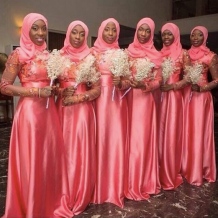
The last UK census undertaken in 2011 showed that Black Muslims made up 10.1% of the British Muslim population, not counting Muslims of mixed Black heritage. The British Black Muslim reality is whispered in hushed tones: it is the Jamaican converts frequenting inner-city mosques, the Nigerian doctors administering your prescriptions, Somali working mothers who nurse the aged in recession-hit care homes. We navigate a precipice few would want to tiptoe in 21st century Britain: the two-pronged realities of unbridled Islamophobia and established racism.
Black British Muslims possess our own distinctive heritage spanning centuries of blood, nobility and disenfranchisement. When Elizabeth I wrote of the need to control the number of ‘blackmoores’ brought into her realm, she was speaking of the many Black interpreters, musicians, servants and sailors who inhabited major English cities in the 1600s. This was a multi-ethnic and certainly multi-faith populace, hailing from what we now know as Ghana, Guinea and North Africa’s much-debated Moors who entertained King James IV’s Scottish court. Somali seamen could even be found serving in the Royal Navy or clustered in 19th century Cardiff and Liverpool. I was born in London to parents who had previously sought education and employment in Saudi Arabia, Lebanon, Egypt and India.
Full article Monday, 4 May 2015
Meet Maryam, India’s Malala

Recently, a 12-year-old Indian Muslim girl named Maryam won a contest by answering all the questions asked in the Bhagwad Gita. This is the first time in India’s history that a Muslim girl has broken such a record.
The news of the young Muslim girl went viral on social networking portals and sparked numerous debates on news channel. While some highlighted the politics behind it, others praised the young girl’s efforts. Maryam has set a fine example for people who divide masses using religious bigotry.
India boasts of diversity, given the existence of various religions, but within its internal system, people are bifurcated on the basis of religion. Maryam has managed to prove a point to individuals who divide people on the basis of caste, creed and colour – that racism can never be as strong as collectivism.
She has set a great example by showing how tolerance can be practised, even at such a young age. Her actions are a response to Indian political parties who are running campaigns on the lines of ‘Muslim-free India’. Furthermore, Maryam proved that Muslims can grasp knowledge about any religion without adapting to it and that a child has the basic knowledge to differentiate between right and wrong.
Since Narendra Modi and his Bharatiya Janata Party (BJP) has come to power, I have not come across an ‘acha din’ (good day) as yet – something which the honourable PM Modi spoke about and promised his people during his election campaign. My hopes were further trampled upon when the union minister, Sadhvi Niranjan Jyoti, and BJP minister, Giriraj Singh, passed offensive and abusive comments towards Muslims. Such immature remarks by these ministers highlight Maryam’s maturity.
In India, we have witnessed how religious bigotry is being used by politicians to divide vote banks in their favour. They use religious slogans to differentiate Hindus from followers of other religions. The Gujrat genocide and the Kashmir genocide are examples of how the politicians have massacred common people for the sake of their vote banks.
If we dig into the history of it, we will find thousands of people slaughtered by these political parties for their own gains and their ministerial chairs.
In the past, attacks on Muslims were carried out by Vishva Hindu Parisah (VHP) and Rashtriya Swayamsevak Sangh (RSS). From campaigns such as ‘Love jihad’ and ‘Ghar wapsi muhim’ to forced conversions, each attack is meant to malign the image of Muslims in India and is done in order to create a split between Muslims and Hindus.
In India, Muslims have tirelessly contributed towards every sector of its formation. For instance, the early contributions made towards society, by Dr Allama Iqbal and Dr Avul Pakir Jainulabdeen Kalam, have helped India develop a lot. From science to technology to Bollywood, each segment has Indian Muslims contributing to it. The contributions of Muslims have proven that India belongs to Muslims as much as it belongs to Hindus.
For some, Maryam is India’s Malala Yousafzai. Malala fought against the Taliban while this young Indian girl fought against religious bigotry. She spread the message of brotherhood and gave reason to thousands of Indians to unite under the banner of religious harmony and shed religious differences aside, which have been plaguing us since time immemorial.
Maryam has given India a new reason to build itself. We should not wait on the government to take steps or make hollow promises. Rather, we should come forward like Maryam and build a new nation which will allow Muslims to live without fear in a country they call their own.
Now is the time to eliminate discrimination based on religion, caste, creed and colour.
Tuesday, 31 March 2015
Latinas converting to Islam for identity and structure
Latinos are one of the fastest growing groups in the Muslim religion. According to the Pew Research Center, about 6 percent of American Muslims are Latino. And a little more than half of new converts are female.
VOA’s Carolyn Presutti travelled to Miami, Florida – where two out of every three residents is Hispanic – to learn more.
Tuesday, 6 January 2015
Muslims of America

"I
converted to Islam sixteen years ago. I am married and have two boys.
My wife is originally from Yemen. I was born in Germany and raised in
the USA since I
was 5. Islam is a religion for all times, for all peoples and all
places. Unfortunately, this is not reality in most Muslim communities
where they are divided up along race, nationality, ethnicity and sects
instead. In the US when a person says their shahada in the masjid there
are loud shouts of “takbir” but in most cases that is the most attention
that a convert will get. What most born Muslims do not understand is
that people who convert often lose their families, friends and other
important things in life. It is a conscious choice they make to embrace
Islam.
The Muslim community should rally around these new converts and
make them feel part of a new, wider family circle. Instead, the
community remains stuck in their cultural ways and if you do not fit
neatly into one of these social constructs you are left out in the cold.
The next time you are at your Jummah prayer notice how after Salat is
over everyone seems to coalesce according to which ever particular group
they are a part of. Palestinians here, Egyptians there, or if the
masjid is progressive you might see Arabs hanging out together. You’ll
see the Pakistanis hanging out with other Pakistanis, Bengalis with
Bengalis. If you don’t belong to any group you don’t really know where
to go and most often people are more than happy to let you stand alone.
This is one reason why many converts will try to adopt a certain culture
in regards to dress, speech or otherwise in an attempt to fit in.
During the holidays, many converts have lost their families, so spend
them alone. During Ramadan, it is rare for a convert to be included in
an iftar since these tend to be family events, or amongst circles of
friends, again broken down according to ethnicity. When it comes time to
marriage, the “takbirs” from your Shahada are long gone. Most of these
yelling “Allahu Akbar” because you became a Muslim would not consider
you for your daughter. The issue is especially bad for African American
converts because there is a serious race issue in the Muslim community. A
large portion of people who convert either leave the religion
altogether or make a choice to not participate in the Muslim community
because of these issues.
As I stated before, Islam is a religion for all
people, places and times. The Prophet himself (saw) took wives from
various countries and backgrounds. One of the biggest draw for many to
Islam is the raceless nature of the religion, but the community has
failed in this respect. We should all strive to follow our religion and
not our culture, not our race, ethnicity or anything else. Let’s strive
to remember what the Prophet said on this issue in his last Khutba, and
what Allah (swt) said in The Quran: “O mankind, indeed We have created
you from male and female and made you peoples and tribes that you may
know one another. Indeed, the most noble of you in the sight of Allah is
the most righteous of you. Indeed, Allah is Knowing and Acquainted.”
49:13.
- Marc Springer #NorthernVirginia
- Marc Springer #NorthernVirginia
Taken from FB page 'Muslims of America'.
Wednesday, 10 December 2014
Thursday, 19 January 2012
'Imams out of touch with young Muslims'

Young Muslim men are turning away from religion in their droves because of the old-fashion attitudes in Britain’s mosques, according to the Prison Service’s Muslim advisor.
Ahtsham Ali said it was one of the reasons why a growing number of Muslims are turning to crime and finding themselves in prison.
In an interview with The Times, he also blamed family breakdown, problems resulting from arranged marriages, drugs and the absence of male role models.
The cleric was highly critical of UK mosques for failing to understand young Muslims raised in Britain and said a main factor was that most import foreign imams who cannot speak English and focus only on religious rituals.
Mr Ali, who has been the Prison Service’s adviser for eight-and-a-half-years, said: “Most will get imams imported from other countries who can’t speak English. More importantly they can’t relate to second and third-generation youngsters growing up here.
”It is a tragedy. I have seen youngsters, the next generation, just totally switch off from it. This is dangerous. It allows others to take advantage, to take up the vacuum.”
In March 2010, 10,358 of the 85,184 people in prison were Muslim, while there has been a steep rise in the number of Muslims behind bars over the past two decades, according to the National Offender Management Service.
Discussing other reasons why he believed the numbers are on the rise, the cleric added: “There is a lot of family breakdown happening now. The divorce rate is very high. I think there is a struggle for those who have been born and brought up here and their acceptance of arranged marriage.”
Mr Ali urged mosques to become more accessible to the young, for faith leaders to make religion fun and put more emphasis on teaching religious ethics.
source
Wednesday, 18 January 2012
Saturday, 10 December 2011
'Joanna' the Muslim character on the webseries: 'Bloomers'
'Joanna' is an honest and complex portrayal of a young Muslim-American girl. Joanna struggles with whether or not to wear a hijab & whether or not to date outside her religion -- all the while dealing with the struggles of every young girl trying to make it in a big city.Through her triumphs and her mistakes, the creator of this webseries hopes her character will resonate with both the Muslim and non-Muslim community and do its part to fight Islamophobia.
It certainly refreshing to see more and more Muslim characters in projects like this, and to see how creative and dedicated people are in the fight against prejudice and intolerance. To watch the webseries pls go to www.BloomersTheSeries.com
Saturday, 26 November 2011
Muslims proud to be British? There's something to learn from the surprise

The finding in Demos's report A Place for Pride that 83% of Muslims said they were proud to be a British citizen, compared with the national average of 79%, has been met with surprise in some parts of the press. Clearly many British citizens have both a strong religious identity and a strong national identity. Yet it also seems clear that many people see these identities as mutually exclusive. Why is this the case?
That 83% of Muslims are proud to be British does in fact make sense. Many British Muslims come from families that have sought the opportunity and refuge offered in this country. The Demos report suggests that "People who are religious are more likely to be patriotic than are those who self-define as atheists or nonbelievers"; 88% of Anglicans and Jews agreed that they were "proud to be a British citizen". Many British Jews have a family history of refugee status and it follows that this leads to a sense of pride in their British identity. People with a strong religious identity are also often part of a strong community, and benefit from the co-operation and collective goodwill that can come with this. Patriotism, the report suggests, isn't only concerned with Queen and flag, but also with community values.
There is a lot of misinformation about the British Muslim community. In 2009 the Gallup Coexist Index found that only 36% of the British public thought that British Muslims were "loyal to this country" as opposed to 82% of the British Muslim community. The surprise at the findings of Muslim pride in Britain is rooted in a prejudice that leads people to believe that it is paradoxical for someone to hold both their religious and national identities as important. Lazy caricatures of Islam as contradicting many of the rights and values that are seen as quintessentially British – particularly freedom and democracy – only exacerbate this problem.
So, how do we tackle the prejudice that leads to this view? We must start by challenging perceptions of faith groups that rely on broad stereotypes, and instead provide people with opportunities for meaningful engagement, where they can meet and learn about each other as individuals. The report quotes a student who participated in Three Faiths Forum's Undergraduate ParliaMentors programme, which gives young people the opportunity to work with students of different faiths and non-religious beliefs on social action projects, and to be mentored by MPs and peers.
The "people I worked with, neither of them had even met a Jewish person before. I found it quite daunting but it was good and it helped me in a way to understand who I am as well as to know more about Islam and Christianity. In the end, the things we sometimes fell out about were what we were doing on the project – not God."
Finding out that the difficulties that come with working with others are often simply the usual interpersonal challenges is an important part of seeing others as individuals, not just a Muslim, Jew, atheist etc.
What we need are more opportunities for this humanising process. If we can find these while people work together on a social cause then this is all to the good. One of the clear implications of the Demos research is that public pride is linked closely with "social engagement, interpersonal trust and volunteerism". If we embrace opportunities to work with people of all faiths and beliefs then we can start to overcome the prejudice that leads to surprise that other people are also proud of Britain. We will, in turn, also give ourselves more reasons for civic pride.
source
Monday, 6 June 2011
The Sensational Story That Wasn't: Reports Of 'Stoning' Death Of Ukrainian Girl Turn Out To Be False

The headlines were nothing short of chilling.
"Aspiring 'Miss Ukraine' Killed Under Shari'a Laws In Crimea" warned Ukrainian online newspaper "Gazeta Po-Kievski."
"Radical Islamists Murder Young Girl In Crimea," screamed Russia's "Svobodnaya Pressa."
"Muslim Girl,19, Stoned To Death After Taking Part In Beauty Contest," was the headline on Britain's "Mail Online," the "Daily Mail" website.
The circumstances around the death of Kateryna Korin, a 19-year-old Ukrainian student on the Crimean peninsula, appeared to point to a made-for-tabloid tragedy: a young beauty-pageant contestant brutally killed by her admirer, a radical Islamist who chose to stone her to death under an unforgiving interpretation of Islamic law.
There was just one small problem: They weren't true.
Law-enforcement officials in Crimea have responded to the reports of Korin's killing by saying the tragedy was an "absolutely routine crime" that involved neither stoning, Shari'a law, nor any religious motive.
"The killing of the girl that took place in the Sovietskoye district of Crimea does not have any underlying reasons like religious, national, or interethnic motives," Olha Kondrashova, a spokeswoman for the Crimean division of Ukraine's Interior Ministry, told RFE/RL's Ukrainian Service. "A young man has been detained as a suspect, and an investigation is under way."
Horrendous Crime
The suspect is believed to be Bilyal Gaziev, a 16-year-old native of the same northern Crimean district and a classmate of the victim's at a local college. He has been charged with premeditated murder, according to law-enforcement officials quoted by Ukrainian media.
So how did a routine -- albeit tragic -- crime of passion turn into a frightening story about a Shari'a-sanctioned stoning?
Some believe the suspect's name and his parents' religious backgrounds have played a role.
Some activists describe it as a campaign to incite religious hatred against Crimean Tatars, a predominantly Muslim ethnic group on the Crimean peninsula. Some Ukrainian websites, including ukra.news, point the finger at Russian media allegedly seeking to manipulate religious sentiments to destabilize Crimea.
Korin reportedly disappeared on May 12 and her body was discovered a week later, dumped in a nearby forest. Police believe she was strangled and then struck in the head with a stone or other blunt object.
Eyewitnesses told reporters that Korin was last seen going into the forest with Gaziev, who, according to classmates and relatives, was Korin's friend and admirer.
Gaziev, an ethnic Russian, was adopted from an orphanage by a Crimean-Tatar family, when he was two months old. Quoting local religious leaders and neighbors, media reports describe Gaziev's parents as non-practicing Muslims who don't attend mosque.
Misinformation Chain
Initial reports about the killing appeared on May 25 but stuck to the basic facts that Korin had been slain in a forest.
But a day later, Russian-language websites in Ukraine, including Novoross.info and Rusnovosti.ru, began giving the story a more sensational -- and erroneous -- twist.
Some of those reports claimed that Gaziev was a follower of radical Wahhabi teachings and that he and two other men stoned the victim to death because she violated Shari'a law by participating in a beauty contest.
Novoross.info quoted Yuri Pershikov, leader of a local Cossack youth organization called Zvezda, as a source for the story -- although it is unclear how he would have specific knowledge about the crime. Pershikov told the publication that the young woman was killed by stoning, which he called a "medieval barbaric act."
Pershikov also claimed, according to novoross.info, that "Russian children are being murdered by Islamic extremists" in the neighborhood of a local madrasah, or religious school. He said that he wouldn't rule out the suspect had ties with students at the madrasah.
Two killings did in fact take place in the area in 2010, and the suspect was reportedly an ethnic Tatar. But police say the suspect suffered from mental illness. There was no evidence suggesting that the killings resulted from Islamic extremism.
Pershikov also criticized the fact that Gaziev, the ethnic Russian suspect, had been given up for adoption to a Muslim family, calling it a "social experiment."
The story then spread to media in Russia and was picked up by international outlets, including "The Daily Mail" -- lending it a veneer of credibility. "The Daily Mail" did not respond to requests for comment. By June 2, the original story had been replaced to suggest "a stalker" might be responsible for the killing but continued to incorrectly identify Korin as a "glamorous Muslim beauty queen."
Finally, the story then went full-circle, with Russian and Ukrainian news outlets citing "The Daily Mail" report.
Remarkably, nobody in this chain of misinformation checked the basic facts of the original report.
The 'Islam Card'?
Crimean Tatars say the whole affair has provoked anti-Muslim sentiment" and have called for an investigation.
"It looks like an informational diversion," says Rifat Chubarov, a Crimean Tatar community leader. "Taking into account that in recent days this information was spread by many mass media outlets, I demand that our Ukrainian Security Service launch an investigation to find out the source of this false information."
Locals in Crimea's Sovietskoye district are clearly troubled by the brutal crime but don't link it to religion, judging by interviews by RFE/RL's Crimea correspondent.
Until now, Islamic radicalism has not been an issue in Crimean villages. But that might just change if unscrupulous media continue to play the religious card.
source
Friday, 8 April 2011
Five myths about Muslims in America

I founded the multi-faith Cordoba Initiative to fight the misunderstandings that broaden the divide between Islam and the West — each perceived as harmful by the other. Millions of American Muslims, who see no contradiction between being American and being Muslim, are working hard to bridge this gap. It is therefore not surprising that they have become the target of attacks by those who would rather burn bridges than build them, and the subject of recent congressional hearings exploring their “radicalization.” What myths are behind the entrenched beliefs that Muslims simply do not belong in the United States and that they threaten its security?
1. American Muslims are foreigners.
Islam was in America even before there was a United States. But Muslims didn’t peaceably emigrate — slave-traders brought them here.
Historians estimate that up to 30 percent of enslaved blacks were Muslims. West African prince Abdul Rahman, freed by President John Quincy Adams in 1828 after 40 years in captivity, was only one of many African Muslims kidnapped and sold into servitude in the New World. In early America, Muslim names could be found in reports of runaway slaves as well as among rosters of soldiers in the Revolutionary War. Muslims fought to preserve American independence in the War of 1812 and for the Union in the Civil War. And more than a century later, thousands of African Americans, including Cassius Clay and Malcolm Little, converted to Islam.
Currently, there are two Muslim members of Congress and thousands of Muslims on active duty in the armed forces. Sure, some Muslim soldiers may have been born elsewhere, but if you wear the uniform of the United States and are willing to die for this country, can you be really be considered a foreigner?
2. American Muslims are ethnically, culturally and politically monolithic.
In fact, the American Muslim community is the most diverse Muslim community in the world.
U.S. Muslims believe different things and honor their faith in different ways. When it comes to politics, a 2007 Pew study found that 63 percent of Muslim Americans “lean Democratic,” 11 percent “lean Republican” and 26 percent “lean independent.” Ethnically, despite the popular misperception, the majority of Muslims in the United States (and in the world, for that matter) are not Arabs — about 88 percent check a different box on their U.S. census form. At least one-quarter, for example, are African American. Anyone who thinks otherwise need look no further than the July 30, 2007, cover of Newsweek magazine, which featured a multicultural portrait of Islam in America.
Muslim Americans are also diverse in their sectarian affiliation. And whether they are Sunni or Shiite, their attendance at religious services varies. According to the State Department publication “Muslims in America — A Statistical Portrait,” Muslim Americans range from highly conservative to moderate to secular in their religious devotion, just like members of other faith communities.
With above-average median household incomes, they are also an indispensable part of the U.S. economy. Sixty-six percent of American Muslim households earn more than $50,000 per year — more than the average U.S. household.
3. American Muslims oppress women.
According to a 2009 study by Gallup, Muslim American women are not only more educated than Muslim women in Western Europe, but are also more educated than the average American. U.S. Muslim women report incomes closer to their male counterparts than American women of any other religion. They are at the helm of many key religious and civic organizations, such as the Arab-American Family Support Center, Azizah magazine, Karamah, Turning Point, the Islamic Networks Group and the American Society for Muslim Advancement.
Of course, challenges to gender justice remain worldwide. In the World Economic Forum’s 2009 Gender Gap Index, which ranks women’s participation in society, 18 of the 25 lowest-ranking countries have Muslim majorities. However, as documented by the Women’s Islamic Initiative in Spirituality and Equality , Muslim women are leading the struggle for change through their scholarship, civic engagement, education, advocacy and activism in the United States and across the world.
4. American Muslims often become “homegrown” terrorists.
According to the Triangle Center on Terrorism and Homeland Security, more non-Muslims than Muslims were involved in terrorist plots on U.S. soil in 2010. In a country in the grip of Islamophobia — where Rep. Peter King (R-N.Y.) can convene hearings on the radicalization of American Muslims — this has been overlooked. In 2010, the Triangle Center also found, the largest single source of initial information on planned terrorist attacks by Muslims in the United States was the Muslim American community.
As an American Muslim leader who worked with FBI agents on countering extremism right after Sept. 11, 2001, I fear that identifying Islam with terrorism threatens to erode American Muslims’ civil liberties and fuels the dangerous perception that the United States is at war with Islam. Policymakers must recognize that, more often than not, the terrorists the world should fear are motived by political and socioeconomic — not religious — concerns.
5. American Muslims want to bring sharia law to the United States.
In Islam, sharia is the divine ideal of justice and compassion, similar to the concept of natural law in the Western tradition. Though radicals exist on the fringes of Islam, as in every religion, most Muslim jurists agree on the principal objectives of sharia: the protection and promotion of life, religion, intellect, property, family and dignity. None of this includes turning the United States into a caliphate.
1. American Muslims are foreigners.
Islam was in America even before there was a United States. But Muslims didn’t peaceably emigrate — slave-traders brought them here.
Historians estimate that up to 30 percent of enslaved blacks were Muslims. West African prince Abdul Rahman, freed by President John Quincy Adams in 1828 after 40 years in captivity, was only one of many African Muslims kidnapped and sold into servitude in the New World. In early America, Muslim names could be found in reports of runaway slaves as well as among rosters of soldiers in the Revolutionary War. Muslims fought to preserve American independence in the War of 1812 and for the Union in the Civil War. And more than a century later, thousands of African Americans, including Cassius Clay and Malcolm Little, converted to Islam.
Currently, there are two Muslim members of Congress and thousands of Muslims on active duty in the armed forces. Sure, some Muslim soldiers may have been born elsewhere, but if you wear the uniform of the United States and are willing to die for this country, can you be really be considered a foreigner?
For centuries, most Islamic scholars around the world have agreed that Muslims must follow the laws of the land in which they live. This principle was established by the prophet Muhammad in A.D. 614-615, when he sent some of his followers to be protected by the Christian king of Abyssinia, where they co-existed peacefully. Not only do American Muslims have no scriptural, historical or political grounds to oppose the U.S. Constitution, but the U.S. Constitution is in line with the objectives and ideals of sharia. Muslims already practice sharia in the United States when they worship freely and follow U.S. laws.
In his 1776 publication “Thoughts on Government,” John Adams praised Muhammad as a “sober inquirer after truth.” And the Supreme Court building contains a likeness of the prophet, whose vision of justice is cited as an important precedent to the U.S. Constitution.
Feisal Abdul Rauf is the founder of the Cordoba Initiative.
source
Subscribe to:
Posts (Atom)