Showing posts with label Sufism. Show all posts

Monday, 23 September 2024

al-Hallaj: Mystic Martyr of Sufism


Explore the life and profound teachings of Husayn Ibn Mansur al-Hallaj, the 9th-century Sufi mystic known for his controversial declaration, “Ana al-Haqq” (I am the Truth) & the factors which led to his martyrdom. In this video, we delve into al-Hallaj’s spiritual journey, his poetry, role in Sufism, and the lasting impact of his philosophy on Islamic mysticism.

Friday, 5 April 2024

The Sufi Muslim Warrior Who Protected Christians


Discover the remarkable life and enduring legacy of Abd al-Qadir al-Jaza'iri. From his leadership during the Algerian resistance against French colonization to his commitment to his Islamic religious beliefs & sufi mysticism. Abd al-Qadir impact reverberates through history. Join us as we explore one of the most fascinating and inspiring figures of modern history.

Monday, 4 September 2023

What is Sufism?


Embark on an intellectual journey into the realm of Sufism. Explore the intricate history, philosophical underpinnings, and mystical practices that have shaped this fascinating tradition. Join me as we delve into the topic of Sufi mysticism, shedding light on its profound impact on Islam & its history.

Monday, 26 February 2018

She’s The Most Famous Sufi Woman In The World: Meet Rabia al-Adawiyya


According to the Sufi poet Fariduddin Attar, Rabia came from a poor family of four from Basra, Iraq. When her father died, she was auctioned as a slave for a few dirhams. Despite all, this she said:


O God, I am a stranger, without father or mother; I have been sold in bondage, and now my wrist is broken. But despite all this, I am not distressed about anything that has befallen me. I only wish you to be content, so that I might know if I have gained your satisfaction or not.


She remained completely devoted to God through prayer and complete remembrance through the difficult time of enslavement and poverty. It is said that when her master saw light around her during prayer, he could not confine her to slavery and set her free. Rabi’a withdrew herself from her previous life to go to the desert and become devoted to works of piety. Her complete affection for her religion and meditation, piety and patience is what she is remembered for today through sayings such as:


Oh God! If I worship You for fear of Hell, burn me in Hell, and if I worship You in hope of Paradise, exclude me from Paradise. But if I worship You for Your Own Sake, grudge me not Your everlasting Beauty.


Through her way of life, traditional gender roles and the status of wealth in society were being questioned. Her life as an independent, influential and intellectual woman showed that wealth and status are not acquired through financial resources, but rather through richness in spiritual value and control of the ego. One needs not to be a man or rich to therefore have a higher status in the eyes of God. Rabi’a led a life in which she had completely detached herself from all other desires but the love for God. She showed in this way that having this personal bond was something that both men and women are capable of striving for and that any man and woman can live this free path of life. It was her high-spiritedness with which she put man around her in her place, among which by rejecting many marriage proposals she received:


God can give me all you offer and even double it. It does not please me to be distracted from Him for a single moment. So farewell.

Friday, 8 December 2017

The Dangerous Myths About Sufi Muslims


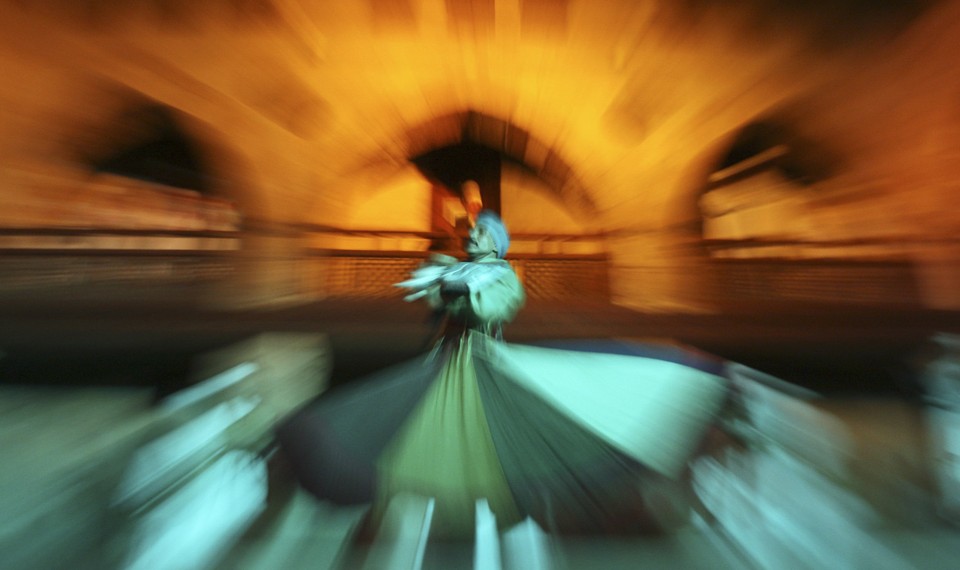
Whirling dervishes perform an Egyptian Sufi dance in Cairo.

The birth of the purist Salafi movement (which many pejoratively describe as “Wahhabism”) saw preachers inspired by the message of 18th-century figure Muhammad bin Abdul Wahhab attacking Sufism writ large in an unprecedented way. While presenting themselves as the orthodox, these types of purist Salafis were actually engaging in a heterodox approach. Many of these figures had to ignore or rewrite large chunks of Islamic history in order to present Sufism and Sufis as beyond the pale.

Ahmad bin Taymiyya, a commonly quoted authority for Salafis, for example, was reportedly a member of the Sufi order of Abdal Qadir al-Jilani. The Sufi affiliations of many medieval authorities have been airbrushed from history in several modern editions of their texts published by Salafi printing houses. Yet, there were virtually no prominent Muslim figures who cast aside Sufism in Islamic history. When followers of ibn Abdul Wahhab attempted to do so by describing Sufis as outside the faith, they were themselves decried by the overwhelming majority of Sunni Islamic scholarship as indulging in a type of heterodoxy because of their intolerance and revisionism.


While some who portray Sufis as heterodox do so with malicious intent, many fans of Sufism in the West seem to agree that Sufis are heterodox—it’s just a type of heterodoxy that they prefer to the normative mainstream of Islamic thought, which they seem to think is different from Sufism. Ironically, the well-meaning nature of this misinformed perspective echoes the fallacy that extremists promote.


And it is an extraordinary fallacy. Until relatively recently, it would have been unthinkable for students in Muslim communities to consider Sufism anything other than an integral part of a holistic Islamic education. The essentials of theology, practice, and spirituality—that is, Sufism—were deemed basic, core elements of even elementary Islamic instruction. And religious figures known for their commitment to Sufism would not have been considered a minority; they would have been by far the norm. Indeed, the very label of an Egyptian “Sufi minority” being bandied about since the mosque attack is a peculiar one: Sufism isn’t a sect—it’s integral to mainstream Sunni Islam.


Thursday, 23 October 2014

Rabi’a al-Basri


 "I want to set fire to heaven with this flame and put out the fire of hell with this water so that people will cease to worship GOD for fear of hell or for temptation of heaven. One must love GOD as GOD is Love."


Rabi’a Al-Basri, the first female Sufi saint and poet in Islam, set forth the doctrine of “Divine Love.”  She was born in the early 8th century in the port city of Basra, present day Iraq, to a very poor but well respected family. She was named Rabi’a for her position as the fourth child in the family. Even though Rabi’a did not leave written evidence of her poetry, we are able to catch a glimpse of her poetry primarily through the works of Farid Al-din Attar, a Sufi saint and poet who compiled her poetry into writing, and Margaret Smith who wrote, “Rabi’a the Mystic” in 1928.
Rabi’a’s father, a Sufi and an ascetic himself, believed that the Prophet came to him in his dreams the night Rabi’a was born. The Prophet told Rabi’a’s father that his daughter was going to be a saint. The Prophet advised Rabi’a’s father to send a letter to the Amir, reminding him of his prayers and requesting a certain amount of money. The Amir responded positively, giving Rabia’s family a large sum of money and thanking him for the letter.
However, Rabi’a’s good fortune did not last long, as her parents died early in her life. Orphaned, she was sold into slavery. There are several accounts of the next stage of her life. It is believed that at one point in her time as a slave, she spoke to God after slipping and dislocating her wrists. She then committed herself to Him, fasting during the day and carrying out her tasks. Many believe that in the middle of the night, her owner witnessed her bowing in worship while a lamp hung above her head without support. This image, symbolizing that of a Muslim saint, was enough for him to free her from slavery. It is said that she then spent several years worshipping in the desert, and performed a pilgrimage to Mecca. She chose a life of celibacy, rejecting many marriage proposals. She also lived a life of asceticism, rejecting materialism and accepting a life of poverty. She was known for performing many miracles.
She is known for being the first woman Sufi saint who devoted herself entirely to God.  She made the greatest contribution of any woman towards the development of Sufism.

Sunday, 3 July 2011

Quotes from Rumi


"Human beings are created from the dust of the earth; but do they resemble dust? Grapes come from vines; but do grapes look like vines? Does theft have the same shape as gallows? Does piety resemble eternal life? Nothing resembles its consequences. So the root of pain and torment is not evil." - Mevlana Rumi (RA)