Showing posts with label Judgemental behaviour. Show all posts

Thursday, 5 September 2024

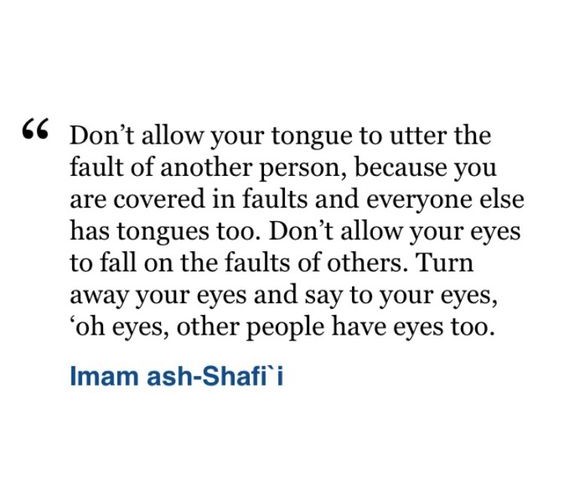
The Evils of Judging in Islam


Judging others is a common human tendency, but in Islam, it's a behavior that carries significant spiritual and ethical consequences. The Quran and the teachings of Prophet Muhammad (peace be upon him) offer profound guidance on the dangers of being judgmental and emphasize the importance of humility, empathy, and understanding.

1. The Sanctity of Intentions
One of the core principles in Islam is that actions are judged by intentions. The Prophet Muhammad (peace be upon him) said:

"Actions are judged by intentions, so each man will have what he intended." (Sahih Bukhari)

This hadith reminds us that only Allah knows the true intentions behind an individual's actions. When we judge others, we overlook the complexity of their circumstances and intentions, which are known only to Allah. By passing judgment, we risk assuming a role that belongs solely to the Divine.

2. The Dangers of Arrogance
Judging others often stems from a place of arrogance or self-righteousness. The Quran strongly warns against arrogance, equating it with a severe sin:

"And do not turn your face away from people in contempt, nor go about in the land exulting over others; indeed, Allah does not like those who are self-deluded and boastful." (Quran 31:18)

When we judge others, we position ourselves as superior, forgetting that all humans are fallible and in need of Allah's mercy. This sense of superiority can lead to spiritual decay, making us blind to our own faults and shortcomings.

3. The Harm of Gossip and Backbiting
Judging others often leads to gossip and backbiting, both of which are explicitly condemned in Islam. The Quran vividly describes the severity of these acts:

"O you who have believed, avoid much suspicion, for some suspicion is sin. And do not spy or backbite each other. Would any of you like to eat the flesh of his brother when dead? You would detest it." (Quran 49:12)

This verse highlights the destructive nature of judgmental attitudes, which can lead to divisions within the community, harm reputations, and create lasting enmity.

4. The Virtue of Covering Faults
Islam teaches that believers should strive to conceal the faults of others rather than expose them. The Prophet Muhammad (peace be upon him) said:

"Whoever conceals the faults of a Muslim, Allah will conceal his faults on the Day of Judgment." (Sahih Muslim)

This hadith underscores the importance of mercy and compassion. By refraining from judgment and instead offering support and understanding, we contribute to a more compassionate and cohesive society.

5. Focusing on Self-Improvement
Islam encourages self-reflection and personal growth over the judgment of others. The Quran advises:

"O you who have believed, let not a people ridicule [another] people; perhaps they may be better than them. Nor let women ridicule [other] women; perhaps they may be better than them." (Quran 49:11)

This verse reminds us that our focus should be on improving ourselves rather than finding faults in others. By concentrating on our own spiritual development, we fulfill the true purpose of our lives and avoid the pitfalls of judgment.

6. Trust in Allah's Justice
Ultimately, Islam teaches that the judgment of others is best left to Allah, who is the Most Just. The Quran states:

"Indeed, Allah is the Best of Judges." (Quran 95:8)

Trusting in Allah’s judgment allows us to relinquish the burden of passing judgment on others, fostering a sense of peace and humility.

Conclusion
Judging others is a practice that Islam strongly discourages. It is a behavior that not only harms the individual being judged but also corrupts the soul of the one who judges. By focusing on our own actions and intentions, avoiding arrogance, and showing compassion towards others, we can align ourselves with the teachings of Islam and build a community rooted in mercy and understanding. As Muslims, it is our duty to reflect on our own shortcomings and trust in Allah’s perfect justice, rather than assuming the role of judge over our fellow human beings.

Monday, 29 January 2024

To the haram police!


 “It may also mean that your shaming of your brother for his sin is a greater and more severe sin than his sin for what it has of self-righteousness, jingoism, and inflation of the ego, as if proclaiming its own purity from sin, and that your brother is the only one who has fallen into it. In contrast, perhaps his being crushed by his sin, humility, meekness, self-reckoning, distance from the ailment of pretension, of arrogance and egotism, and his standing before God Almighty with his head down and body humble and heart broken, is more beneficial and better for him than your self-righteousness and ostentation, and [implied] expression of favor upon God and his creation. 


How near to God is such a sinner from the mercy of God and how near to God's wrath is such a braggart. For a sin that brings humility is dearer to Him than a righteous act accompanied by boastful self-righteousness. That you spend the night sleeping and wake up lamenting is better for you than if you spend the night standing in prayer and wake up self-righteous.
For a self-righteous man's deed is not raised [to heaven]. That you laugh and acknowledge your sins is better than if you weep and boast. The groan of sinners is dearer to Him than the proud, self-satisfied hum of worshippers. Perhaps God made him fall into this sin as a cure that brings out a lethal illness, but your illness still resides within undetected.”


[Madārij al-Sālikīn, vol. 1, Ibn Qayyim al-Jawzīyyah, translated by Ovamir Anjum in his splendid translation “Ranks of the Divine Seekers A Parallel English-Arabic Text. Volume 1 (Islamic Translation) (English and Arabic Edition)
Tuesday, 20 September 2022

Stop the pointless judgement....


I am sick of seeing Muslimah hijabies cake make up on!
Well how about.....
Ya Allah bless my Muslim sisters with confidence and help them overcome their insecurities and let them truly see and believe how beautiful they are the way you created them.
Well how about.....
Ya Allah help me concentrate on my own shortcomings instead of lashing out at others and their life choices.
Well how about....
Ya Allah make me a Muslimah who is empathetic and not judgmental.
Well how about...
Ya Allah help me understand that Muslim women are under peer pressure and the pressure from society to look a certain way to show they are strong, confident and empowered. That Muslimahs face a lot of pressure to fit in.
I just gave you 4 different ways to think and our deen asks us to give 70 of these excuses. Before you judge someone please step back, pause and remember to give excuses.
❝If a friend among your friends errs, make seventy excuses for them. If your hearts are unable to do this, then know that the shortcoming is in your own selves.❞
- Hamdun al-Qassar
📘 [Imam Bayhaqi, Shu`ab al-Iman, 7.522]

from Ideal Muslimah

Tuesday, 28 December 2021

Always be kind to people


We all know atleast one person who has left Islam or left practicing Islam or have taken their hijaab off because of someone's tongue.

Someone somewhere said something so harsh, derogatory and insensitive that it flipped a believers heart.

And that is why we have such stringent ahadith about tongue and how we make use of our tongues.

Reading some of these ahadith may scare us. The punishments concerning tongue may seem way too harsh. But when you compare that with the reality of people leaving the fold of Islam, you understand Allah's wisdom and admonishment behind it's guarded usage and the importance of staying silent when angry, upset or on edge.

❄ “Talk to people a little and talk to your Almighty Lord often, for perhaps your heart will see Allah Almighty.”
- Mu’adh ibn Jabal رضي الله عنه
[al-Risālah al-Qushayrīyah 1/248]

Always be kind to people.
Always encourage.
Always speak words that are sweet.
Always show people their talents.
Always highlight the goodness a loved one has forgotten to see.
Always be someone's hype person.

📚 “Whoever restrains his tongue, Allah Almighty will cover his faults. Whoever controls his anger, Allah Almighty will protect him from His punishment. Whoever apologizes to Allah Almighty, He will accept his apology.”
- Prophet Muhammad ﷺ
[al-Ṣamt li Ibn Abī Dunyā 21]

The world we live in is filled with those who criticise, those who pass snarky comments, those who hate you for no reason. Be the light in this dark world.

📚 "Make things easy for the people, and do not make it difficult for them, and make them calm (with glad tidings) and do not repulse (them)."
- Prophet Muhammad ﷺ
[Sahih Bukhari] 

Source

Wednesday, 27 November 2019

Prostitutes, Wine & Sultan Murad


Sultan Murad, the Sultan of the Ottoman Empire would often anonymously go into the midst of the people and see their state. One evening, he felt an uneasiness in himself and the urge to go out. He called for his head of security and out they went. They came to a busy vicinity, and found a man lying on the ground. The Sultan prodded him, but he was lifeless and the people were going about their own business. No one seemed to care about the dead man lying on the ground.
The Sultan called upon the people. As they didn't recognize him, they asked him what he wanted. He said, "Why is this man lying dead on the ground and why does no one seem to care? Where is his family?”
They replied, "He is so and so, the drunkard and fornicator!"
The Sultan said, "Is he not from the Ummah of Muhammad ﷺ? Now help me carry him to his house.” The people carried the dead man with the Sultan to his house and once they reached the home, they immediately left. The Sultan and his assistant remained.
When the man's wife saw his dead body, she began weeping. She said to his dead body, "Allah have mercy on you! O friend of Allah (Wali)! I bear witness that you are from the pious ones.”
The Sultan was bewildered. He said, "How is he from the pious when the people say such and such things about him. So much so, that no one even cared he was dead?"
She replied, "I was expecting that. My husband would go to the tavern every night and buy as much wine as he could. He would then bring it home and pour it all down the drain. He would then say, ‘I saved the Muslims a little today.’ He would then go to a prostitute, give her some money to bring her to our house and recite Quran to the woman till the morning. And he would say, ‘Today I saved a young woman and the youth of the believers from vice.’
The people would see him buy wine and they would see him go to the prostitutes and they would consequently talk about him. One day I said to him, ‘When you die, there will be no one to bathe you, there will be no one to pray over you and there will be no one to bury you!’
He laughed and replied, ‘Don't fear, the Sultan of the believers, along with the pious ones shall pray over my body.’” The Sultan began crying. He said, “By Allah! He has said the truth, for I am Sultan Murad. Tomorrow we shall bathe him, pray over him, and bury him." And it so happened that the Sultan, the scholars, the pious people, and the masses prayed over him.
We judge people by what we see and what we hear from others. Only if we were to see what was concealed in their hearts, a secret between them and their Allah.
"O you who believe, abstain from many of the suspicions. Some suspicions are sins. And do not be curious (to find out faults of others), and do not backbite one another. Does one of you like that he eats the flesh of his dead brother? You would abhor it. And fear Allah. Surely Allah is Most-Relenting, Very-Merciful." (Quran 49:12)
-Story of Ewliyah Nalıncı Mimi Dede from Istanbul

Saturday, 1 June 2019

The Power of Salam, Nouman Ali Khan on Surah An-Nisa', Ayah 94


While going through the Qur'an, Surah An-Nisa, I came across Ayah 94. A simpe translation, based on translation by M.A.S.Abdel Haleem says
So, you who believe, be careful when you go to fight in God’s way, and do not say to someone who offers you a greeting of peace, ‘You are not a believer,’(c) out of desire for the chance gains of this life– God has plenty of gains for you. You yourself were in the same position [once], but God was gracious to you, so be careful: God is fully aware of what you do.

(c) A Muslim killed someone in battle who had given him the Muslim greeting, thinking that the man was trying to save himself, but the Prophet condemned this.

While looking to understand this, I came across this Khutbah by Ustadh Nouman Ali Khan, it's embedded below.


This is a very powerful reminder now to judge any Muslim.

More details on Surah An-Nisa' on Islam Awareness Homepage: https://www.islamawareness.net/Quran/VideoLectures/surah004.html

Monday, 17 September 2018

Never Judge People By their Appearance | Nouman Ali Khan |


Important message from Ustadh NAK. Look at peoples deeds, actions and intentions. Do not concern yourself with the external and superficial.

Monday, 3 September 2018

Trigger Warning: Depression, self-harm, suicide


...From FB of Maryam Amir
...
...
A sister who had been practicing self harm reached out to me. Some of her community members knew about what she was going through after she confided in them but she felt she received little support.
She attempted suicide. She was hospitalized. People knew about it. She received little help from those who could have been there for her.
She wore hijab but in the hospital, they would not allow her to wear it out of fear she could use it as a tool for self harm.
She had been struggling with her faith for some time and when she was released she decided that even though she believed hijab is an obligation, she couldn’t continue to wear it for the time being.
And now all of a sudden, she felt like so many in the community wanted to get involved. Now they reached out and asked what had happened with her hijab, did she lose her Eman? The community was so ready to be there to support her when they were worried about her struggle with HIJAB. Where what about when she was struggling with her LIFE?
You may say that it’s easy for us to discuss hijab and we may not know how to approach topics of mental health or depression or self harm or suicide. But what does that say about us as a community? What does that say about what we prioritize? We know how to police women’s choices when it comes to dress, but as a greater community, we often have no idea how to protect a person’s life.
There are some exemplary Muslim communities who do not reflect this reality and provide necessary services, such as counseling and support groups which focus on nurturing friendships and classes which are healing in spirituality. But there are too many narratives like this one.
Obviously this post is not intended to encourage removing hijab or to minimize the obligation and importance of it. It’s unfortunate I have to even state that knowing that some may demonize even posting about this issue as belittling the importance of hijab.
It’s to point out that if we are a community who is more concerned about someone’s dress than someone’s life, we need to evaluate our understanding of Islam. To send the message that a woman’s spiritual or life worth equates to the clothing she wears is traumatic, it is toxic, and it can cause a person to question their very faith itself.
This sister didn’t need a community to tell her to cover her hair again. She needed a community who would be there for her as she slowly pieced her life, her heart and her faith back together again.

Saturday, 25 November 2017

Just because I don’t wear hijab, doesn’t mean I need you to pray for my soul


As a Muslim, I have never thought that a hijabi Muslim sister is better than me, or more pious. And I have wished that these feelings be reciprocated. However, this has not always been the case. Many a time, during my childhood and teenage years, growing up with young Muslim girls, I was told what I was doing was wrong, and that they hope Allah yahdeek: loosely translated as may God guide you (to the right path). There was no discussion, debate or even room to allow me to defend myself. Instead, I was prayed for.

The most basic regulations within Islam lay in the main foundations of the five pillars: these are the testimony to the faith, to fast Ramadan, give to charity, pray five times a day and journey to Mecca at least once in one’s lifetime. Yet, the outer image of a Muslim has become more a concern than the inner intentions and acts of the Muslim woman. I think to myself often, if the headscarf instigates these women to pray, fast and genuinely help them in their path of faith, then I am all for it.

Yet what about those who feel the headscarf has done half their duty for them? It’s like having a padlock but no key: you may be wearing the headscarf, but it hasn’t unlocked your intention to follow Islam in its most basic form.

This sometimes harsh judgment shown towards Muslim women who do not wear hijab can lead to at least some Muslim women to become alienated from the Muslim community, and could lead to a loss of Islamic practice. A similar situation prevails regarding evaluation of the headscarf as a token of Islamic faith. The depiction of the hijab as a unifying element within the Muslim community is not well-founded, and breeds a seed of intolerance to those of us who don’t wear it. In addition, it has become a token political symbol, fuelling public debate by non-Muslims, never mind Muslims themselves.


Friday, 10 November 2017

Can we stop pretending there’s just one kind of Muslim?


In your heart, it’s fine if you are praying they find guidance to a more pious path if that’s what you believe, but do not impose your practice on them. Let them meet and be among other Muslims. Invite them to your homes. Sometimes these people are strangers, but sometimes they will be your children, your cousins, your best friends. But it doesn’t matter because they are your sisters and brothers in Islam and they deserve to feel like a part of the Muslim family.
We should not be perpetuating a culture of such intolerance that children feel like they need to live double lives. When they are comfortable asking questions and talking to their parents and community about faith and when they know that despite mistakes and rebellion they are still loved, they are more likely not to resent this faith and culture. They will be more likely to find spirituality. 
I also want to take a moment to point out that this spectrum of faith is not a circumstance of being Muslim in the West. It happens everywhere. It is not a consequence of being young. Muslims of all ages have different perspectives. Muslims at any age in any country engage in all types of activity and I know this for a fact. Maybe people are sneakier or less public about their personal lives in stricter cultures, but I promise that it doesn’t matter where you are, Muslims are not uniform in any society.
Link

Thursday, 26 October 2017

Stop Calling Women Selfish For Choosing Birth Control

EVERYBODY WANTS TO BE A GOOGLE GYNECOLOGIST INSTEAD OF FOCUSING ON THEMSELVES.
It really kills me how Muslims can be so judgmental. And I’m not saying that ‘other’ people aren’t. Trust me, they are, but because I’m very much so Muslim, we’re going to speak about that demographic right now.
Do you know how I know that the “haram police” is so judgy? I used to be on its payroll. I was the girl who still maintained her virginity past the age of 13, never took off my hijab, never dated…smoked weed. Ha! Heck no. Weed was wack. And, if you smoked it you clearly were destined to dwell within the fiery pits of hell.
We grew up in a family where my mother only fed us halal meats, read the Holy Book to us when we woke up and right before we went to sleep (yup, the devil had to be creeping somewhere in the closet), and disbarred watching anything over a PG-13 rating–even that was pushing it. We had to close our eyes if there were kissing scenes, and she’d fast forward any music with curse words in it. A man dressed in women’s clothing on TV? She’d turn it off completely. Magazines with Britney Spears in short-shorts were a no-no. She bought us magazines like National Geographic instead, stating they were more “educational.”
DO YOU KNOW HOW I KNOW THAT THE “HARAM POLICE” IS SO JUDGY? I USED TO BE ON ITS PAYROLL. 
When I turned 19, I moved out. Her world had become overbearing and controlling.
Society had quickly let me know that the world was not as it was back at home and that judgmental shit had to be tossed immediately if I were to make it.
Although I was out of Mom’s house, I still hung around a lot of Muslims and their parents. Their parents were judgmental in the wrong kinds of ways. Most of the parents were hypercritical when it came to other people’s kids, specifically their daughters. If they had a son, they could basically be spotted in a strip club making it rain on someone’s ass and it’d be given 99 excuses plus one. But, let it be a daughter and she’s damned to hell forever.
Of course, this mindset trickled down to the Muslim children. They ranged from middle-grade judgy to Muslim-parent judgy.
Shortly after moving out on my own, I went to the doctor and requested birth control. I knew for a fact that I didn’t want to have a trillion kids like a lot of the Muslim women had in the community. Most of those women hadn’t held a job, were overly-dependent on their cheating ass husbands to pay the bills, hadn’t had anything past a high-school diploma (if that). They weren’t traveling to faraway lands or experiencing the wonders of life. Many of them became career mothers, usually pregnant every other year.
MOST OF THE PARENTS WERE HYPERCRITICAL WHEN IT CAME TO OTHER PEOPLE’S KIDS, SPECIFICALLY THEIR DAUGHTERS.
Cheers to people who loooooooove having buckets of kids…but that just wasn’t me.
My friends and I were chatting on the couch and pregnancy came up. Someone had gotten pregnant. Again.
“I’m 99.9 percent sure that I’m covered,” I joked.
“What do you mean?” Someone asked.
“Well, I’m on birth control now.”
By the facial expressions, you’d think I just tossed a cat out the window.
I got everything from “That’s not permissible in Islam” and ‘That’s unnatural” to “You won’t ever be able to have a child” and “That’s what women are made for.”
I sat there and took the verbal abuse because that’s exactly what it was. Why was I selfish because I wanted to take control of my body? I mean, God gave me MY body. It wasn’t theirs or my then-husband’s to control. So why were they so adamant on policing my reproductive system in the name of Islam?
WHY WAS I SELFISH BECAUSE I WANTED TO TAKE CONTROL OF MY BODY?
Years passed and I was still unwaveringly on birth control. I’d get asked, “Why don’t you have any kids yet?”
My usual responses: because I don’t want to be a mom or I have no money or I’m pursuing an education.

Tuesday, 18 April 2017

Do not speak for God!

Image result for allah mercy

The Prophet Muhammad (peace be upon him) told the story of two men, one of whom would commit sin and the other would strive to do his best in the world. When the man who exerted himself in worship continued to see the other in sin, he would say: "Refrain from (sinning)." The sinner replied: "Leave me alone with my Lord. Have you been sent as a watchman over me?"

The man who tried to do his best then said: "I swear by God, God will not forgive you, nor will He admit you to Paradise." When they both died and came before God, He told the man who had striven hard in worship: "Did you have knowledge about Me or had you power over that which I had in My hand?" God then said to the man who sinned: "Go and enter Paradise by My mercy." Sunan of Abu-Dawood

Thursday, 13 October 2016

Carer murdered by husband over her work with men

Imran Khan
A disgraceful munafiq murderer who orphaned his own children!
A man who told his wife it was "not halal" for her to work with other men as a carer has been jailed for life after admitting her murder.
Manchester Crown Court heard Imran Khan, 38, stabbed Nasreen Khan, also 38, at their home in Cheadle Hulme, Stockport on 18 April while five children were in the house.
Khan was extremely controlling of his wife, the court heard.
He was sentenced to life in prison with a minimum of 20 years.
Khan had sent his wife angry text messages which said "leave the job" and "I don't give permission", the court heard.
The court was told the couple had a volatile relationship and frequently split up.

'Nothing to lose'

Khan complained they had no physical intimacy and did not like that her job as a care assistant because it involved one-to-one contact with other men, even though she was not bathing them, the court heard.
Judge Patrick Field said it was a "merciless attack" and described Khan as a "selfish and controlling man" who "did little to support" his wife and family.
He told Khan there was "an element of jealousy of your wife's independence of mind".
"She was a devoted mother. She worked hard to support her family and she was good at that job", he said.
"Unless anyone should think there was a cultural clash, let it be said the evidence shows your parents and sister were entirely supportive of Nasreen's choice."

Mrs Khan told a colleague she was going to confront him and stand up for herself, the court heard.
On the night of her death, the court heard the couple had been arguing at their home on Cheadle Road.
The court learned when Mrs Khan told her husband she wanted him to leave, he said: "I've got nothing to lose now have I?"
He then phoned his father and the court heard he told him "I've got no choice. I'm going to kill her and kill myself."
There were five children in the house who the court was told heard her screams as he repeatedly stabbed her in the kitchen. He then phoned his father again, saying "I did it" before hanging up.
He discarded the knife on the driveway of their house before driving off.
Mrs Khan died later in hospital.
The court heard he told police: "I always loved her. I never meant to do nothing."
His lawyer told the court Khan was "genuinely remorseful".

Friday, 9 September 2016

My faith is constantly questioned because I don’t wear hijab

scoopwhoop.com
There are some words that are hard to forget, words like, “Every strand of hair that I see on your head is a sin.”
There seems to be an implicit hierarchy in the American Muslim society and its time that it is acknowledged and addressed. For some women it appears as though wearing the hijab serves as a prerequisite within the Muslim community to be treated as a dignified woman in Islam. As an unveiled woman, not wearing the hijab should not be interpreted as an act of defiance against the tenets of Islam. Rather, it is a product of my environmental and ideological circumstances.
This piece is not targeted toward the strong and beautiful women who have made the choice to wear the hijab. This is simply to bring a humble perspective from a sister who does not. In my experiences, I feel that as an unveiled woman, my faith is constantly under suspicion. Growing up in a town where I was one of three Muslim families in a 35 mile radius, I had little exposure to the “culture” of Islam before college. Upon my observations and experiences, it appears that it has become easier for some to raise their finger and voice towards an non-hijabi woman than it is to raise that same voice or finger toward themselves and question, “Where do I think I fall short?”
There are some words that are hard to forget, words like, “Do you…pray. It’s just that you aren’t a hijabi so I wasn’t sure.”
The essence of the hijab is to symbolize haya (modesty) and one way to do that is through being mindful of the clothes that drape you. However, haya also blankets various concepts such as humility, self-respect, honor, and shyness that seem to be overlooked. These are not peripheral aspects of haya, but rather integral elements that need to be given as much attentive concern as clothing. Disciplining of the tongue, actions, and intentions are also components, that may not be aesthetic, but are just as discernable.
Full article

Tuesday, 24 November 2015

Being Religious Without Being a Jerk


Religiosity often turns people into jerks.
Many have witnessed this story: A young man or woman who used to be friendly, well-mannered, who treated people well, sadly turns into someone who shows mild annoyance upon meeting people who follow a different religious opinion. He shows anger when presented with arguments against his or her own point of view. Finally, he or she begins to pronounce judgment against others—pronouncing minor differences in opinion as proofs of disbelief.
When told to calm down, to stop being judgmental—the response comes in one of many flavors:
  • “Brother, I am enjoining the good and forbidding the evil!”
  • “We are defending the Sunnah!”
  • “When people are harsh against the Sunnah, we will be harsh in defending it!”
And so on.
Over what kinds of issues? Not the serious lack of counseling services in the community. Not the difficulty that our youth are having in protecting their faith from intellectual attack. Not the issues of domestic abuse, poverty, family breakups or homelessness afflicting non-Muslims and Muslims around us.
But the length of our pants and whether or not they are above our ankles, the lengths of our beards, etc. Perhaps one’s adherence or lack thereof to a group or organization. What we think about pseudo-philosophical concepts about the essence of God’s attributes.  Such meanness and harshness occurs not over what is physically affecting people, but over a disagreement between opinions in our minds. Over varying textual interpretations that result in different legal opinions or a creedal points unknown to the majority of the world’s Muslims.
Why does this happen to us when almost nothing is more important in our religion than the subjugation of our egos to the Power and Oneness of God?