
Showing posts with label Culture and Tradition. Show all posts
Showing posts with label Culture and Tradition. Show all posts
Friday, 16 September 2022


Tuesday, 1 March 2022
Marriage in Pakistan is a marry one get one free deal — marry your husband and get his entire family too
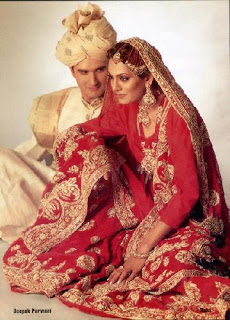
“You are being removed from your family, and moved into this one, your husband's,” said the Nadra officer. I saw him drag and very literally drop my name from one document to the other. “Now you’re part of their family.” I felt my eyes tear up a little and tried to catch my breath. My husband later joked about how the Nadra officer had gotten me more sentimental than the nikahkhwan.
This incident led me to mentally prepare myself a year ahead of my ruksati — any chance I got I spoke to friends, friends of friends and family members about their experiences after getting married, especially women who found themselves in joint family systems. A year later I found myself sometimes struggling but mostly naturally manoeuvring and settling into a new life and family. These conversations made me grateful in some situations and in others helped me take a step back. But all of the stories stayed with me.
For example, a newly-married 27-year-old told me she wasn’t allowed to have cheese in her new home. As bizarre as it may sound, it was true — her father-in-law received a WhatsApp forward about processed cheese being cancerous, “So now we can’t have cheese, I literally have to destroy the evidence if we have a cheese omelet”. I think she saw the disbelief on my face, because she added, “I’m serious, I would rather that my father-in-law finding me smoking up than eating cheese”. We all laughed and when I asked her how she dealt with it, her reply really stuck with me — “It’s his house”.
Why does no one talk about moving in with people you’ve met just a few times in your life? What does it mean to “adjust” into a new house and a new family?
According to an article in The Washington Post, the University of Kentucky’s Department of Communication conducted two studies on depression in newly-married women. In a study of 28 women conducted in 2016, nearly half of the participants indicated they felt depressed or let down after their wedding. They also reported clinical levels of depression. Another study conducted in 2018 of 152 women showed 12 per cent feeling depressed after their wedding.
For most South Asian women the post-marriage depression strikes a few weeks or months later. Maheen*, 30, recalled, “Once you’re back from the honeymoon and the dinners end and life starts to normalise, you find yourself in someone else’s house and you’re thinking 'okay, when do I go home', but this is home, but at the same time it’s really not”.
For 29-year-old Hina*, it was made very clear that this wasn't her house. “I come from a very conservative community where girls are married off very young. I was 21 and I remember my mother-in-law told me on the very first day that this wasn’t my house,” she said. When I asked Hina how she was made to feel this way, Hina laughed and said, “Oh, she very literally told me that this isn’t my house and that this is their house and their rules were meant to be followed".
Hina’s experience is unfortunately not rare — moving out of your home for a woman in Pakistan doesn’t necessarily mean starting anew with your spouse. It often means you have to “adjust” into a family where your diet, spending habits and general lifestyles is altered. There's also an unspoken rule — don’t change the environment, change yourself. The sign of a “good” daughter-in-law is when she takes up less space, doesn’t speak her mind and is subservient not just to her husband but everyone in his family as well.
Twenty-nine-year-old dentist Sidra* recalled that she and her husband got into a fight when she refused to serve his brother breakfast. "Religiously I’m not supposed to but my husband told me religion aside, this is our culture. It just didn’t seem fair. I work as well and have to reach the clinic before my husband and I never complained about doing his work but I drew the line at serving his brother. The argument kept growing to a point where I went back to my mother's the next day,” she said.
Sidra’s situation may seem extreme but culture in our country often overrules religion. “I am supposed to look after not just my husband but his parents as well, and it just makes me mad because had my mother been in the place of my mother-in-law she would actually help me instead expecting me to clean up after her,” Samra* who got married last year told me over the phone. “It’s a sham when they tell you your mother-in-law Is like your mother. She really isn't.”
When I asked my friend Amina* about the one piece of advice she would give a new bride, she had a very simple reply. “Be yourself — this is something I was not. I was the best version of myself, but that didn’t last very long. I was exhausted after a while, which disappointed my in-laws. Just be who you are and don’t give them a chance to complain about how you’ve changed after getting married.”
Women from South Asian cultures have newly come to terms and accepted the idea of normalising and de-stigmatising depression, postpartum depression as well as emotional and physical trauma. My personal discomfort of accepting I was depressed in this perfectly sound new environment made me feel ungrateful because of which I invalidated and dismissed my short and sometimes long bouts of depression.
“There is resentment you feel towards your husband for the way he smoothly settles into his life where nothing for him changes. But for me everything changed, and he didn’t even acknowledge it,” Beena* told me about her experience moving cities. “Do men realise how lucky they are? They can open the door to their mothers’ room, I have to wait for the holidays and book a ticket.”
What I learnt is that no one is going to prepare you, no words or stories can save you from the vehement misplacement you feel when you’re living with a family familiar and harmonised with each other’s patterns and even habits that may be unpleasant to live with. Listening to these stories made me feel like I hit the jackpot with my in-laws. So why was it that I felt this strange sadness that over took me randomly? Often, I silenced that feeling because of the horrors stories I had been listening to for almost a year. It was not until much later that I realised the advice I wished to have received from married women instead of table setting, in-law dealing and money managing was that randomly crying on random afternoons was normal, seeing your husband sitting next to his mother watching TV and feeling resentment that I couldn’t do the same was natural and feeling lost during a big dinner with all your in-laws was going to get better.
I wish someone had told me this was all going to happen and I didn’t have to deny myself the grief or sorrow. That that period of bereavement wasn’t permanent, that my feelings were valid. But most of all, that I wasn’t being ungrateful nor did it mean I loved my new life or my husband any less, but there were things that this new home didn't have — my mother’s voice waking up, my father handing me a plate of cut fruit or that heart-to-heart conversation I had with my sisters before falling asleep or references to the many inside jokes I have with my brother. In this culture which we cling on to so dearly we don’t talk about the agony women leave with when they separate from their families, the stress during the move and the separation anxiety that follows.
How do I explain to the men in my life the feeling I endure when I am standing outside the door of the room that was once mine at my parents' house? Where I see pieces of my life and have to decide what to take with me and what to leave behind? What do I do with the despair I feel and the frustration that comes with it? Instead, we tell these women they’re not the first to part with their families. Instead we call them a bridezilla, difficult or moody. Moving in with another family is like a migration you make, it will always involve loss. Sometimes it hits you sooner and sometimes its inside a Nadra office.
Friday, 24 May 2019
Wednesday, 23 January 2019
Tuesday, 15 January 2019
Did my children die because I married my cousin?

"The doctors in York were trying to do 100% to keep her alive, I did have that hope but I could see she was in pain. She was sedated until she passed away. I had her in my arms for most of the time, then I lay down beside her. My husband realised she was taking her last breaths."
Ruba says she has no idea how they have all endured the pain of losing three children and of suffering six miscarriages, the last just weeks after Inara's death. "I didn't even know I was pregnant at that time and I miscarried after the funeral," she says.
She says it was Inara's death that made her accept a link between her children's misfortunes and cousin marriage.
For a long time she just did not believe it, in part because she saw other ill and disabled children at the hospice and it was clear that not all of them were conceived by married cousins. Some were from the white community.
"My husband still doesn't believe it," she says. "I believe it now because it's happened three times, so there must be something in what they're saying. It must be true."
After Inara's death, some of Ruba and Saqib's relatives, both in the UK and in Pakistan, came to the conclusion that they were unlikely to have a healthy child - and argued that the marriage should therefore end in a "happy separation". This would allow both partners to remarry and have healthy children with someone else.
"We both said no," Ruba says.
"My husband says: 'If God is going to give me kids, then he can give me them from you. He's given me kids from you and he can give me healthy kids from you. If it's written, it's written for you. I'm not going to get married again and neither can you get married again, we are both going to try together.'"
And although Ruba was reluctant to marry in 2007, after 10 years of married life she doesn't want to part.
"Relatives wanted us to be happily separated for the kids, so that I can have healthy kids with someone else and so could he. But what if I do have healthy kids with someone, they might not make me feel like he makes me feel? I might have kids but not a happy marriage. It might not be successful marriage, and I don't want to bring kids up as a single parent. I have heard about people doing this but it's not for us."
But what options does this leave them?
The couple's experiences have led others in the family, including Ruba's brother, to reject cousin marriage.
"We never use to think about the risks - up to my children we've never thought it was wrong to marry in the family, but because I've been through it my other relatives do think twice about going in the family," Ruba says.
"Ten years ago I just accepted what my parents said, but now our cousins have been given a choice and they're saying no to that. Our younger generation have been given a choice and if they don't like it they can speak up about it."
As well as losing three children, Ruba has also suffered six miscarriages, the last just weeks after Inara's death. She hadn't realised she was pregnant at the time, but miscarried after the funeral, when Inara was buried alongside her brother and sister.
She is sustained by her religion and supported by her parents.
"God only burdens a person with how much they can take. Sometimes I think people are so lucky, they don't have to try hard and they get a healthy child, but sometimes those children bring trouble when grow up and so those tests placed on them are different," Ruba says.
"In this life I'm the unluckiest person, but in the next life I will be the luckiest because they were innocent children. And those children help you in the next life, because you will be with them."
Link
Tuesday, 27 November 2018
Tuesday, 18 September 2018
In my homeland of Pakistan, women aren’t seen as people

In Dera Ismail Khan, Pakistan, a 14-year-old girl is abducted by a gang while out with her cousins to fetch water from a nearby well. She is then made to parade naked through her own neighborhood in Garahmat Village.
It’s later found out that the reason behind all this cruelty is a century old one: honor.
The girl’s brother had been engaged in a love affair with another woman from the village. When the village council found out, they ruled that the sister of the fornicator be punished for her brother’s sins.
nother such incident took place in Multan, Pakistan, where a 16-year-old girl was brutally raped by the men of another family, residing in the same village as her. And just like the first incident, this tear-jerking one was a matter of family honor.
The teen victim’s brother had raped a 12-year-old girl.
Following that assault, the members of the victim’s family decided that the fitting punishment was to brutally rape the sister of the perpetrator, too.
When will this abhorrent mentality of revenge-rape come to an end?
I simply don’t understand why the lives of women are ruined for the faults of their family members. For as long as I can remember, women in Pakistan have been known more as the flag bearers of the family name than their own person. They are treated like badges if they achieve something in life, and stains if anyone around them dares to break the norm. We are NOT anyone’s possessions.
Why burden us by linking everyone else’s honor to us?
In rural areas of Pakistan, women’s bodies are treated like battlegrounds to resolve disputes.
The brash village councils (panchayats) ruin thousands of lives every single day despite not even being registered as proper judicial establishments. These councils are usually run by the utterly inhumane and illiterate “elders” of the village and are not bound by any rule of law. These so-called leaders can do whatever they want, to anyone at any given time.
And they are not at all fearful because they are fully aware of the prevailing lawlessness in Pakistan.
They know that if anyone dares to lodge a single complaint against them at a local police station, all it will take to close the case forever is a few thousand rupees worth of bribe money in the already-brimming pockets of the police station’s head.
The plights of our women are trivialized by everyone around them. They are told to “get over it” and “just pray no one finds out” so they can live happy lives.
But thankfully, our media is now active enough to come to the rescue of women who have had to bear with such atrocities. And like countless others, these women’s voices found solace in confiding to the media.
Our inefficient Pakistani authorities finally took notice of these heinous acts and detained the allegedly involved men.
Rape, in the 21st century, continues to be one of the greatest fears of women in my dear country.
Women fear their voices will be muffled to a point where they lose all sense of self and let go of the reins of their lives, altogether. They know that no person around them will have the balls to defend their honor.
Instead, she will be belittled over and over again for something that was completely out of her control.
Men from her vicinity will refuse to be seen around her and so all her chances at a normal life will cripple because of the quest of every man on Earth to find his own pure little Virgin Mary.
The revenge factor in these rapes will become non-existent the day all potential perpetrators realize that society will let women integrate regardless of what has happened to them in the past.
And this will only happen if men and their families stop making women feel like trash because of something that’s completely out of their control. They need to see beyond girls’ pasts and must get to know them for who they really are in lieu of baselessly passing judgments.
Trust me, this is the only thing survivors of rape need and it CAN be done. So play your part: stop labeling them as baggage, and start letting them thrive.
For if a woman grows, so does an entire generation.
Link
Monday, 28 August 2017
I Embrace Being Muslim, Mexican & Pakistani; I’m Better for It

I grew up waking up at 7:00 A.M. on Saturdays to the sounds of Spanish music as my mom opened my bedroom door to find my sister and I hiding under the covers in our twin beds. She would yell, “Vamos a limpiar la casa, vamos!” And boy, did we clean.
My mom was born and raised in Leon, Guanajuato, Mexico; one of the most beautiful places in the world. With the sounds of Vicente Fernandez, Alejandro Sanz, and Alejandro Fernandez in our house, it reminded me of the early days (when I was like, 5) in Mexico. It made the cleaning a little more tolerable.
Every afternoon we would get ready and head to my tio’s house where at least 60 family members would gather for pool parties. Tacos and ceviche were obvious to the eye, but so were Coronas and Pacificios in the ice chests near the bar.
We also had a Qur’an teacher come twice a week to teach us how to read, pray, etc. I began reading the Qur’an at the age of 3 or 4 and finished it by the age of 5. I still remember the look on my father’s face when I recited Surah Yasin to the entire mosque. He smiled so bright that day.
***
I grew up with a lot of people who were also mixed; however, a lot of people were judgmental toward my family because my mother was not “raised Muslim.”
My parents always placed a huge emphasis on religion and I always wondered why. I wondered why people looked at me different because I was not fluent in Urdu (and yes, I’m talking about the “aunties” whose daughters were fluent in Urdu.)
I could tell Rasmalay from Barfi and understand my dad when he spoke. I was even fluent in Urdu and Punjabi when I was a kid and would run outside when the airplanes would fly over our house and yell “Ja’has” to my parents in awe. Later in life, I dropped the Urdu and picked up the Spanish.
***
We would not get invited to many parties and as I got older and I understood why. It was because my parents were one of the first mixed-ethnic couples in our area where the wife actually converted.
Though my mother converted to Islam, she never compromised her culture. She still cooked Mexican food, listened to Spanish music, and we would go to church sometimes with our Mexican side of the family. My mom wanted us to understand that although we were Muslim, we had to respect all faiths.
Friday, 27 May 2016
Saturday, 7 May 2016
Thursday, 9 July 2015
Filmmaker Wants To Stop Fathers From Giving Up Their Daughters
She fights for the rights of women by telling stories about heroic men.
"The struggle to end violence against women has always been carried out by women activists," says Samar Minallah Khan, who makes documentaries about gender-based violence in her native Pakistan.
"Women have worked very hard to bring awareness, but it will never be enough." That's why she brings men into the picture. And her approach has won acclaim from both men and women.
Khan is one of five women honored with a Global Leadership Award by Vital Voices, a group founded by Hillary Clinton after the World Conference of Women in Beijing in 1995. At the presentation ceremony, held at the Kennedy Center last month, a packed house of women gave her a standing ovation when she dedicated the award to the men in her life: "my amazing supportive and loving father, my husband, my brothers and my son."
Khan's films focus primarily on the practice of swara, where a daughter is given away as compensation for a crime. Swara happens mainly in poor, rural areas.
Monday, 6 October 2014
The most common myths about Muslim women and why they’re wrong

Myth: Muslim women are inferior to men
Growing up as an Alawite Muslim, I certainly felt my brothers were given preferential treatment. However, I also recall that the reasons (or excuses), given by my parents were more related to status and reputation than religion, including the all-too familiar refrain,But we can’t let you go out! What will people say?
There is a fine line between culture and religion. My friend Sofia, a university lecturer, says that religion is culture, and that regarding it as a separate phenomenon only obscures the reality - that human societies shape and modify religion according to their own peculiarities and practices (which is indeed what we are seeing with modern terrorist groups).
But that doesn’t change the fact that the often-abhorrent treatment of women in Muslim societies is largely at odds both with Islamic history and with what is written in the Quran. Whilst I view Islam through a secular rather than spiritual lens, for Randa, every day is “a struggle to reconcile my deep conviction in, and devotion to, the Islamic faith with the sickening reports of abuses of many women in the name of Islam.”
However, she adds, “Not for a moment do I think that the oppression and brutality directed against women stem from sincerely held religious beliefs. Whether it is targeting girls who seek an education in Afghanistan or treating women like second-class citizens in Saudi Arabia, the fact is that the oppression of women is essentially about coveting power and dominating women.”
For all their differences, the underpinnings of both Muslim and western societies are fundamentally the same, for each is built on the shaky foundation of patriarchy. As much as we like to blame religion for much of the world’s ills, the truth is, much of what we recognise as religious oppression is actually cultural misogyny.
On that note, I’ll leave the last word to Randa, who calls for, “A kind of radical surgery in Muslim countries in order to remove the festering, diseased pustule of patriarchy that attempts to define one half of society as walking sex organs…This would entail promoting theologically grounded arguments that would empower women to make dignified choices based on their own religious tradition.”
Amen.
Friday, 1 August 2014
Friday, 30 May 2014
Thursday, 29 May 2014
Meet Australia's Muslim Power Couple

Susan Carland and Waleed Aly are exactly the type of people you’d want at your dinner party: intelligent, outspoken, engaging, charming, funny. Add Australian accents to that package and you’ve won me over in a second.
Independently of each other, married couple Carland and Aly often serve as the public faces of Islam in Australia. Aly, 35, is a broadcaster who hosts multiple shows on both radio and TV, covering news events ranging from politics to entertainment to sports. Carland, 34, is often called on by the media to write articles or give interviews discussing her academic work on the intersection of feminism and Islam. The duo’s friends jokingly refer to them as the “Muslim Brangelina,” and it’s easy to see why. They are young, good-looking, fashionably-dressed and charitable. Like Brangelina, except sans Hollywood and plus two upcoming Ph.Ds.
Source Saturday, 24 May 2014
"He culturally believed he had the right to hit his wife and discipline his wife.”

I hope he enjoys the dhal in prison! So disgusted....
A Pakistani immigrant beat his wife to death in their Brooklyn home after she made the mistake of cooking him lentils for dinner instead of the hearty meal of goat meat that he craved, according to court papers.
Noor Hussain, 75, was so outraged over the vegetarian fare that he pummeled his wife, Nazar Hussain, 66, with a stick until she was a “bloody mess,” according to prosecutors and court papers.
“Defendant asked [his wife] to cook goat and [his wife] said she made something else,” the court papers indicated as Hussain’s murder trial opened on Wednesday.
“The conversation got louder and [his wife] disrespected defendant by cursing at defendant and saying motherf- -ker, and . . . defendant took a wooden stick and hit her with it on her arm and mouth.”
Defense attorney Julie Clark admitted Hussain beat his wife — but argued that he is guilty of only manslaughter because he didn’t intend to kill her. In Pakistan, Clark said, beating one’s wife is customary.
“He comes from a culture where he thinks this is appropriate conduct, where he can hit his wife,” Clark said in her opening statements at the Brooklyn Supreme Court bench trial. “He culturally believed he had the right to hit his wife and discipline his wife.”
Prosecutors, however, said Hussain meant for his wife to die.
“His intentions were to kill his wife,” Assistant District Attorney Sabeeha Madni said in court. “This was not a man who was trying to discipline his wife.”
Madni said that Hussain “brutally attacked his wife as she lay in her bed” — leaving deep lacerations on her head, arms and shoulders, and causing her brain to hemorrhage.
He beat her with a stick that the family had found in the street and used to stir their laundry in a washtub, the court papers state.
He then tried to clean up the blood that had splattered onto their bedroom wall before calling his son for help, Madni said.
“I killed her. Hurry up and come over,” Hussain told his son, according to prosecutors.
Madni also said Pakistani women who lived in the same building as the Hussains would testify about the beatings Nazar received at the hands of her husband.
“They have told us about years of abuse they witnessed,” Madni said.
Hussain met his wife in Pakistan and the couple married before moving to Brooklyn, prosecutors said.
The trial continues Thursday before Judge Matthew D’Emic.
Monday, 14 April 2014
‘Jinn’ – Shadows in the Night May Bring Islam, Muslims to Light

Figures in the corners of your eyes, strange noises in the middle of the night, the feeling of being watched - have you experienced any of these? Yes?
Your heart races, adrenalin pumps through your veins and fear creeps into your mind - is it just your imagination? No? We know what the answer is. It's a jinn.
Since we were children, Muslims have told stories from generation after generation about the third being living on earth. With certainty and resolve, we know that it is exists, and we know that it's the answer to the fearful question of "What goes bump in the night?"
Now, the rest of the world will learn about what we've known about for years - the jinn. God creation made from smokeless fire, jinns live in the unseen world, in dimensions beyond our visible universe.
On April 4, 2014 "Jinn," a true labor of love written and directed by Ajmal Zaheer Ahmad and much-anticipated by Muslim audiences, will open in theaters across the country. "Jinn" is the thrilling tale of Shawn, an automotive designer with a high-powered job, who appears to have the perfect life until one day when he receives a message that he will soon incur the wrath of a generational curse. When a series of nightmarish events reveal the ominous warning to be true, Shawn seeks the help from the mysterious Gabriel (Ray Park of "X-Men" and "Star Wars: Episode 1 - The Phantom Menace") and tortured mental patient Ali (Faran Tahir of "Star Trek" and "Iron Man"), who knows about otherworldly force that is reaching out to him.
"Jinn" is a fun, family film that explores ideology never seen before on the big screen. Last weekend, the movie was screened to well-known and respected imams, who clapped at the end of the film and congratulated the producers on doing a good job at authentically telling audiences about jinns.
"We made this film with the intention of creating a project that would make Muslims feel proud and not compromised," Ahmad said. "Though we did fill in the gaps with our imagination, we did a lot of research and were very careful not to make any missteps. This is no ordinary tale. We wanted created a film about good fighting evil and about people coming together to fight a common foe. This movie transcends the horror genre; it is a cool, action film."
A native of Michigan, Ahmad said the idea came to him at age 9 and said the concept for the whole idea may have come from jinn. Yes, you heard that right. There may be more to the film and the education of this inter-dimensional being than we know.
"The reality is that the story of jinn also is a fresh and old concept," Ahmad said. "It's the best of both worlds. It's fresh to new audiences and appeals to an audience that has been waiting for a story about this for a while."
However, beyond just being a fun movie, "Jinn" producers, who have poured millions into the project, said their ultimate goal is to create change.
"If you believe that there needs to be a change in the world about how minorities are depicted on the screen, then [seeing this movie] is the first step you can take to make that change," Ahmad said. "We are not doing this for money. We are doing this for the community."
These words may unfortunately ring true for a movie that is opening the same weekend as projected-blockbuster "Captain America: The Winter Soldier." However, if history is any kind of indicator, "Jinn" could be the perfect counterprogramming and sneak away with good numbers and a positive message for Muslims.
"It is important for us to create this type of content and to make these kinds of projects," Ahmad said. "We've seen the ramification the depiction it has on young people. We want them to be inspired to create this content, get involved in the media and find careers in the industry. This is the first time, we are seeing a hero on the screen that looks like us and shares our background."
Filmed and produced in Michigan by Exxodus Pictures, the producers said they have a deep love for the state and the city of Detroit. Their intention was to shine a light on their home state in addition to telling an authentic tale.
"We filmed in Michigan because we want to help with the state's revival and the city's resurgence," said Shahid Syed, Partner & Executive Producer of Exxodus Pictures. "We received amazing support from Michigan, and the film has been welcomed with open arms"
The film crew said they were able to shoot in amazing places that others have not had access to before such as the Highland Park Ford Plant, the birthplace of the Model T; Turnip Rock in Port Austin, Michigan; and Sisters, Servants of the Immaculate Heart of Mary in Monroe, Michigan.
"We are looking forward to celebrating the release of 'Jinn' with the people of Michigan," Ahmad said. "This weekend, we will be attending many screenings and enjoying the experience with the audience. This is an incredible opportunity for our community to say that our narrative is important, and we hope Muslims nationwide will mobilize. If you cannot support a movie that is made about us with the first line in the film being 'Bismillah,' then you can never complain again about not being counted."
Exxodus has lofty goals for this weekend's release, saying that if just 10 percent of the American Muslim community made it to the theater, the industry would change overnight.
"It is imperative and our duty to mobilize as a group to watch this movie in the theater," Syed said. "On Monday morning when the box office tabulations come in, we want Hollywood and the Western world to take notice of the power of our community at the box office."
One thing is true: Religion is a hot commodity at the box office. From "Noah" to "God's Not Dead," Hollywood is taking notice of religious-based stores. It is now up to movie-goers to keep the momentum going and show that the box office might also include Muslims.
Source: Marium F. Mohiuddin
Tuesday, 24 September 2013
Watching Anthony Bourdain in Palestine
I am a hardcore foodie, which means I love to eat. I was also born with Cerebral Palsy, which means I shake all the time—so cooking is not my thing, as I am banned from being around knives and fire. Those who cannot cook, watch, and I am obsessed with cooking shows. Forget Paula Dean; when it comes to on-air celebrity chefs no one makes my stomach go pitter-patter more than Chef Anthony Bourdain. He is absolutely fearless. He eats and smokes things I'd never have considered touching before I saw him do it first on No Reservations. No Reservations is no more, and the beautiful Bourdain has relocated to CNN. Parts Unknown, his new show now in its second season, is hands-down the best, most informative show on cable news. There is simply no competition, unlike on Bravo's Top Chef Masters where Chef Anthony happens to be my favorite judge.
Full article.
Monday, 16 September 2013
Female genital mutilation: 'Mothers need to say no'

SourceFor Samira, the very idea of this kind of mutilation is incomprehensible. Brought up in London, she was working as a model when she was approached by BBC3 to present a documentary about Somalia. Visiting the war-torn country, she met women who planned to have their daughters cut and saw a six-year-old girl who had been recently subjected to FGM. "I just didn't understand how a mother who had gone through this pain could have it done to her children. I don't blame the women, I blame the society that doesn't stop it."Since the film came out last year, Samira has been touring schools withSave the Children to highlight issues facing Somalia. "One thing I have learned is that while people may say we are moving on, it still continues."According to Forward, a leading UK charity that campaigns to end FGM, the practice takes place in many cultures and occurs in several different religious communities. However, mainstream spiritual leaders have denied that the practice stems from religion. Samira believes the desire to control women's sexuality lies behind it."I think women here are scared their daughters will become too westernised and not get married – that they will have boyfriends and go out, and this is why they have it done."Yet the subject, she says, is rarely discussed. "I go into schools with a high number of Somali girls, and they always seem shocked that it is part of our history and culture. We need women to talk about their experiences, men to talk about their marital experiences, clerics to explain it is not linked to religion and doctors to talk about the problems it causes. Then things will change – when we discuss what FGM is really doing."
Subscribe to:
Posts (Atom)