
.jpg)
Bek Lover joins Cenk Uygur on The Young Turks (TYT) for an in-depth conversation on the "Muslim Invasion" narrative, media propaganda, Islam in America, Albania, U.S. politics, free speech, lobbying, history, and the importance of building bridges across political divides.

In many conversations today, Islam is unfairly associated with the oppression of women. Cultural practices, political realities, and selective interpretations are often mistaken for religious teachings. However, a closer and more honest look at Islamic principles reveals something very different: misogyny hatred, devaluation, or unjust treatment of women is fundamentally incompatible with Islam. In fact, it is haram (forbidden).
The Spiritual Equality of Men and Women
At its core, Islam establishes the spiritual equality of all human beings, regardless of gender. The Qur’an repeatedly emphasizes that both men and women are equally accountable to God and equally capable of righteousness:
“Indeed, the Muslim men and Muslim women, the believing men and believing women… God has prepared for them forgiveness and a great reward.” (Qur’an 33:35)
This verse is not symbolic, it is explicit. Worth is not determined by gender, but by character and faith. Any ideology that diminishes women simply for being women directly contradicts this foundation.
The Prophet’s Example: A Model of Respect
The life of the Prophet Muhammad offers a practical demonstration of how women are to be treated. He uplifted women in a society where they were often treated as property. He consulted women, valued their opinions, and emphasized kindness toward them.
One of his most well-known teachings states:
“The best of you are those who are best to their women.”
This sets a clear moral standard. Misogyny, whether expressed through abuse, dismissal, or discrimination is not only discouraged but directly opposed to prophetic character.
Rights Granted, Not Given by Society
Islam introduced rights for women that were revolutionary in their historical context, rights to inheritance, education, consent in marriage, and financial independence. These are not favors granted by men; they are divinely mandated الحقوق (rights).
For example:
A woman has the right to own and manage her own wealth.
She must consent to marriage; forced marriage is invalid.
She is entitled to education and personal development.
To deny or undermine these rights is not just cultural malpractice, it is a violation of Islamic law.
Culture vs. Religion: A Crucial Distinction
Many practices that appear misogynistic in Muslim societies stem from cultural traditions, not Islamic teachings. Patriarchal customs, misinterpretations of scripture, and power structures have, at times, overshadowed the ethical clarity of Islam.
Blaming Islam for these practices is like blaming a constitution for the actions of those who violate it. The problem lies in human behavior, not divine guidance.
Misogyny as ظلم (Oppression)
In Islam, injustice (zulm) is a grave sin. Misogyny, by its very nature, is ظلم, it denies women their dignity, rights, and humanity. Whether through systemic discrimination or everyday attitudes, it stands in direct opposition to Islamic ethics.
The Qur’an repeatedly condemns oppression in all forms. There is no exception made for gender-based ظلم.
Reclaiming the Narrative
For Muslims and non-Muslims alike, it is important to separate Islam from the actions of individuals or societies that fail to uphold its teachings. Challenging misogyny is not a rejection of Islam, it is a return to it.
Muslim communities today are increasingly engaging in this process: revisiting texts, amplifying women’s voices, and confronting harmful norms. This is not innovation; it is restoration.
Conclusion
Misogyny is not just discouraged in Islam, it is incompatible with it. The faith calls for justice, compassion, and dignity for all people. Any belief or practice that undermines women contradicts these principles and must be recognized for what it is: not Islam, but a deviation from it.
Understanding this distinction is essential, not only for correcting misconceptions but for building communities that truly reflect the values Islam teaches.
.jpg)
Former Marine Richard McKinney shares his incredible journey—from harboring hatred toward Muslims to stepping inside a mosque with dark intentions. What happened next changed his life forever. Hear how an unexpected encounter led him to embrace Islam and find peace where he least expected it.

“It is me waking up and realizing that the country that my grandfathers fought for, the country that my child still in uniform, fights for and protects, is failing to protect me. That in this country, four generations on we don't matter, we don't belong.”
Former member of the British Conservative Cabinet Minister, Baroness Sayeeda Warsi shares her fears and vulnerabilites as a Muslim entrenched in politics in the UK and discusses racism, bigotry, and Islamophobia, which are the themes of her latest book, “Muslims Don’t Matter.’
.jpg)
From writing a book against Islam to embracing the faith. Joram Van Klaveren shares his story at the GPU Festival showcasing his inspiring story.
.jfif)
Naomi tells Mehdi on this episode of ‘Unshocked’: “I'm not going to sugarcoat it. It was a blow.” For Mehdi, “the idea that 14 or $15 million from AIPAC and the pro-Israel lobby in this district didn't play a role? Come on! That's just an insult to our intelligence.”
Over in France, as elections approach, the center right and center left have together blamed the anti-Israel far left for rising antisemitism - and given the French far right a pass in the process! There are reports that many French Jews may now vote for Marine Le Pen’s National Rally for the first time.
Naomi says “European politics is a world upside down,” and says it is “chilling” to think that the “charge of antisemitism is potentially going to facilitate the resurgence of fascism in Europe”.
Although all these far-right parties are staunch supporters of Israel, Mehdi explains how “the old anti-Semitism is still very much alive and well.” A mind-boggling idea regardless of which side of the coin you choose to see it from, so mind-boggling that Mehdi says: “I feel like screaming that no one sees the obvious disconnect… these people are still anti-Semitic and they're pro-Israel. What does that tell you about them?”
What does it also say about Zionism? Mehdi and Naomi discuss Zeteo’s upcoming documentary ‘Israel’s Reel Extremism’ and Mehdi’s participation in the Munk Debate on anti-Zionism in Toronto earlier this month.

This is Maryam Pougetoux. A sister who became a topic of intense discussion in French mainstream media and the victim of threats and insults for no other reason than being a hijabi.

About 42 percent of mosques or Islamic institutions in a newly released UK report have experienced religiously motivated attacks in the last three years.
The survey, the first of its kind, was jointly carried out by two British Muslim organisations – Muslim Engagement and Development (MEND) and Muslim Census.
It said that the most common form of attack experienced by mosques and other Islamic institutions was vandalism, followed by burglary or theft (34 percent), with 83 percent being attacked at least once a year.
It also suggested that nearly 17 percent of mosques have faced physical abuse directed at staff or worshippers, with one mosque reporting that a religious cleric was stabbed outside the front entrance.
Mosques officials described receiving threats of physical violence on popular social media platforms and general abuse. In the report, they have expressed their frustrations and how increased Islamophobia hate crimes are taking toll on their wellbeing.
“We have witnessed individuals breaking windows, vandalising worshipers’ vehicles, and spraying racist graffiti on the mosque building,” an unidentified mosque official was quoted by the report as saying.
Nearly two-thirds of the 113 mosques who participated in the survey reported that the attacks harmed the wider community, with 9 percent reporting that their mosques or Islamic institutions were targeted frequently, at least every three months.
The report indicated that 15 percent of mosques saw an increase in attacks during the COVID-19 pandemic.
Toufik Kacimi, the imam of Sainsbury Park mosque in north London, told Al Jazeera that religiously motivated attacks have increased over the years, with the latest incident happening weeks ago when a member of the public hurled dog faeces into the mosque.
“Just last Ramadan, one man punctured six cars belonging to worshipers; we also received threats phone calls and hatred letters,” he said.
Kacimi also said that some of the attackers pretend to be Muslim to gain access to the mosque and steal money and mobile phones from the donation box and people’s jackets.
“We can say that hate crimes against Muslims have sharply increased in the last three years, and it’s costing us more money; we have hired four security guards and deployed more CCTV cameras in the mosque premise and it’s a huge financial burden to us,” he said.
Police response
The survey also investigated the UK police response to such attacks. It said 85 percent of the mosques that have been attacked or threatened reported these incidents to the police.
About 55 percent of the mosques were satisfied with the police response, while 38 percent said that no police action was taken when they reported the incident, according to the report.
In addition, 28 percent of the respondents said that the police provided extra surveillance to the mosques due to their reports; however, 15 percent of those deemed it unnecessary to contact the police and report the attack, supposing the police would not take any action.
However, the UK national police chiefs’ council lead for hate crime, Deputy Chief Constable Mark Hamilton, refuted the allegations, saying that they take all hate crime reports seriously since they have a devastating impact on individual victims and the communities involved.
“We work hard to build confidence by engaging with affected communities at a local and national level. We are in regular contact with our partners at the charity who support Muslim communities, and I would encourage anyone who suffers hate crime to report it to the police,” he told Al Jazeera.
“Everyone has a right to live their lives and practice their religion, without the fear of targeted abuse for who they are, either physically or verbally; and we will always seek to protect that right.”
Azhar Qayum, the director of MEND told Al Jazeera that though they have documented their concerns, they have also made recommendations to the police to address Islamophobic hate crimes in the UK.
“We haven’t had a response from the government yet; but we have made some recommendations, including the police to improve links with their local Muslim community and mosques and implement swift action when such attacks occur, and a full explanation when no action is taken and we will monitor to see if they have been implemented,” he said.
Some mosques mentioned in the report also stated that they kept quiet about these attacks for a variety of reasons.
About 64 percent of mosques reported that they feared these attacks would have a negative impact on Muslim communities, with responses ranging from worshippers being discouraged from attending mosques, to causing rifts in the community to Muslims losing faith in the police.
The UK Home Office statistics record 6,377 religious hate crimes between March 2020 and 2121 with almost half of them aimed at the Muslim community in Britain, which is estimated to be about 2.8 million or 4.4 percent of the British population.
For four days a group of 28 Muslim girls stood in protest in front of the Junior Pre-University college in the Karnataka state after they were denied entry for wearing hijab – an issue that has snowballed to other colleges in the southern state.
On Monday morning Farheen (name changed) and her friends were allowed to enter the premises of the college located in the coastal town of Kundapur in Udupi district, but they were in for a shock after college authorities did not allow them to sit in their respective classrooms with other students.
On the same day, the college officials posted a notice outside the gate declaring prohibition of hijab in classrooms as part of the college uniform code.
“Our teachers told us they will not allow our entry in classrooms or teach us without government orders”, Farheen, a commerce student, told Al Jazeera.
It left Farheen and her friends “hurt and humiliated”.
An official from the education department visited the girls while they were seated in a separate classroom. “Give up on your hijab. If you hold on to this, you will lose out on your education’, he told us,” Farheen recounted.
“How is it fair that other students are being taught and we are told to sit separately and self-study just for wearing a headscarf,” said Farheen’s friend, who also wanted to remain anonymous.
“We used to sit in class all these years with hijab. Now suddenly, they are treating us like criminals and keeping us in a separate classroom. We are hurt.”
The decision of the Kundapur college to segregate Muslim girls, however, has angered students and activists who called it a form of “religious apartheid” and “untouchability”, a reference to the banned practice of discrimination against members of lower castes in the Hindu socio-religious hierarchy.
The Campus Front of India (CFI), an organisation of Muslim students active in southern Indian states said in a statement on Sunday that a ban on hijab is “an organised nationwide conspiracy [that] is systematically executed by the right-wing Hindutva [Hindu-ness] groups to dehumanise Muslim women”.
Visuals of students being shut outside the gate by several colleges in the state have caused mounting outrage among the Muslim minority and triggered protests since last week, with rights groups alleging that the move violates the rights of Muslim students to practice their religion and access education.
The tensions escalated after students and activists allegedly backed by Hindu nationalist groups started to wear saffron colour scarves, calling for hijab ban in educational institutions in the state – where Muslims form 12 percent of the population.
On Tuesday, students and Hindu right-wing activists were seen marching into campuses wearing scarves and turbansin many colleges across the state andin some cases, clashing with police.
A viral video showing a student in hijab being heckled by a group of Hindu men in Mandya district has caused an online outrage, with many hailing the girl for her bravery in standing up to the “mob”.
Karnataka Chief Minister Basavaraj Bommai from the Bharatiya Janata Party (BJP) announced a three-day closure of educational institutes across the state and appealed for calm.
“I appeal to all students, teachers and management of schools and colleges, as well as people of Karnataka, to maintain peace and harmony,” Bomai said in a tweet.
Last week, his government issued a directive that all educational institutions should follow dress codes set by management.
Siddaramaiah, former chief minister and main opposition leader in the state, blamed the government for “trying to create communal disharmony throughout the state in the name of hijab”.
The government was “denying education to Muslim girls”, he said.
On Wednesday, the state high court which is hearing a petition by the Muslim girls to allow the use of hijabs in educational institutions has referred the case to a bigger panel of judges.
The lawyers appearing for the girls on Tuesday argued before the court that the practice of hijab is protected under the right of freedom of religion guaranteed in the Indian constitution and that the state has no power to ban it.
Kaneez Fathima, a member of the state legislative assembly from the opposition Congress party, who led a demonstration in Kalburgi city in support of girls said that she wears a hijab and sees it as an essential part of a Muslim woman’s life.
“We have been wearing hijab for years without any problem but now, the issue has been suddenly taken up by the BJP and Hindutva groups to rake up communal tensions”, she told Al Jazeera, referring to the Hindu far-right groups.
The controversy over hijab first started a month back when a group of six Muslim students at a government-run women’s college in Udupi district was denied entry into their classrooms because the administration alleged they were defying the rules by wearing the hijab.
The girls, however, defiantly resisted the pressure even as they were made to sit outside the classrooms on stairs.
The controversy has reignited the debate about the rights of India’s minorities under the Hindu nationalist government. Activists have said attacks against Muslims and their religious symbols have increased under Prime Minister Narendra Modi.
The hijab ban came as the religious minorities, mainly Muslims and Christians, faced attacks from the right-wing Hindu groups in the state – home to the Indian IT hub of Bengaluru. The state’s Hindu-nationalist BJP government has passed laws against cow slaughter and anti-conversion believed to target minorities.
However, the governing BJP defended the hijab ban, arguing that it violates rules on uniform.
“Educational institutions are not the place to practice one’s religion. The girls must focus on education and come to college to study not to assert identity,” Ganesh Karnik, the party spokesperson, told Al Jazeera.
He said that it was a small group of students stirring up the issue as the government on Monday ordered an investigation into the role of “vested interests” supporting students demanding entry of hijab-wearing girls.
But the girls said they cannot be forced to give up their hijab.
“We can’t just remove it. This is targeted harassment by the authorities,” Al-Rifaa, a student from another college in Kundapur, told Al Jazeera.
“For the last 30 years, the college had no issue with hijab. Why is it suddenly a problem, what has triggered this?,” Rifaa asked.
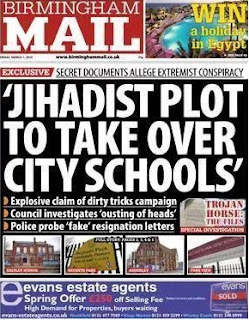
A strange letter appears on a city councillor’s desk in Birmingham, England, laying out an elaborate plot by Islamic extremists to infiltrate the city’s schools. The plot has a code name: Operation Trojan Horse. The story soon explodes in the news and kicks off a national panic. By the time it all dies down, the government has launched multiple investigations, beefed up the country’s counterterrorism policy, revamped schools and banned people from education for the rest of their lives.
To Hamza Syed, who is watching the scandal unfold in his city, the whole thing seemed … off. Because through all the official inquiries and heated speeches in Parliament, no one has ever bothered to answer a basic question: Who wrote the letter? And why? The night before Hamza is to start journalism school, he has a chance meeting in Birmingham with the reporter Brian Reed, the host of the hit podcast S-Town. Together they team up to investigate: Who wrote the Trojan Horse letter? They quickly discover that it’s a question people in power do not want them asking.
From Serial Productions and The New York Times comes The Trojan Horse Affair: a mystery in eight parts.

Dunia Nur was out buying paint when it happened. The community organiser in Edmonton, Alberta was speaking Somali to her aunt on the phone when a man at the shop aggressively told her to “speak English”. When she tried to get out of the situation, he blocked her path.
“He was offended at the fact that I was speaking my language,” Nur, a Somali Canadian and the president and co-founder of the African Canadian Civil Engagement Council, told Al Jazeera. “I tried to move and then he blocked me.”
While the recent incident did not escalate further, Nur said it left her feeling unsafe, especially as it took place shortly after a Muslim family was run down by a driver in London, Ontario in a deadly attack that police said was spurred by anti-Muslim hate.
It also came amid a string of verbal and physical attacks against predominantly Black Muslim women in and around Edmonton since late last year – a reality that Nur said has left many members of the community feeling afraid to leave their homes.
In late June, two sisters, Muslim women who wear hijabs, were attacked by a knife-wielding man who hurled racial slurs at them on a path just outside the city. In other instances, Muslim women have been knocked to the ground while out on a walk or threatened while waiting for public transit.
The city says Edmonton police have received reports of five incidents involving Black women wearing hijabs since December 8, 2020, and the police force’s hate crime unit arrested and laid charges against a suspect in each case.
But Muslim community advocates say incidents often go unreported. “We had a town hall meeting where many women came out and actually stated that they have previously been attacked with knives, they have been told to go back to their homes, they have experienced a lot of gender-based violence and hate-motivated crimes – it just went unreported,” Nur said.
“Muslim Black women are being attacked and they are being attacked because of anti-Black racism and they’re being attacked because of Islamophobi[c] rhetoric and they are being attacked because they are women… I feel like right now we’re at a point that we’re not sure what’s going to happen to us when we go outside.”
The capital of the western Canadian province of Alberta, Edmonton was home to just more than 972,000 residents in 2019, according to a municipal household survey.
In an email to Al Jazeera, Mayor Don Iveson’s office said some Edmontonians “have not gotten the message that racist and bigoted behavior is not welcomed in our city”.
“There are systemic and long-term contributing factors to that, there are also issues of specific prejudice in the hearts and minds of [Edmontonians] who ought to know better – and there are far too many of those people that have been given license, in a variety of different ways, to spew their hatred in this community. And I, like most Edmontonians, want it to stop. Now,” the statement said.
Iveson said Edmonton city council supports calls to strengthen hate laws in Canada and has provided financial assistance to bolster initiatives to address hate and violence, including a task force to provide advice on how to make the community feel safe.
“The City, the Edmonton Police Service, and the Edmonton Police Commission have responded with a work plan outlining 70 different actions that are responding to the issues identified. A more comprehensive strategy will be coming forward in early 2022,” the statement said.
The city council also passed a motion earlier this month directing Edmonton to further engage with Black, Indigenous and other communities of colour to address harassment and violence.
The motion also orders the mayor to write to the federal government “requesting a review and potentially update the current definition of hate crime” for any racial, gender or cultural gaps or biases, the city said.
But despite these measures, activist Wati Rahmat told Al Jazeera that “Muslim women are in fear” in Edmonton.
“I have had friends who have conversations about whether they should be changing the way they wear the hijab, or take off the hijab, or go out with a friend, or not go out,” said Rahmat, who founded Sisters Dialogue, a Muslim women-led initiative, in response to the attacks. The group is currently working on a safe-walk service to offer accompaniment to Muslim women who do not feel safe going out by themselves.
The demands for more support in Edmonton come amid growing, Canada-wide calls for the federal government to implement an action plan to stem Islamophobia, as advocates say systemic racism and far-right bigotry increase the risks of violence.
For many, the June attack in London, Ontario – as well as a deadly 2017 shooting at a Quebec City mosque and a fatal stabbing last year outside a mosque in Toronto’s west end – show just how deadly the problem can be.
Members of the Muslim community and supporters gather for a vigil after a deadly attack in London, Ontario, killed four members of a Muslim family in June [File: Ian Willms/Getty Images via AFP]
“I don’t think it’s right for women to have to fear going out,” Rahmat said.
Some Muslim advocacy groups, including the National Council of Canadian Muslims (NCCM), have also called for street harassment laws to be bolstered, as most of the recent attacks on Muslim women in Alberta have taken place in public.
Fatema Abdalla, NCCM’s communications coordinator, said at least 15 attacks on Muslim women were reported in the cities of Edmonton and Calgary over the past six months.
“These women were either on their daily walks or they were at a park or an LRT [light-rail transit] station or some form of a transit station,” Abdalla told Al Jazeera, adding that NCCM receives calls nearly every week about verbal abuse targeting Muslim community members across the country.
“It’s instances like these that we need to prevent from happening so that they no longer lead to such devastating attacks as the one that we have seen in London, Ontario,” she said.
In the meantime, Muslim community leaders are taking steps to try to stem the violence on their own. Noor al-Henedy is director of communications at Edmonton’s Al Rashid Mosque, which organised self-defence courses for Muslim women this year.
While the community felt it was necessary to provide women with concrete tools to get out of a bad situation – and the courses drew overwhelming interest – al-Henedy said they also reflect an upsetting reality.
“It’s very sad and disappointing to be honest with you and I think it makes some people a little bit angry that we do have to do this, that we have to resort to these measures,” al-Henedy told Al Jazeera in an interview in March.
“We worry about the future generation; we worry about our daughters,” she added. “When a 15-year-old comes and tells you that she’s too afraid to cross the street, walking from school to home, that’s extremely concerning. It’s heartbreaking.”
Nur at the African Canadian Civil Engagement Council said the organisation is also working on offering psychological support, as well as information for Muslim women to know what to do if they are attacked, including how and to whom to report an incident of violence.
She called for international organisations such as the United Nations to push Canada to take action to urgently respond to the situation in Edmonton.
“We need international attention and solidarity because we can’t do this on our own and our public officials are failing us. We need international help and intervention,” Nur said. “We’re not okay. We really are not okay.”


.jpg)
