Showing posts with label Extremists. Show all posts

Wednesday, 7 June 2017

It's Not Islam That Drives Young Europeans to Jihad, France's Top Terrorism Expert Explains read more: http://www.haaretz.com/world-news/europe/1.791954

Said and Cherif Kouachi return to their car after the attack outside the offices of French satirical weekly newspaper Charlie Hebdo, January 7, 2015.

Salman Abedi, the suicide bomber who killed 22 people at a Manchester pop concert this week, started life advantageously enough: to parents who had fled Gadhafi’s Libya for a new life in Britain. But actually it was that kind of dislocation that would send him off kilter two decades later, says Olivier Roy, one of France’s top experts on Islamic terrorism.
“An estimated 60 percent of those who espouse violent jihadism in Europe are second-generation Muslims who have lost their connection with their country of origin and have failed to integrate into Western societies,” Roy says.

They are subject to a “process of deculturation” that leaves them ignorant of and detached from both the European society and the one of their origins. The result, Roy argues, is a dangerous “identity vacuum” in which “violent extremism thrives.”
Born in Britain in 1994, Abedi would later be drawn to violent fundamentalism after a life in limbo. On the one hand, he tried to reconnect with Libya, where he traveled shortly before this week’s attack, while on the other, he strove to emulate the same British young people he killed.
“Unlike second generations like Abedi’s, third generations are normally better integrated in the West and don’t account for more than 15 percent of homegrown jihadis,” Roy says. “Converts, who also have an approach to Islam decontextualized from any culture, account for about 25 percent of those who fall prey to violent fundamentalism.”

With little if any understanding of religion or Islamic culture, young people like Abedi turn to terrorism out of a “suicidal instinct” and “a fascination for death,” Roy says. This key element is exemplified by the jihadi slogan first coined by Osama bin Laden: "We love death like you love life.”

“The large majority of Al-Qaida and Islamic State jihadis, including the Manchester attacker Abedi, commit suicide attacks not because it makes sense strategically from a military perspective or because it’s consistent with the Salafi creed,” Roy says. “These attacks don’t weaken the enemy significantly, and Islam condemns self-immolation as interference with God’s will. These kids seek death as an end-goal in itself.”
read more:

Friday, 7 April 2017

Violent misogyny is a common trait among extremists

Violent misogyny is a common trait among extremists
The man who attacked Westminster shared a hatred for women with other mass murderers
We may never know what went through the mind of the perpetrator of last week’s attack in Westminster, London. That’s the opinion of the police who have been investigating why Khalid Masood, born Adrian Elms, drove a car into dozens of pedestrians, stormed into the Parliament and stabbed a policeman, leaving four people dead and at least 50 injured.

    I am struck by one thing we do know about him: a history of perpetrating domestic violence against his wives and partners.
    In the record of notorious attackers, he shares this feature with his heinous peers. Because if there is one thing that has become clear in their histories, it is that violence against women is an embedded feature of their lives long before they set out on their inglorious ends.

      A relative of one of Masood’s former wives said that he was "very violent towards her, controlling in every aspect of her life – what she wore, where she went, everything".
      Last year, Mohamed Lahouaiej-Bouhlel killed more than 80 people when he drove a lorry into a crowd in Nice, France. He had a history of domestic violence.
      The former wife of Omar Mateen, who killed 49 people in a Florida nightclub, last June reported that "he would just come home and start beating me up because the laundry wasn’t finished".

        Before anyone cries that this is about Muslims or Islamist ideologies, let’s be clear: this misogynistic world view cuts across all religions, backgrounds and classes. Whatever the background of such men, domestic violence abuse is a clear factor in their histories. In some cases, the atrocities they perpetrate are even announced as revenge on feminists.
        Full article

        Sunday, 22 February 2015

        Today’s Top 7 Myths About Islamic State


         By Juan Cole
        The self-styled ‘Islamic State’ Group (ISIS or ISIL), the Arabic acronym for which is Daesh, is increasingly haunting the nightmares of Western journalists and security analysts.  I keep seeing some assertions about it that strike me as exaggerated or as just incorrect.

        1.  It isn’t possible to determine whether Daesh a mainstream Muslim organization, since Muslim practice varies by time and place.  I disagree.  There is a center of gravity to any religion such that observers can tell when something is deviant.  Aum Shinrikyo isn’t your run of the mill Buddhism, though it probably is on the fringes of the Buddhist tradition (it released sarin gas in the Tokyo subway in 1995).  Like Aum Shinrikyo, Daesh is a fringe cult.  There is nothing in formal Islam that would authorize summarily executing 21 Christians. The Qur’an says that Christians are closest in love to the Muslims, and that if they have faith and do good works, Christians need have no fear in the afterlife.  Christians are people of the book and allowed religious freedom by Islamic law from the earliest times.  Muslims haven’t always lived up to this ideal, but Christians were a big part of most Muslim states in the Middle East (in the early Abbasid Empire the Egyptian and Iraqi Christians were the majority).  They obviously weren’t being taken out and beheaded on a regular basis.  They did gradually largely convert to Islam, but we historians don’t find good evidence that they were coerced into it.  Because they paid an extra poll tax, Christians had economic reasons to declare themselves Muslims.

        We all know that Kentucky snake handlers are a Christian cult and that snake handling isn’t typical of the Christian tradition.  Why pretend that we can’t judge when modern Muslim movements depart so far from the modern mainstream as to be a cult?

        2.  Daesh fighters are pious.  Some may be.  But very large numbers are just criminals who mouth pious slogans.  The volunteers from other countries often have a gang past.  They engage in drug and other smuggling and in human trafficking and delight in mass murder.  They are criminals and sociopaths.  Lots of religious cults authorize criminality.

        3.  Massive numbers of fighters have gone to join Daesh since last summer.  Actually, the numbers are quite small proportionally.  British PM David Cameron ominously warned that 400 British Muslim youth had gone off to fight in Syria.  But there are like 3.7 million Muslims in the UK now!  So .000027 percent of the community volunteered.  They are often teens, some are on the lam from petty criminal charges, and many come back disillusioned.  You could get 400 people to believe almost anything.  It isn’t a significant statistic.  Most terrorism in Europe is committed by European separatist groups– only about 3% is by Muslims.  Cameron is just trying to use such rhetoric to avoid being outflanked on his right by the nationalist UKIP.  One of the most active Daesh Twitter feeds turns out to be run by an Indian worker in a grocery chain in Bangalore who lived in his parents’ basement and professed himself unable to volunteer for Syria because of his care giving chores.  Daesh is smoke and mirrors.

        4.  Ibrahim Samarra’i’s ‘caliphate’ is widely taken seriously.  No, it isn’t.  It is a laughing matter in Egypt, the largest Arab country.  There are a small band of smugglers and terrorists in Sinai who declared for Samarra’i, but that kind of person used to declare for Usama Bin Laden.  It doesn’t mean anything.  Egypt, with 83 million people, is in the throes of a reaction against political Islam, in favor of nationalism.  It has become a little dangerous to wear a beard, the typical fashion of the Muslim fundamentalist.  Likewise, Tunisia voted in a secular government.

        5.  Daesh holds territory in increasing numbers of countries, including Afghanistan and Pakistan.  But outside of Syria and Iraq, Daesh is just a brand, not an organization.  A handful of Taliban have switched allegiance to Daesh or have announced that they have.  It has no more than symbolic significance in Pakistan and Afghanistan.  These converts are tiny in number.  They are not significant.  And they were already radicals of some sort.  Daesh has no command and control among them.  Indeed, the self-styled ‘caliph’, Ibrahim Samarrai, was hit by a US air strike and is bed ridden in Raqqah, Syria.  I doubt he is up to command and control. The Pakistani and Afghan governments have a new agreement to roll up the radicals, and Pakistan is aerially bombing them.
        Even in Syria and Iraq, Daesh holds territory only because the states have collapsed.  I remember people would do this with al-Qaeda, saying it had branches in 64 countries.  But for the most part it was 4 guys in each of those countries.  This kind of octopus imagery is taken advantage of by Daesh to make itself seem important, but we shouldn’t fall for it.

        6.  Only US ground troops can defeat Daesh and the USA must commit to a third Iraq War.  The US had 150,000 troops or so in Iraq for 8 1/2 years!  But they left the country a mess.  Why in the world would anybody assume that another round of US military occupation of Iraq would work, given the disaster that was the last one?  A whole civil war was fought between Sunnis and Shiites that displaced a million people and left 3000 civilians dead a month in 2006-2007, right under the noses of US commanders.
        In fact, US air power can halt Daesh expansion into Kurdistan or Baghdad.  US air power was crucial to the Kurdish defense of Kobane in northern Syria.  It helped the Peshmerga paramilitary of Iraqi Kurdistan take back Mt. Sinjar.  It helped an Iraqi army unit take back the refinery town of Beiji.  The US ought to to have to be there at all.  But if Washington has to intervene, it can contain the threat from the air.  Politicians should just stop promising to extirpate the group.  Brands can’t be destroyed, and Daesh is just a brand for the most part.

        7.  Daesh is said to have 9 million subjects.  I don’t understand where this number comes from.  They have Raqqah Province in Syria, which had 800,000 people before the civil war.  But the north of Raqqah is heavily Kurdish and some 300,000 Kurds fled from there to Turkey.  Some have now come back to Kobane.  But likely at most Daesh has 500,000 subjects there.  Their other holdings in Syria are sparsely populated.  I figure Iraq’s population at about 32 million and Sunnis there at 17%, i.e. 5.5 million or so. You have to subtract the million or more Sunnis who live in Baghdad and Samarra, which Daesh does not control.  Although most of the rest Sunni Iraq has fallen to Daesh, very large numbers of Sunnis have fled from them.  Thus, of Mosul’s 2 million, 500,000 voted with their feet last summer when Daesh came in.  Given the massive numbers of refugees from Daesh territory, and given that they don’t have Baghdad, I’d be surprised if over all they have more than about 3-4 million people living under them.  And this is all likely temporary.  Plans are being made to kick them right back out of Mosul.

        Monday, 25 March 2013

        Politically motivated sexual assault: the Egypt story none want to hear


        What happened to the Egyptian women who were gang raped and sexually tortured in Tahrir Square on 25 January 2013? Not much, other than power holders incriminating the victims as being responsible for bringing the assault upon themselves. Consequently, four leading rights organisations – El Nadim Center for the Rehabilitation of Victims of Torture and Violence, the Center for New Woman Studies, Nazra for Feminist Studies and the Center for Egyptian Women's Legal Aid – have filed an official complaint on behalf of seven female clients.
        They have provided evidence, in videos and testimonies, of women who were violently sexually assaulted, which they believe was undertaken in a systematic manner, and have demanded an investigation to reveal the identity of the perpetrators and call them to justice. The organisations believe that such violence is politically motivated, intended to intimidate women against engaging in activism against the government.
        Farah Shash, a psychologist with El Nadeem Center argues that although politically motivated sexual assault was practised during the rule of the Supreme Council of Armed Forces (SCAF), such incidents have increased in frequency and severity since the Muslim Brotherhood took over. The targets are both women and men who are either activists or bystanders in protest spaces. The political nature of many of these assaults is clear.
        Yet many prefer to talk about the problem of sexual harassment more generally. To do so entails a public condemnation of society and government alike for failing women, but to talk of politically motivated sexual assault is to primarily hold the Muslim Brotherhood accountable for using it as a political strategy for eliminating opposition. Critics would argue that the opposition has also been engaged in violence against the government. However, this disregards the asymmetry of power between a ruling party that can resort to its national security apparatus and its militias, compared with the resources available to citizens.
        Irrespective of whether the sexual assault is politically or socially motivated, a culture of fear threatens to obscure the iconic 2011 image of protesting women in Tahrir Square. In conversations with women living in Mo'assasset el Zakat, an impoverished shanty town in close proximity to El Marg, north of Cairo, the views are divided. Some argue that women should not go into Tahrir Square anymore, they should leave this kind of political activism to men and concentrate on their work and families. Others see it differently. They argue that this is a ploy to terrorise and intimidate women so that they do not go out to the streets, and the only thing to do is push back and not be deterred.
        However, women do not always have the choice. Across many parts of Egypt, families have been withdrawing their daughters from schools and universities because of the lax security situation. Culture is not to blame: it is not that men do not want to see their daughters educated, on the contrary, but they fear that the women and girls will be vulnerable to harassment and assault. Yet no one is talking about the immense human cost of a generation of women missing out on education because of government failure to ensure a safe and assault-free environment. Why?
        There is a reason why the everyday realities of women and girls and their families are not featuring as prominently in the international policy arenas and the media: there seems to be an implicit policy of silence – almost to the point of censorship – of not criticising the Muslim Brotherhood too much for fear of appearing Islamophobic and orientalist.
        No one, for example, is listening to the stories of Egyptian women in Qena, Fayoum, Cairo and elsewhere about their anger and despair at some of the religious leaders at the local mosques who are actively encouraging married men to take on Syrian women as wives. Sharing their husbands is not the kind of solidarity with the Syrian people women had in mind. Polygamy in Egypt has rarely been practised and when it has, it has been done in secret. Yet there has been very little talk about how religious leaders affiliated to particular Islamist movements are wreaking havoc in the homes of Egyptian families. All the while, many Egyptian women are suffering in silence, anguishing over the idea or the experience of having to share their husbands.
        The irony is that while the international community is keen to show its political correctness by ignoring the voices of Egyptian women critical of the regime, many of the country's citizens are fighting against the Muslim Brotherhood's and Salafis' claim to be the sole guardians and representatives of Islam, and are resisting attempts to vilify them as traitors to religion.
        The failure of the government to send strong signals to perpetrators of politically motivated assault and to those promoting practices and behaviour that undermine women's wellbeing can only be interpreted as complicity in these very acts. And saying those who critique the government are critiquing Islam is a way of using religion for political ends that many Egyptian Muslim women and men are not going to buy into anymore.

        Sunday, 4 March 2012

        PAKISTAN: Abducted and forced into a Muslim marriage


        Comment: What a disgrace!!


        Sixteen-year-old Ameena Ahmed*, now living in the town of Rahim Yar Khan in Pakistan’s Punjab Province, does not always respond when her mother-in-law calls out to her.

        “Even after a year of `marriage’ I am not used to my new name. I was called Radha before,” she told IRIN on a rare occasion when she was allowed to go to the corner shop on her own to buy vegetables.

        Ameena, or Radha as she still calls herself, was abducted from Karachi about 13 months ago by a group of young men who offered her ice-cream and a ride in their car. Before she knew what was happening, she was dragged into a larger van, and driven to an area she did not know.

        She was then pressured into signing forms which she later found meant she was married to Ahmed Salim, 25; she was converted to a Muslim after being asked to recite some verses in front of a cleric. She was obliged to wear a veil. Seven months ago, Ameena, who has not seen her parents or three siblings since then and “misses them a lot”, moved with her new family to southern Punjab.

        "The abduction and kidnapping of Hindu girls is becoming more and more common," Amarnath Motumal, a lawyer and leader of Karachi’s Hindu community, told IRIN. “This trend has been growing over the past four or five years, and it is getting worse day by day.”

        He said there were at least 15-20 forced abductions and conversions of young girls from Karachi each month, mainly from the multi-ethnic Lyari area. The fact that more and more people were moving to Karachi from the interior of Sindh Province added to the dangers, as there were now more Hindus in Karachi, he said.

        “They come to search for better schooling, for work and to escape growing extremism,” said Motumal who believes Muslim religious schools are involved in the conversion business.

        “Hindus are non-believers. They believe in many gods, not one, and are heretics. So they should be converted,” said Abdul Mannan, 20, a Muslim student. He said he would be willing to marry a Hindu girl, if asked to by his teachers, “because conversions brought big rewards from Allah [God]. But later I will marry a `real’ Muslim girl as my second wife,” he said.

        According to local law, a Muslim man can take more than one wife, but rights activists argue that the law infringes the rights of women and needs to be altered.

        Motumal says Hindu organizations are concerned only with the “forced conversion” of girls under 18. “Adult women are of course free to choose,” he said.

        “Lured away”

        Sunil Sushmt, 40, who lives in a village close to the city of Mirpurkhas in central Sindh Province, said his 14-year-old daughter was “lured away” by an older neighbour and, her parents believe, forcibly converted after marriage to a Muslim. “She was a child. What choice did she have?” her father asked. He said her mother still cries for her “almost daily” a year after the event.

        Sushmat is also concerned about how his daughter is being treated. “We know many converts are treated like slaves, not wives,” he said.

        According to official figures, Hindus based mainly in Sindh make up 2 percent of Pakistan’s total population of 165 million. “We believe this figure could be higher,” Motumal said.

        According to media reports, a growing number of Hindus have been fleeing Pakistan, mainly for neighbouring India. The kidnapping of girls and other forms of persecution is a factor in this, according to those who have decided not to stay in the country any longer.

        “My family has lived in Sindh for generations,” Parvati Devi, 70, told IRIN. “But now I worry for the future of my granddaughters and their children. Maybe we too should leave,” she said. “The entire family is seriously considering this.”
        source

        Wednesday, 1 June 2011

        RE teacher Gary Smith's Muslim attackers jailed


        Comment: What a disgraceful, jahil bunch of inhumane violent thugs. I hope they are made very comfortable in prison. An incident like this once more shows how easily and quickly 'brothers' will turn so casually to violence, one wonders. Why is more not done in the community to declare these kinds of actions completely haram!

        Four Muslim men who assaulted a religious education teacher because they did not approve of him teaching Muslim girls have been jailed.

        Gary Smith, 38, was beaten as he walked to Central Foundation Girls' School in Bow, east London, last July.

        The gang left him unconscious after attacking him with a metal rod and a brick, Snaresbrook Crown Court heard.

        They pleaded guilty to GBH with intent and were ordered to serve jail sentences of four or five years.

        Azad Hussain, 26, of Wapping, and Akmol Hussein, 26, of Bethnal Green, both east London, were each given indeterminate sentences and ordered to serve a minimum of five years in prison.

        Simon Alam, 19, of Whitechapel, was given 10 years and told he would have to serve at least five years, and Sheikh Rashid, 27, of Shadwell, was sentenced to eight years and ordered to serve at least half the term.

        Judge John Hand QC said he believed the four remained a danger to the public because of their extreme religious beliefs.

        Addressing the defendants one by one, he said: "Your belief is that you carried out a duty to your God and you did so with no mercy.

        "If you think that people around you in society present an insult or threat to God then you will not hesitate in attacking again in the way that you have acted."

        'Mocking us'

        The court heard Mr Smith suffered multiple injuries, has a permanent 4.7in (12cm) long deep scar across his left cheek, and the whole of the facial part of his skull was broken.

        The court heard how the men were only caught because Hussein's car was being bugged on an unrelated matter.

        Hussein, who had a niece at the school, was heard to say: "He's mocking us and he's putting thoughts in people's minds.

        "How can somebody take a job to teach Islam when he's not even a Muslim himself?"

        Hussein was also recorded as saying he did not care if he had to go to prison over the attack as he was doing it for the sake of Allah.

        Prosecutor Sarah Whitehouse said Mr Smith had been head of religious studies at the school for eight years and was "by all accounts an able, enthusiastic and popular teacher".

        The court heard he cannot remember the attack and has problems with his memory and sufferers from depression and anxiety - all of which now affect his ability to teach.

        A fifth defendant, Badruzzuha Uddin, 24, of Shadwell, east London was jailed for two years after admitting a charge of assisting an offender after he hid the men's bloodstained clothes.

        source

        Wednesday, 9 February 2011

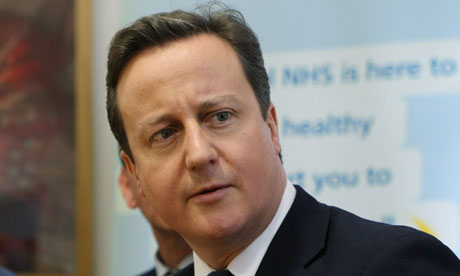
        David Cameron tells Muslim Britain: stop tolerating extremists


        David Cameron will today signal a sea-change in the government fight against home-grown terrorism, saying the state must confront, and not consort with, the non-violent Muslim groups that are ambiguous about British values such as equality between sexes, democracy and integration.

        To belong in Britain is to believe in these values, he will say. Claiming the previous government had been the victim of fear and muddled thinking by backing a state-sponsored form of multiculturalism, the prime minister will state that his government "will no longer fund or share platforms with organisations that, while non-violent, are certainly in some cases part of the problem".

        In a major speech to a security conference in Munich, he will demand: "We need a lot less of the passive tolerance of recent years and much more active, muscular liberalism."

        He will say that "some organisations that seek to present themselves as a gateway to the Muslim community are showered with public money while doing little to combat extremism. This is like turning to a rightwing fascist party to fight a violent white supremacist movement."

        Cameron's aides, aware the speech may prove highly controversial, refused to identify the organisations in his sights, but it is clear one target is the Muslim Council of Britain.

        Last night some Muslim groups criticised the prime minister for making the speech on the same day that the English Defence League is holding its biggest ever demonstration, in Luton.

        Cameron will also make clear that his tougher stance extends to unambiguous support for the democracy movement in Egypt: "I simply don't accept that there's a dead-end choice between a security state and Islamist resistance."

        His remarks suggest that a Home Office-led review into the government Prevent programme, being overseen by Lord Carlile, is going to lead to major changes.

        It also suggests that he has sided unambiguously with figures such as Michael Gove inside his cabinet rather than his party chairman, Lady Warsi, who has complained of fashionable Islamophobia.

        Cameron will argue many young men have been drawn to extremism due to a rootlessness created by the weakening of a clear collective British cultural identity.

        He will say: "Under the doctrine of state multiculturalism we have encouraged different cultures to live separate lives, apart from each other and the mainstream. We have failed to provide a vision of society to which they feel they want to belong.

        "We have even tolerated these segregated communities behaving in ways that run counter to our values. So when a white person holds objectionable views – racism, for example – we rightly condemn them. But when equally unacceptable views or practices have come from someone who isn't white, we've been too cautious, frankly even fearful, to stand up to them."

        He will warn his audience: "Europe needs to wake up to what is happening in our own countries. We need to be absolutely clear on where the origins of these terrorist attacks lie – and that is the existence of an ideology, Islamist extremism."

        This ideology he says, is entirely separate from Islam, and "at the furthest end includes those who back terrorism to promote their ultimate goal: an entire Islamist realm, governed by an interpretation of sharia".

        But he adds: "Move along the spectrum, and you find people who may reject violence, but who accept various parts of the extremist world-view including real hostility towards western democracy and liberal values.

        "If we are to defeat this threat, he says, its time to turn the page on on the failed policies of the past. So first, instead of ignoring this extremist ideology, we as governments and societies have got to confront it in all its forms."

        Echoing Tony Blair after 9/11, he rounds on the soft left that "lump all Muslims together, compiling a list of grievances and arguing if only governments addressed them, this terrorism would stop".

        Inayat Bunglawala, chair of an anti-extremist group called Muslims4Uk, said: "Mr Cameron's remarks are ill-judged and deeply patronising. The overwhelming majority of UK Muslims are proud to be British and are appalled by the antics of a tiny group of extremists and so will hardly be pleased with his lecture on integration.

        "Ironically, the PM's comments come on a day when the viciously Islamophobic English Defence League are to stage their biggest demonstration yet on our streets. Integration works both ways and we would expect Mr Cameron and his government to be openly challenging these EDL extremists. Instead, he and his senior ministers have to date remained totally mute. It is disgraceful."

        In opposition the Tories began considering the policy on Muslims, which critics say risks branding many as extremists even though they do not espouse violence.

        Critics say it is based on flawed neo-Conservative thinking and risks backfiring, while supporters say it is necessary to tackle those who are fellow travellers with violent extremists.

        source

        Saturday, 8 January 2011

        In India, a struggle for moderation as a young Muslim woman quietly battles extremism


        AHMEDABAD, INDIA -- Rubina Sandhi had settled in for a night of homework when panic swept through the narrow, congested alleys of her neighborhood.

        It was Sept. 11, 2001. Television sets in the mosques, tea shops and market were beaming images of the World Trade Center engulfed in flames in New York. Five months later, Rubina's house was burning as Hindu mobs torched Muslim areas of her city, leaving thousands of people homeless. She remembers smoke hovering over Ahmedabad just as it had over New York.

        With their few remaining possessions, Rubina's family members took refuge in a squalid relief camp and, several weeks later, moved into ramshackle housing on the edge of the city - where only Muslims lived and worked. "We felt like ghosts," recalled Rubina, who was then 12.

        The rioting was among India's worst sectarian violence in decades, hardening divisions between the Hindu majority and the country's 140 million Muslims as hard-liners on both sides sought to exploit the tensions. Soon after the rioting, many young Muslims in Rubina's neighborhood started following stricter forms of Islam as imams fanned out into the region's poorest Muslim areas, some bringing with them Wahhabism, the fundamentalist form of Islam practiced in Saudi Arabia.

        Some Indian Muslims even sought training in Pakistan to carry out acts of revenge in India, their version of violent jihad. For her part, Rubina chose a different struggle, determined to be a good Muslim and daughter as the community around her became more radicalized. She fought for the right to make decisions for herself, and she tried to find a way to voice her beliefs as a woman, as others around her were being silenced.

        Her decisions would mirror those of many other young Muslim women in her city who entered adulthood in the aftermath of religious violence and the Sept. 11, 2001, terrorist attacks. She would be asked to compromise her dreams, and her commitment to Islam would be questioned.

        Ahmedabad, a 600-year-old city in the state of Gujarat, has long been a vibrant historical center where religions aspired to coexist. It was the headquarters for Mahatma Gandhi's ashram and his peaceful freedom struggle and is celebrated for its Indo-Islamic architecture. Of the city's 5 million people, 11 percent are Muslim.

        Before the riots, many Muslims in Rubina's neighborhood celebrated Hindu traditions. Yet tensions between Hindus and Muslims here often rose to the surface.

        The violence in 2002 erupted after 59 Hindus were burned to death on a train as they were returning home from a pilgrimage site. Muslim extremists were blamed for the blaze, but the cause of the fire remains in dispute. In 2004, a government-appointed panel ruled that the train fire was an accident and not caused by Muslims.

        Soon after the anti-Muslim riots, extremist imams started to gain more clout. Among them was a firebrand televangelist named Zakir Naik, whose weekly sermons are broadcast from Mumbai and Saudi Arabia. Thousands of young Muslims have been drawn to his powerful slogans, including his declaration that to defend Islam, "every Muslim should be a terrorist."

        This more conservative brand of Islam became more acceptable, and it seemed to empower Muslim men in India. But it had the opposite effect on Muslim women. The imams and mullahs warned young women to stay indoors, to forgo higher education and to become dutiful mothers of as many children as God would give them. The children, they said, would replace the Muslims killed during the riots.

        "The Hindu mobs who attacked us called us all terrorists. Then the mullahs wanted to take away our freedoms," Rubina said, adding: "Everyone felt confused."

        Rubina's father, Mohammed Sandhi, had an eighth-grade education and a job selling incense sticks to Hindu temples. When he was a young boy, his grandparents had told him haunting stories about Muslim-Hindu tensions in the 1930s and rioting in the southern city of Hyderabad that forced the family to migrate to Ahmedabad.

        Mohammed believed in the aspirations of a rising India. He had saved for years to move the family into a comfortable two-room home, and he hoped that his two children - Rubina and her older brother, Irfan - would be the first in their family to attend college.

        But after the riots, Mohammed began to believe that his ambitions were naive, at least for Indian Muslims. "We thought that was the past, over, just our history. But after the 2002 riots, we worry every day that the violence could happen again," he said.

        In the street just outside the family's housing complex, 69 people, mostly Muslims, were burned alive during the riots, the first and largest single massacre during the crisis, a federal investigation later found.

        From there, fighting spread. Over the next two months, more than 200 mosques and hundreds of Muslim shrines were burned down, and 17 ancient Hindu temples were attacked, according to police and human rights workers.

        Everything in Rubina's home was destroyed: childhood photographs, birth certificates, school records and land deeds.

        The family left behind the charred ruins of their home for a relief camp, one of more than 100 that housed 150,000 Muslims after the riots.

        The city slowly calmed, but acts of violence on both sides continued and people remained fearful.

        Watching their parents weep, Rubina and Irfan grew angrier and more confused. "We never thought this could happen here," said Rubina's mother, Mumtaz Sandhi. "We thought we are Muslims. But we are also Indians."

        Silencing women's voices

        After several weeks in the camps, Rubina's family settled in Juhapura, a poor area on the western outskirts of the city where many Muslims moved from Hindu-dominated localities.

        The neighborhood has some middle-class areas but is largely poor, and activists have fought for basic government services, including paved roads, a sewage treatment system and garbage collection.

        During her teenage years, Rubina started to notice that her brother, like many young Muslim men, was growing more observant of Islam, more conservative, introverted. They had always been close, and tragedy had strengthened their bond. But their paths began to diverge as Irfan sought comfort and sanctuary in the strictures of Islam.

        Rubina, like other young Muslim women, feared she would lose her freedom under those strictures. She resisted calls from increasingly conservative imams to wear a traditional black garment that covers the body and sometimes the face.

        In Gujarat, more and more women suddenly started dressing more conservatively, often as a show of Muslim pride but also to ward off sexual advances and potential sexual violence.

        Rubina's mother began covering her hair, and Rubina said Irfan soon told her that he preferred to marry a woman who dressed conservatively.

        Around this time, Rubina met a social worker named Jamila Khan at a meeting for Muslim women concerned about the living conditions in Juhapura and profiling of Muslim men as terrorists. But Khan also spoke out against Muslim leaders intent on reeling in Muslim women, curbing the liberties enshrined in India's secular constitution. She described herself as an "Islamic feminist."

        "It doesn't matter what our women were wearing," Khan told Rubina and her friends. "What is important is still having a voice. Islamic rigidity is silencing our most dynamic Muslim female minds."

        Many of Rubina's peers were giving up on having a career and were marrying and starting families earlier. Instead of going to college to study business or medicine, many were taking up courses at nearby mosques that taught them to be good Muslim wives.

        But as Rubina entered young adulthood, she said, she became aware of the hypocrisy among many of the imams. Although they preached that Muslim women should be homemakers, they sent their daughters to private schools and universities in Britain, Canada and the United States.

        During her first and only year at college, a Hindu extremist group circulating on campus began warning Hindus against having friendships or romantic relationships with Muslims. Rubina said some Hindu students started calling the places where Muslim students gathered "the Gaza Strip" or "Pakistan."

        "But I am Indian, too," Rubina said she wanted to tell them. She felt ashamed. Betrayed. Silenced.

        Fighting for change

        At home, religion had started to drive a wedge in Rubina's family. Irfan, when he talked to her at all, often chided her for not covering her hair. He wanted her to quit school and marry a man whose version of Islam was as strict as his. With her father's support, she refused.

        "We don't really talk that much right now," Rubina said of her brother, who declined to be interviewed for this article.

        Her father arranged for her to marry a moderate Muslim, a man who had a promising job as a hotel manager and to whom Rubina felt attracted. Still, his family insisted that she withdraw from college to start preparing for her nuptials. With her brother and father pushing for the marriage, she agreed.

        She gave up her dreams of an English-language degree, a steppingstone for working-class Indians seeking better jobs in the country's booming call centers and outsourcing industries.

        The trajectory of her life suddenly seemed predictable, she thought, from fiancee to wife to mother and, as is tradition in many Muslim families, caretaker of her husband's home and family. But she still refused to cover her hair.

        Not long after she was engaged, 10 gunmen - young Muslims suspected to be part of a Pakistani jihadi group - crossed the Arabian Sea and came ashore in Mumbai, India's financial and cultural capital. During a three-day siege of the city, the assailants killed 166 people and injured scores - including Muslims - in part as retribution for atrocities in Gujarat, according to recordings of their cellphone conversations, which the Indian government later released.

        It was a turning point for India's Muslim community. For the first time in anyone's memory, many Muslim leaders came together to express anger against Pakistan, where the attackers were said to have been trained. Muslims in Mumbai even refused to bury the gunmen, nine of whom died in the attacks. The backlash was also directed at extremists within the Muslim community.

        "Many Muslims were very worried that we would be attacked after the siege of Mumbai," Rubina said. "We stayed at home, closed our shops. But after watching the Muslims of Mumbai protest in the streets, some here found the courage to protest against the terrorists and explain where we stood."

        The anti-extremist movement spread to other Indian cities with large Muslim populations, including Ahmedabad. Rubina and other women in her neighborhood saw it as an opportunity to speak out against extremism at a time when fatwas, or religious decrees, against women were on the rise.

        "Why do Muslim woman have to be so docile and submissive?" asked Khan, the social worker, who opened a chapter of a national Muslim women's group just down the street from Rubina's house. "Everyone is complaining about terrorists. This is the moment for Muslim women to speak up about our rights, too."

        The women's group filed, and later won, a lawsuit against the city accusing it of failing to provide electricity, water, and sewage and trash services in Muslim communities.

        Emboldened by that success, Rubina soon began studying health issues as part of a government campaign to help young mothers in the neighborhood care for sick children, offering health tips and medicine.

        "Many families here still think it's not safe for a girl to be out in offices or on the roads," she said one recent day, braiding her long hair and loading her briefcase with notes about neighbors in need.

        She walked past the mosque where her brother prayed. Nearby, children played hopscotch over open sewers clogged with plastic bags and crushed soda cans. She paused and tried to remember what her life had been like, how safe she had felt before the riots. Now 22, she wondered whether her life would have been different.

        "Would we have a better life?" she asked. "Would Muslims have a better life?"

        Just weeks ago, Rubina married the hotel manager. "My husband and his family will let me work. That is what's important," she said. "I don't want to sit home. There is a lot of work to do in the community. We are still recovering."

        Her brother attended the wedding ceremony and praised her work as a health activist, one of the few times he has let on that he was proud of her.

        Rubina glowed in a red sari, her hands stained with henna. She danced with the women in a midnight celebration at her home. And her father and brother danced in a nearby room.

        source

        Monday, 29 November 2010

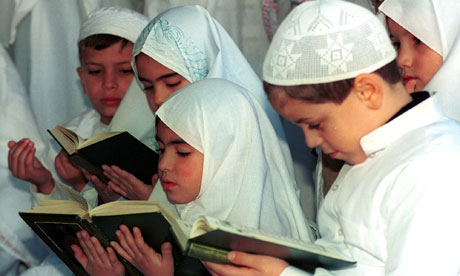
        This trend of young Muslim girls wearing the hijab is disturbing


        Anyone walking on the streets of Egypt will notice a phenomenon that wasn't so evident only a year ago: the increasing numbers of little girls (and by "little", I mean as young as eight years old in some cases) wearing headscarves and abayas. While this sight was previously confined to third-class trains and rural areas, it has now become increasingly common in cities and among well-to-do families.

        In general, the age at which Muslim girls in Egypt begin to wear the scarf has dropped. Back when I was in high school, very few female students wore headscarves. Today, my younger brother (who is 15) tells me that almost all the girls in his middle school wear a scarf. It hasn't stopped there either, having caught on in primary schools.

        The very sight of a little girl in a scarf is both disturbing and confusing. Adult Muslim women are expected to dress modestly so that men outside the family cannot see their bodies. But what is the point of a child or pre-pubescent girl wearing a hijab? It hints at what may be a disturbed (one is tempted to say diseased) concept of sexuality in the mind of the father who thinks his little girl should be covered up. What exactly is tempting about the body of an eight-year-old that needs to be covered?

        Some suggest that I am overanalysing, and that the reason parents like their little girls to don the scarf is simply so they can "get used to doing the right thing from a young age". They compare it to how Muslim parents teach their children to fast until noon during Ramadan so that when they are older it won't be so hard to fast until sunset, or how fathers take their kids to the mosque on Fridays to get them used to it. We all know how hard it is to kick habits we were taught in early childhood. Getting a little girl "used to" the hijab effectively obliterates the "free choice" element by the time the girl is old enough to think.

        The hijab is aggressively marketed as the proper attire for a respectable woman. That isn't new. What is new is that now even children are targets of this marketing. One need look no further than Fulla, the Middle Eastern version of Barbie, designed to suit Muslim values. When I recently stepped into a Toys R Us store in Cairo, it was quite shocking to see a Fulla doll clad in a headscarf and a full length abaya, the box proudly proclaiming "Fulla in her outdoor clothes", in effect telling little girls that there is only one proper way to dress outside the house.

        Many defenders of the hijab point to the influence of "decadent western culture", endlessly criticising how western TV sexualises and objectifies women, though they fail to understand that they are doing they exact same thing to little girls when they constantly promote the hijab. If it is so important to cover up, there must be something worth covering up and hiding from men. Inevitably, little girls are taught to view themselves as sexual objects that must be covered up from an early age – and it is this culture permeating the minds of our younger generations.

        To make matters worse, what about the brothers of these girls? Will they not grow up with the same mentality? If they see that their sisters have to be covered up from a very early age to avoid being exposed in front of men, it is only natural that they grow up with the concept that women have to be covered, controlled and restricted.

        I once heard the naive suggestion that dressing your daughter modestly would ward off paedophiles. On the streets, though, it seems more likely that it will simply lead to increased harassment. A 12-year-old in a scarf could pass for 16 to the casual observer, making her "woman" enough to be harassed.

        On a more sentimental level, making a little girl wear a headscarf deprives her of her childhood. While other girls will be doing their hair or playing with Barbie or wearing cute dresses, she'll be doing what grown-ups do – wearing a headscarf and full length abaya.

        Her parents will defend her right to wear it, saying that the girl chose it herself because some of her friends were doing it and she wanted to fit in, or to be grown up like mummy, much in the same way as a boy asks his father for a cigarette so he can be like daddy. But parents usually know better in the latter case.

        Finally, I am sure that when this article is translated into Arabic and posted on Egyptian websites, the usual flood of comments will ensue; how I am anti-hijab, how I want to strip Egyptian and Muslim women of their modesty, how I want Muslim women to "walk around naked like western women", and so on. I tell them my view on the hijab is irrelevant. The issue at hand is: what exactly is the point of imposing a scarf on a little girl, and why is it becoming more common?

        source

        Tuesday, 18 May 2010

        Muslim rocker wields guitar in rock’n’roll jihad


        HE IS a long-haired rocker who plays a mean riff and cites Led Zeppelin among his influences — and now he has been unveiled as the government’s latest weapon in the fight against Al-Qaeda.

        Salman Ahmad, a Pakistani musician whose band has sold more than 30m albums, is to urge Muslim students to choose an electric guitar over extremism.

        The self-proclaimed “rock’n’roll jihadist” will this week take his message to students at Oxford University, Imperial College and the London School of Economics, which all have sizeable Islamic societies.

        “You counter radicalisation through telling the truth and if that comes from the power of a guitar then do that,” said Ahmad, who has worked with the Obama administration to tackle extremism on American college campuses.

        The number of British students linked to terrorist plots has caused serious concern, with fears that some UK campuses have become recruitment grounds for Al-Qaeda-inspired groups. The most recent case involved Umar Farouk Abdulmutallab, an engineering graduate of University College London, who is accused of trying to blow up a passenger jet over Detroit with a bomb hidden in his underpants.

        “I have seen at first hand young Muslims being radicalised by the distorted message of Islam,” said Ahmad, 46, a practising Muslim who was born in Lahore but spends most of his time in New York where he is a part-time lecturer in Islamic music and poetry. “They’re fed this guilt narrative that in order to be a good Muslim you have to give up the electric guitar, or you can’t wear jeans, or you have to cut your hair.”

        He said he would discredit radical interpretations of Islam by showing that it encouraged creative flair and his aim was to prevent students being brainwashed by “murderous thugs masquerading as holy men”.

        Ahmad, frontman of the band Junoon, added: “Rock musicians and extremists have the same target market — the youth.” His tour of UK campuses is funded by the Home Office via the Quilliam Foundation, a think tank.

        Ahmad, who has faced death threats from hardliners accusing him of being “un-Islamic”, said young Muslims who rail against perceived injustices in countries such as Iraq, Afghanistan and Palestine need an alternative outlet to channel their frustrations: “Talking about Islam through arts and culture [could fulfil that role] and open up minds to another point of view.”

        source

        Sunday, 16 May 2010

        Terrorists Kidnap a Hero


        Militants are holding the Mother Teresa of Somalia hostage, and as a result, dozens of children have already died. Eliza Griswold talks to Dr. Hawa Abdi from the home where she is being held captive.

        At dawn last Wednesday, Dr. Hawa Abdi, a 63-year-old Somali gynecologist, woke to the whistle of shells falling around her at her family farm. This was nothing new. For the past four years, Islamist militias have been battling Somalia’s weak and ever-changing government for power over the world’s longest-running failed state. But 10 minutes later, those familiar sounds turned into 500 militant members of al Qaeda-linked Hizbul Islam, one of the two lethal Islamist groups vying for control in Somalia, bursting into her home and surrounding her hospital. They rounded up dozens of Dr. Hawa’s employees and killed two of them. (Twenty security guards are still being held hostage.) They told Dr. Hawa that she could no longer be in charge of the hospital she has spent the last 15 years building, or the refugee camp that has sprung up around it.

        “We came three months ago and told you that as a woman you can’t run this place,” the militant leader said. Dr. Hawa recounted this story to me last night by phone from her bedroom, where she was being kept under house arrest by five militant members of Hizbul Islam who were stationed outside her room and in the hospital. “It’s very dangerous for me now. I am still not free,” she said. “It’s strange how they think, these people. They think that women can’t do anything, have property, or be leaders.”
        “I’m in my room and afraid to go anywhere,” she told me. “The refugees have come to sleep with me. But the militants are stronger than us, so we are praying to God.”

        Hours earlier, the militants had told her to quit talking on the phone, but she refused. She said she had nothing left to lose. “This isn’t government,” she said. “This is my home.”
        Dr. Hawa is one of Somalia’s few heroes. A divorced mother of two, she trained in Ukraine as a gynecologist during the Cold War. In 1993, she opened the one-room women’s hospital. Given Dr. Hawa’s reputation as a doctor and humanitarian, people suffering from the famine of the early ’90s flocked to her farm. She buried more than 10,000 people who died of starvation there. The latest wave of refugees has built their homes, which look like overturned bird’s nests, on the hill that serves as a mass grave.

        I first walked up this hill with her in 2007, when the camp seemed full to bursting with 20,000 recent arrivals. When I visited again, in 2008, the number of displaced people had grown. Now the population has more than tripled. The numbers are indicative of the spiraling humanitarian crisis that is threatening to outdo the infamous early 1990s. When that famine ended, Dr. Hawa’s work did not. She kept adding on to her hospital.

        Hawa Abdi and her operating team during a gynecological procedure. She opened her private clinic for women and children in 1983. (Seamus Murphy/VII Network) All 400 beds were full when last week’s shelling started. Eighty-two children suffering from malnutrition or cholera were waiting for the doctor in her feeding center. Seventy-two thousand other people were squatting on her crammed farm. She sold all her family gold long ago to feed them. She offers every family a small plot of farmland so they can grow their own corn and vegetables. Until two months ago, the World Food Program supplied at least nominal help to Dr. Hawa, providing corn for 500 families. Then things got so bad it couldn’t get shipments of food through. Doctors Without Borders ran a clinic on Dr. Hawa’s land, too—until last Wednesday, when Hizbul Islam had the depravity to take the popular doctor hostage.

        The militants have been holding Dr. Hawa under house arrest for the past five days. In the beginning, they hung their black flag outside the clinic to show their power. In response, Dr. Hawa had the nerve to hang up a white one. “This is my protest,” she told them. “Take your flag down. Even the holy Quran says you can’t enter a private house without an invitation.” The militants told her she should not dare to speak to them in this manner. But as usual, she refused to back down.

        Somalia’s baffling war has its panoply of villains—from warlords to al Qaeda-linked militants—all vying for control of the country. The fighting began when neighboring Ethiopia invaded Somalia in late 2006 with the backing of the United States. At the time, Somalia was under the sway of a loose group of religious leaders and businessmen who believed that the country’s only hope for survival lay in Islamic law. According to the CIA, al Qaeda-linked militants were also hiding out in this badland. America hoped to uproot these unsavory men and send them fleeing down Somalia’s long coast to the border of neighboring Kenya, where the militants would be easy to arrest. The plan was to dislodge a small number of bona fide terrorists and deny a larger number of their potential recruits any comfortable hiding zone in East Africa. The plan didn’t come off, however, and instead this invasion helped to create the very enemy the U.S. was seeking to destroy: a group of well-armed radical religious fighters who believed that Islam demanded they protect their land and its people.

        Over the past several years, these militants, known as both al-Shabab (The Youth) and the newer group Hizbul Islam (the Islamic Party), have put themselves at al Qaeda’s disposal. Hizbul Islam is led by Sheik Hassan Dahir Aweys, a former military man who is on both the U.S. and the U.N. terrorist watch lists. (In 2009, al-Shabab issued the popular web video “Here I am at your service, Oh Osama.”) On their own and together, the militants have killed African Union peacekeeping troops, murdered Somali journalists and international aid workers—and attacked fellow Somalis like Dr. Hawa. Their willingness to break all such societal ties is an indication of their power and their unpopularity.

        Dr. Hawa says she will rebuild, but much has been lost. At least 20 of the 82 children who were at the feeding center are now dead. There is still some water for every family, but no food, she said: “No food. Totally no food. Peace is more important than food.” I thought this was a kind of platitude, but she corrected me. Without peace—a cessation of violence—no one could go to their farms. They were stuck, like she was, waiting for the militants to leave. Dr. Hawa was already demanding reparations, which she knew Hizbul Islam wouldn’t pay. Still, she kept asking. Her hospital has been decimated. “The windows, the doors, the operating tables, the hospital beds, the sterilization equipment, they destroyed all,” she said. “Every, every, every instrument they took or they broke.”
        The only thing protecting her is the sheer number of people surrounding her—the displaced people she has sheltered, many for more than a decade, are now protecting her. They are arriving by the hundreds to visit her in her room. “I’m in my room and afraid to go anywhere,” she told me. “The IDPs [the internally displaced people, shorthand for refugees who haven’t yet crossed international borders] have come to sleep with me. But the militants are stronger than us, so we are praying to God.”

        source

        Thursday, 13 May 2010

        Speaking up: Young muslims take on the extremists


        How can mainstream young Muslim students get heard when fundamentalists often have a stranglehold on their groups and societies? Saniya Gour, 17, an east London A-level student, has struggled. "Everyone where I live is so extreme. There are very few who are not hardline about things. And, as a girl, they don't want to hear what you have to say. I go to Leyton Sixth Form College and when I asked one of the heads of Isoc (the Islamic Society) if I could speak, he said no. They don't even like me talking to guys. They say: 'You're wearing a headscarf, you shouldn't be talking to boys'."

        However, Saniya and other young Muslims now have a national forum where they can learn leadership skills and how to speak up. The Young Muslim Leadership Network (YMLN), funded by the Government as part of its controversial Prevent programme designed to stop violent extremism, is working hard to make its mark. It needs to. Early soundings by some of its two dozen members show that it is up against powerful forces.

        The network was founded last year for young people aged 16 to 21, and has three groups – two in London and one in Birmingham. The central London group is researching university Islamic societies, and members have been shocked at what they have found. Hazura Bazeer, 18, a member of the central London branch of the YMLN, is in her final year at Coombe Girls' School in New Malden, Surrey, and has a place to study medicine at King's College, London. She says: "In one case that we heard of, a girl was slapped in the face for not wearing a headscarf, and, in one society, women were not allowed to speak and had to hold up their questions in writing."

        On many campuses, societies are run by extremists, and moderate Muslim students avoid them. Such students also know that these societies are now closely monitored by the authorities – even more so after the recent University College London-educated alleged "underpants bomber" – and worry about the consequences of membership.

        She points out that a lot of societies don't have any election process. "There is no democracy," she claims. "Posts are just handed on, so it is all just a vicious circle."

        Her group is sending out a questionnaire to students and consulting on what changes people would like to see. It is also planning to visit more open Isocs, such as those at Oxford and Cambridge, in order to produce a code of good practice. "These societies have a lot of potential and ought to be a really cool part of university life."

        Muhammad Saqib, 20, who is a student at Manchester University and active in the Birmingham group, has only recently become a practising Muslim. "I only started praying last year. Before that, I just thought it was a strict religion with a lot of rules that just seemed quite depressing. All these Muslims blowing themselves up gave quite a negative impression."

        However, a talk at the LSE made him realise "that Islam is just the opposite", and now he is helping to produce a series of short video clips aimed at counteracting stereotypes and encouraging young Muslims to become engaged in society. The group has already interviewed Clare Short, the former Cabinet minister, and various prominent Asian figures, and, when the DVD is finished, they plan to show it in schools and to youth groups.

        But Naqeeb Ahmed, 29, project officer for the network, knows from his experience at the University of Birmingham that young Muslims are often prime prey for extremists. "They've been brought up in liberal families, but then they get to university and start to explore their own identity and who they are as a Muslim, and they get drawn into these societies and become more and more extreme so that, eventually, even if their own father dies, they refuse to say a prayer in the house for him because they have been told that that is wrong. I've seen it so often myself. And these groups are strong and well-funded. We're up against the petrodollar – and how easy is it to fight that?"

        Najda Khan, 18, who works for Bradford Metropolitan District Council, says schisms within Muslim communities can be deep and divisive. "Where do I start?" she says, rolling her eyes. "It can be about someone praying in the wrong way, about the Prophet's birthday, about issues with the Council of Mosques." She has already founded a campaigning environmental group and spoken to the House of Lords. "I'm passionate about getting young Muslims politically active."

        These young people are also working to counteract prejudices about Islam. Crude stereotypes of oppressed women and bushy-bearded terrorists are, they say, reinforced by an irresponsible media, while barriers such as poverty, lack of confidence and family tensions stop many young Muslims playing their full part in society.

        The network recently held its second national conference in London, and Bazeer, like others, values the chance to meet. "There aren't many Muslims where I live, and I don't have other Muslim friends at school. Alcohol is a big problem. You get invited to birthday parties, and there you are with a load of drunk people and you're sober. It can be difficult. And my friends say: 'Oh you're so innocent. You don't do this and you don't do that'. Everyone in the network is dealing with these kinds of misconceptions and stereotypes."

        The network works alongside other organisations, such as the Federation of Student Islamic Societies and the Young Muslims Advisory Group, set up by Hazel Blears, the former Secretary of State for Communities and Local Government. However the Prevent programme, which has backed the YMLN with £110,000, has drawn widespread condemnation from critics who say it is being used to spy on Muslim communities. In March, a cross-party committee of MPs published a report, after an investigation into the three-year-old programme which has spent £53m on funding more than 1,000 community projects, which found it was doing more harm than good.

        But Don Rowe, senior adviser on curriculum resources for the Citizenship Foundation, which administers the network, points out its aim is simply to "increase the young people's understanding of how our society works, so that they will feel more comfortable engaging with people in power and have more faith in the system and how it works. If they can sit down for an hour with someone like Clare Short and discuss a whole range of issues they have identified as important, it is bound to increase levels of trust and understanding".

        source