Showing posts with label Martyr. Show all posts

Monday, 23 September 2024

al-Hallaj: Mystic Martyr of Sufism


Explore the life and profound teachings of Husayn Ibn Mansur al-Hallaj, the 9th-century Sufi mystic known for his controversial declaration, “Ana al-Haqq” (I am the Truth) & the factors which led to his martyrdom. In this video, we delve into al-Hallaj’s spiritual journey, his poetry, role in Sufism, and the lasting impact of his philosophy on Islamic mysticism.

Monday, 7 October 2019

The imam who died fighting racism in South Africa


Two momentous events occurred in Cape Town in South Africa on 29 September 1969.

The first was a huge funeral march - some 40,000 people carried the coffin of Imam Abdullah Haron for about 10km (six miles) to his final resting place in Mowbray Muslim Cemetery.

And at night a rare and massive earthquake shook the earth.

For many who attended the funeral these two events are indelibly connected - they say the death of the pioneering 45-year-old South African imam was so painful and so shocking.

Imam Haron died in a police cell on 27 September, after 123 days of solitary confinement and daily interrogations about his involvement in the struggle against the racist system of apartheid, which ended in 1994 with the election of Nelson Mandela as South Africa's first black president.

Imam Haron was the first cleric of any faith to die in custody under the apartheid regime. His death signalled that even men of God were not safe from an increasingly repressive, white-supremacist state.

His death caused global outrage, and he became the first Muslim to be commemorated at the famous St Paul's Cathedral in London.

The security police said he died after falling down a flight of stairs.

They said the two broken ribs and 27 bruises on Imam Haron's body had nothing to do with them, despite their notoriety for using torture and beatings.

The imam's family say they do not accept "that lie", and are demanding a fresh inquest to mark 50 years of his death.

Backing the campaign is visual artist Haroon Gunn-Salie - who is named in honour of the imam and has made several art works memorialising his life and death.

Gunn-Salie's latest work, Crying for Justice, is an installation in the grounds of the Castle of Good Hope in Cape Town - a symbolic burial ground of 118 unmarked graves, one for each of the people who he says died in detention during apartheid, including Imam Haron.

They were all held without trial - and the police said they fell down stairs, slipped in showers, or took it upon themselves to jump out of windows.

No-one has ever been held responsible for any of those deaths in detention,and it's a sore, open wound for the families.

When finished, viewed from the castle ramparts, the graves Gunn-Salie has dug will spell out the word: Justice?

"The artwork is as much as a cry to the heavens as a cry to the courts," says Gunn-Salie.

"It's a public statement asking, quite literally, to unbury the past, to dig up the files, to dig up the evidence, and bring closure to the families."

Sadly, his 93-year-old widow Galiema Haron died on Sunday, exactly 50 years after her husband's funeral, without achieving closure.

In a tribute to her, governing African National Congress MP Faiez Jacobs said: "Widowed by what appeared to have been a deliberate killing, she raised her children alone, always wondering how her beloved husband had died.

"If the apartheid rulers thought they could kill her spirit, they were wrong. She stood tall, defiant and principled."

Imam Haron was one of the youngest imams in South Africa - only 32 when he was appointed in 1955 to lead the congregation at the Stegmann Road Mosque in Cape Town.

He was a pioneer in Cape Town's mostly conservative mixed-race Muslim community.

Imam's Haron's widow, Galiema, was left to care for their children, including Fatiema
He introduced adult education classes, discussion groups where the topics were chosen by young people and encouraged women to take part. And he invited children to sit at the front of the mosque, rather the back, and to lead prayers.

He also invited people from outside the Muslim community - including trade unionists and liberal politicians - to come and talk to the young people about what was happening in South Africa.

"He didn't fit the pattern of the Muslim clergy which was quite ritualistic," says Aneez Salie, a journalist, former member of the ANC's armed wing and father of the artist Gunn-Salie.

"He was very progressive, away ahead of his time," Mr Salie, who at 13 attended the imam's funeral, told the BBC.

Fatiema Haron-Masoet - the youngest of Imam Haron's three children - was almost six when her father died.

"He had a gentle soul, he was very kind and loving and extremely emotionally accommodating," she told the BBC.

The imam's son Muhammed Haron, now a theology professor in Botswana, was 12 when his father died.

He remembers his father as a deeply spiritual man who had fasted twice a week since he was a teenager - and that wherever he went he wore a black kafiya, the traditional Arabic scarf, or fez.

"That is his identity - a theological man, a man from the Muslim tradition."

But he was also a "socialite" and "a man larger than life" - well-dressed, suave, with a sweet tooth, and a passion for rugby, cricket and the cinema.

The imam had his own projector - and Muhammed remembers groups of the imam's friends gathering at the family home where his father would screen films "often beyond midnight on a Friday and Saturday".

The imam was a huge fan of the fictional spy James Bond. Perhaps with a twinkle in his eye, he named his home Golden Eye - after the sprawling Jamaican estate of Ian Fleming, the creator of 007.

Golden Eye, a double-storey house, had a huge balcony - and the railings were designed as musical notes.

"Music was not totally approved of theologically by the conservatives," Muhammed says.

"But my father was theologically able to skirt around some of these issues that may have been considered taboo."

"He had a wider vision of things rather than a narrow notion," Muhammed explains.

What was apartheid?
  • Introduced in 1948 by the Afrikaner-led National Party government
  • Black people regarded as inferior
  • No vote for black people in national election
  • Races segregated in all aspects of life
  • Prevented black people from owning land in much of South Africa
  • Reserved most skilled jobs for white people
  • Scrapped in 1994 with the election of Nelson Mandela as first black president

Imam Haron's willingness to forge alliances with people of other races, as well as with Christians and communists, made him a particular threat to an increasingly brutal regime desperate to divide and rule.

Former rugby player Yusuf "Jowa" Abrahams - one of the imam's students - remembers how the imam tried to raise consciousness in the Muslim community about the injustices of apartheid, especially for those most hit by apartheid's cruel and racist laws: black South Africans.

"He said to us we need to break down racial barriers and work towards the future," Mr Abrahams told the BBC.

The imam practised what he preached, regularly visiting black communities in townships such as Langa, Gugulethu and Nyanga, where he became fondly known as mfundisi, or priest.

As well as being an imam, Haron also worked as a salesperson for the confectionary company Wilson Rowntree. This job meant he could legally move in and out of the townships - even after the apartheid regime restricted people's movements and segregated South Africa along racial lines with laws like the Group Areas Act.

In a public meeting held at Cape Town's Drill Hall in May 1961, the imam condemned that law as "inhumane, barbaric and un-Islamic". Four years later, like millions of other South Africans, the imam and his family were forced out of their own home.

Most other imams were too scared to speak out - or they were indifferent, content to be left alone to worship in peace, believing that it was not their duty to stand up to a repressive government.

But Imam Haron believed otherwise, and he started taking part in clandestine anti-apartheid operations.

He deliberately kept the details of what exactly he was involved in a secret from his wife and his congregation - in order to protect them.

Mr Abrahams believes the imam "died with his secrets".

However, he is known to have developed close ties with the then banned ANC and Pan Africanist Congress (PAC), both of which were waging an armed struggle, and the Black Sash - a non-violent legal and welfare movement of volunteer white women.

In 1966 and at the end of 1968, the imam went on a pilgrimage to Saudi Arabia. He also secretly travelled to Egypt to meet political exiles and the World Islamic Council.

And he went to London, where his oldest daughter Shamela was studying. There he also met Canon John Collins of St Paul's Cathedral, an Anglican priest who was raising money for the destitute families of political activists who had been killed, detained, or forced into exile.

The imam and the priest struck up a deep friendship and Abdullah Haron agreed to smuggle in and distribute money on his return to South Africa.

But by the time of his return to South Africa in 1969, the imam knew he was in danger. On 28 May 1969 he was picked up by the apartheid police and four months later he was dead.

At the imam's funeral, Victor Wessels, a teacher and Marxist, said: "He died not only for the Muslims. He died for his cause - the cause of the oppressed people."

A few days later, on 6 October 1969, Imam Haron was commemorated in St Paul's Cathedral. His friend, Canon Collins, spoke of him as a martyr, signalling the deep respect the imam commanded across religious and racial lines.

Link

Monday, 18 January 2016

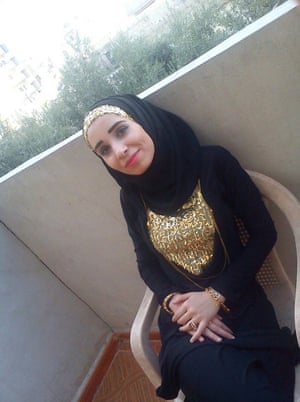
Ruqia Hassan: the woman who was killed for telling the truth about Isis

 A hero and a martyr: Inna lillahi wa inna ilayhi raji'un
 A photograph of Ruqia Hassan posted on Twitter
After Hassan’s arrest, her distraught family visited the prison every day, desperate for news. They were never allowed to see her. Rather than shutting down her Facebook page, the militia left it active to entrap her friends – at least five people are thought to have been arrested as a result, according to Abu Mohammed. Months would pass before the family learned of Hassan’s fate. “We hoped that she would be released,” says Ali. “But on New Year’s Day her brother went to see Isis again; they told him they had executed her and five other women. They wouldn’t give the family her body.”
Since then, Hassan’s cousins have been unable to contact the family in Raqqa. In her last Facebook post, Hassan wrote: “I’m in Raqqa and I received death threats. When Isil arrest me and kill me it’s OK, because [while] they will cut [off] my head I will have dignity, which is better than living in humiliation.”
Abdullah says he hopes his cousin will be an inspiration. “She taught many people a lesson they would never forget. She taught us not to fear the tyrant ... I’m sure we will have many other Ruqias from now.”
Ali, too, could not be prouder of his cousin. “She become a hero in our village for her courage and being the voice of the truth. She was fearless ... A little Kurdish girl from Kobani faced a brutal militia and exposed them. She will never be forgotten.”

Monday, 22 June 2015

The living martyr, a visit to the Bakr family in Gaza

 Sharifa Bakr sits in front of posters commemorating Ahed and Zachariah Bakr, photo by Dan Cohen
I recently visited the Bakr family in their home in Gaza’s Shati refugee camp. Sharifa Mustafa Bakr, 48, is the mother of 9-year-old Zachariah and grandmother of Ahed, two of the four boys killed.  “Zachariah was my favorite because he was the youngest one,” she said pointing to the poster above her that commemorates his brief life. “He was the sweetest – so innocent and playful,” she told me as tears began to stream down her cheeks.
Sharifa Bakr suffers from heart problems and had just returned from the hospital on that fateful day. “Zachariah asked for a shekel to use the internet, and I promised I would give it to him when he returned,” she said. That was the last time Sharifa Bakr would see her beloved grandson. “When he left, I felt that my soul went with him,” she stammered as she collapsed into tears.
After lying down to watch the news, Sharifa Bakr read on the ticker that four children had been killed on the nearby beach. She knew that the children typically play soccer on the beach because the refugee camp has no parks or open spaces. Upon seeing the news, she ran to Al-Shifa hospital where she encountered a friend who informed her that the dead children were in fact from the Bakr family.
12-year-old Muntasir Bakr was one of the four boys who narrowly survived the airstrikes.
“We call him the living martyr,” Sharifa Bakr told me.
Muntasir was hit with shrapnel which still remains in his head and causes him headaches. He has severe trauma that remains undiagnosed and untreated, and has violent episodes which have caused him to attempt suicide and attack his siblings. I sat with Muntasir in his family’s home. He was polite and good-natured but the trauma from last summer was visible on his young face and audible in his voice. He spoke like a man who had lived many lifetimes – not like a child nearing his teenage years.
“Everyday someone dies. I went to play at the beach yesterday and I couldn’t because I was overwhelmed with fear. It’s a life full of sadness,” he said. “Netanyahu destroyed life.”
Unbeknownst to me, his father had told him to recount the massacre on the beach. “We barely started playing when the first missile exploded right next to my cousin Ismael,” he said. “We started running away and then I told them ‘lets go back and get Ismael then we’ll run away again.’ When we did that another missile exploded right next to us. My brother and my nephew died because they let go of my hand. Two missiles exploded around me. It was foggy when we were running, I turned around and saw my nephew and brother lying on the ground.”
“Before the war, I wanted to be a fisherman like my father,” Muntasir told me. “Now I want to be a fighter so that I can avenge my brother, my nephew and my cousins. Imagine if you were a child and a missile exploded right beside you. What would you do?”
Muntasir became despondent and silent as he looked down. His father, 55-year-old Subhei Fares Bakr, told me Muntasir had not slept in 24 hours. He attempted to medicate his son but Muntasir was not responsive and the pill fell out of his mouth. Subhei Bakr called a cousin over to help put the pill down his throat, but Muntasir began shaking violently. His cousin restrained him from injuring himself, and finally Muntasir passed out. His cousin lifted Muntasir’s limp body into his arms and ran down the stairs and outside into Shati camp’s dusty alleyways. I ran closely behind as they hailed a taxi. We crammed inside and the car sped through the streets of Gaza City. “Get out of the way,” another cousin in the front seat screamed at traffic.
We arrived at a barebones medical facility where Muntasir was laid down on an examination table. A doctor administered smelling salts, immediately waking Muntasir. Still dazed, his cousin helped him walk to a sink where he washed his face. Muntasir was weak and his cousin once again carried him out.
“There’s no medicine or treatment for him here. We have to get him out of Gaza,” Muntasir’s cousin told me as he carried him away. We hailed another taxi and headed back to the Bakr’s home in Shati camp.
- See more at: http://mondoweiss.net/2015/06/living-martyr-family#sthash.my7x0diV.dpuf

Monday, 29 September 2014

ISIS kills Iraqi woman activist in Mosul


Militants with the Islamic State of Iraq and Syria (ISIS) group publicly killed a rights lawyer in the Iraqi city of Mosul after their self-styled Islamic court ruled that she had abandoned Islam, the U.N. mission in Iraq said Thursday.

Samira Salih al-Nuaimi was seized from her home on Sept. 17 after allegedly posting messages on Facebook that were critical of the militants' destruction of religious sites in Mosul.

According to the United Nations Assistance Mission in Iraq, al-Nuaimi was tried in a so-called "Sharia court" for apostasy, after which she was tortured for five days before the militants sentenced her to "public execution."

She was killed on Monday, the U.N. mission said. Her Facebook page appears to have been removed since her death.

"By torturing and executing a female human rights' lawyer and activist, defending in particular the civil and human rights of her fellow citizens in Mosul, ISIL continues to attest to its infamous nature, combining hatred, nihilism and savagery, as well as its total disregard of human decency," Nickolay Mladenov, the U.N. envoy to Iraq, said in a statement, referring to the group by an acronym.

The militant group captured Iraq's second largest city Mosul during its rapid advance across the country's north and west in June, as Iraqi security forces melted away. The extremists now rule a vast, self-declared caliphate straddling the Syria-Iraq border in which they have imposed a harsh version of Islamic law and beheaded and massacred their opponents.

In the once-diverse city of Mosul, the group has forced religious minorities to convert to Islam, pay special taxes or die, causing tens of thousands to flee. The militants have enforced a strict dress code on women, going so far as to veil the faces of female mannequins in store fronts.

In August, the group destroyed a number of historic landmarks in the town, including several mosques and shrines, claiming they promote apostasy and depart from principles of Islam.

Among Muslim hard-liners, apostasy is considered to be not just conversion from Islam to another faith, but also committing actions that are so against the faith that one is considered to have abandoned Islam.

The Gulf Center for Human Rights said Wednesday that al-Nuaimi had worked on detainee rights and poverty. The Bahrain-based rights organization said her death "is solely motivated by her peaceful and legitimate human rights work, in particular defending the civil and human rights of her fellow citizens in Mosul."

In the nearby town of Sderat, militants on Tuesday broke into the house of a female candidate in the last provincial council elections, killed her and abducted her husband, the UN also said. On the same day, another female politician was abducted from her home in eastern Mosul and remains missing.

The ISIS extremists' blitz eventually prompted the United State to launch airstrikes last month, to aid Kurdish forces and protect religious minorities in Iraq.

This week, the U.S. and five allied Arab states expanded the aerial campaign into Syria, where the militant group is battling President Bashar Assad's forces as well as Western-backed rebels.

Nearly a dozen countries have also provided weapons and training to Kurdish peshmerga fighters, who were strained after months of battling the jihadi group.

In other developments Thursday, German Defense Minister Ursula von der Leyen visited northern Iraq for talks with Kurdish leaders about the fight against ISIS extremists and Berlin's efforts to help with arms deliveries.

Thursday also marked the start of German arms deliveries to the semi-autonomous Kurdish region, with the ultimate goal of supplying 10,000 Kurdish fighters with some 70 million euros ($90 million) worth of equipment.
Source

Monday, 23 January 2012

In the line of fire: Tom Hurndall


The photographs and journal entries of the young activist Tom Hurndall – who was killed at the age of 21 by a sniper – are a visceral portrait of the conflict in the Middle East, says Robert Fisk


I don't know if I met Tom Hurndall. He was one of a bunch of 'human shields' who turned up in Baghdad just before the Anglo-American invasion in 2003, the kind of folk we professional reporters make fun of. Tree huggers, that kind of thing. Now I wish I had met him because – looking back over the history of that terrible war – Hurndall's journals show a remarkable man of remarkable principle. "I may not be a human shield," he wrote on 17 March from his Amman hotel. "And I may not adhere to the beliefs of those I have travelled with, but the way Britain and America plan to take Iraq is unnecessary and puts soldiers' lives above those of civilians. For that I hope that Bush and Blair stand trial for war crimes."

Hurndall got it about right, didn't he? It wasn't so simple as war/no war, black and white, he wrote. "Things I've heard and seen over the past few weeks prove what I already knew; neither the Iraqi regime, nor the American or British, are clean. Maybe Saddam needs to go but... the air war that's proposed is largely unnecessary and doesn't discriminate between civilians and armed soldiers. Tens of thousands will die, maybe hundreds of thousands, just to save thousands of American soldiers having to fight honestly, hand to hand. It is wrong." Oh, how many of my professional colleagues wrote like this on the eve of war? Not many.

We pooh-poohed the Hurndalls and their friends as groupies, even when they did briefly enter the South Baghdad electricity station and met one engineer, Attiah Bakir, who had been horrifyingly wounded 11 years earlier when an American bomb blew a fragment of metal into his brain. "You can see now where it struck," Hurndall wrote, "caving in the central third of his forehead and removing the bone totally. Above the bridge of his broken nose, there is only a cavity with scarred skin covering the prominent gap..."

Hurndall's picture of Attiah Bakir shows him as a distinguished, brave man who refused to leave his place of work as the next war approached. He was silenced only when one of Hurndall's friends made the mistake of asking what he thought of Saddam's government. I cringed for the poor man. 'Minders' were everywhere in those early days. Talking to any civilian was almost criminally foolish. Iraqis were forbidden from talking to foreigners. Hence all those bloody minders (many of whom, of course, ended up working for Baghdad journalists after Saddam's overthrow).

Hurndall had a dispassionate eye. "Nowhere in the world have I ever seen so many stars as now in the western deserts of Iraq," he wrote on 22 February. "How can somewhere so beautiful be so wrought with terror and war as it is soon to be?" In answer to the questions asked of them by the BBC, ITV, WBO, CNN, Al Jazeera and others, Hurndall had no single reply. "I don't think there could be one, two or 100 responses," he wrote. "To each of us our own, but not one of us wants to die." Prophetic words for Tom to have written.

You can see him smiling selflessly in several of his snapshots. He went to cover the refugee complex at Al-Rweished and moved inexorably towards Gaza where he was confronted by the massive tragedy of the Palestinians. "I woke up at about eight in my bed in Jerusalem and lay in until 9.30," he wrote. "We left at 10... Since then, I have been shot at, gassed, chased by soldiers, had sound grenades thrown within metres of me, been hit by falling debris..."

Hurndall was trying to save Palestinian homes and infrastructure but frequently came under Israeli fire and seemed to have lost his fear of death. "While approaching the area, they (the Israelis) continually fired one- to two-second bursts from what I could see was a Bradley fighting vehicle... It was strange that as we approached and the guns were firing, it sent shivers down my spine, but nothing more than that. We walked down the middle of the street, wearing bright orange, and one of us shouted through a loudspeaker, 'We are international volunteers. Don't shoot!'. That was followed by another volley of fire, though I can't be sure where from..."

Tom Hurndall had stayed in Rafah. He was only 21 when – in his mother's words – he lost his life through a single, selfless, human act.

"Tom was shot in the head as he carried a single Palestinian child out of the range of an Israeli army sniper." He was a brave man who stood alone and showed more courage than most of us have dreamed of. Forget tree huggers. Hurndall was one good man and true.
source

Monday, 18 April 2011

A killing in Gaza that also carries a warning to Israel


Comment: IslamAwareness strongly condemns the cowardly murder of this brave and wonderful human being by evil terrrorists who are utterly misguided. May Allah give punish them and give brother Vittorio justice, InshaAllah.


The kidnapping and killing of Vittorio Arrigoni in Gaza is exactly what the Italian foreign ministry statement said it was: "An act of vile and senseless violence."

Arrigoni was no novice; he had lived in Gaza for several years, working for the International Solidarity Movement, a group committed to non-violent resistance against Israel's occupation of Palestinian land. There was no reason for Palestinians to treat him as anything other than the sincerest of friends.

This is not the only inexplicable element in his fate. His captors appear to have been members of the Salafist movement, a group that regards Hamas as unduly moderate. Their declared purpose was to secure the release of their leader, who was detained by the Hamas authorities last month. But Arrigoni died several hours before the expiry of the deadline they had imposed, suggesting either that something went wrong from the start or that they quickly abandoned hope of attaining their objective.

The killing prompted grief in Gaza, but also despair. Not only was Arrigoni well known and well liked there, but it escaped no one that this kidnapping was the first since that of the BBC journalist Alan Johnson in 2007. The intervening four years – crudely interrupted by Operation Cast Lead, Israel's 2008 reinvasion of the territory – had seen Hamas gradually more able to impose order. Missile attacks on Israel had declined and kidnappings of foreigners had ceased. It must be feared that the death of Arrigoni signals a change. With missile attacks on Israel from Gaza also increasing in recent weeks, the relative calm is at risk of breaking down. Lawlessness, never far from the surface in Gaza, could be on its way back, with implications for the territory, for the Palestinian cause, for Israel, and for the, currently moribund, prospects of peace in the Middle East.

Two factors can be identified as fostering current tensions – one that can be addressed; the other harder to tame. The first is the continuing Israeli blockade, which has helped to create and now exacerbates tensions in Gaza. Loosening the blockade is the only way that the pressure inside the densely populated territory can be relieved. Allowing in more goods, including especially medical supplies and building materials, would bring a rapid improvement of conditions inside Gaza, with hospitals better able to function, more productive work, and an acceleration of reconstruction. It is unfortunate that Israel's automatic response to renewed violence in Gaza is to tighten the blockade, without apparently understanding that this invariably serves only to reinforce the malign trends.

The other factor is the spread of unrest across the wider region. With Egypt still in ferment, protests in Syria showing no sign of abating and a new Jordanian government only just holding the line, Gaza inhabits a deeply troubled neighbourhood. What is more, it shares many of those countries' most problematical features: a very young population, an acute lack of employment, and serious obstacles to political engagement. With so much turmoil gathering around, the very last thing Israel needs is chaos in Gaza. But it needs to recognise that it holds the keys to making that less likely in its own hands. Self-interest, as well as the benefit to Gaza, dictates that it should relax the blockade.

source