Showing posts with label Patriarchy. Show all posts

Tuesday, 28 April 2026

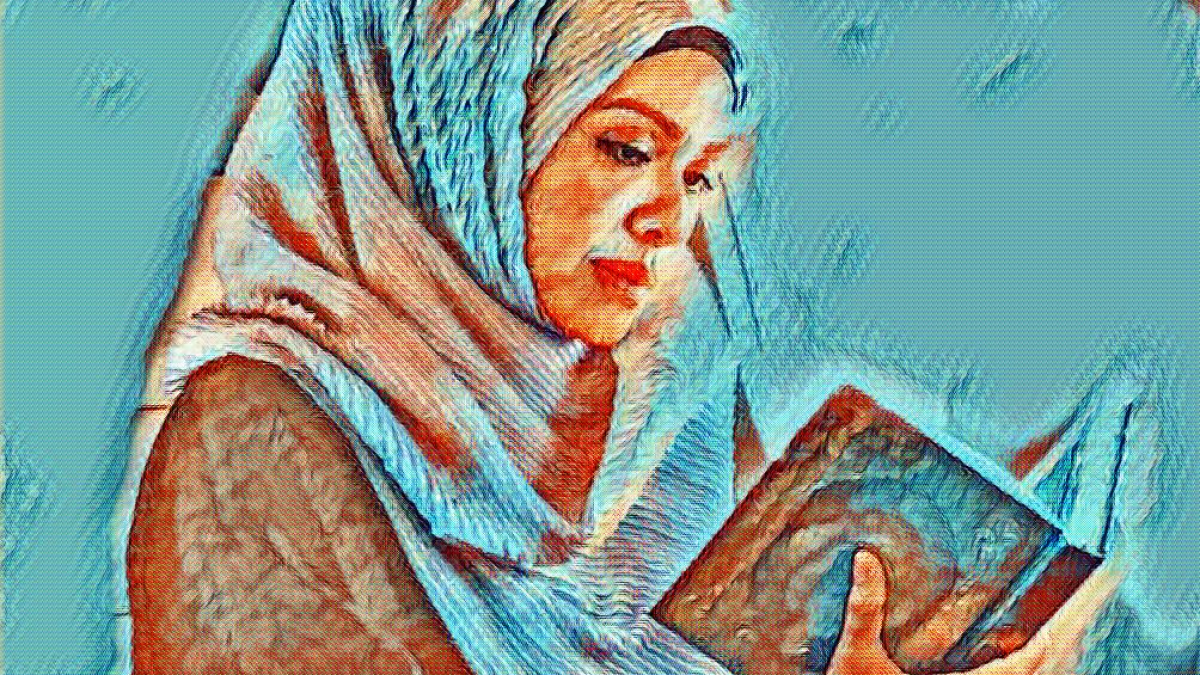
Misogyny Is Haram in Islam: Reclaiming a Misunderstood Truth


In many conversations today, Islam is unfairly associated with the oppression of women. Cultural practices, political realities, and selective interpretations are often mistaken for religious teachings. However, a closer and more honest look at Islamic principles reveals something very different: misogyny hatred, devaluation, or unjust treatment of women is fundamentally incompatible with Islam. In fact, it is haram (forbidden).

The Spiritual Equality of Men and Women


At its core, Islam establishes the spiritual equality of all human beings, regardless of gender. The Qur’an repeatedly emphasizes that both men and women are equally accountable to God and equally capable of righteousness:

“Indeed, the Muslim men and Muslim women, the believing men and believing women… God has prepared for them forgiveness and a great reward.” (Qur’an 33:35)

This verse is not symbolic, it is explicit. Worth is not determined by gender, but by character and faith. Any ideology that diminishes women simply for being women directly contradicts this foundation.

The Prophet’s Example: A Model of Respect

The life of the Prophet Muhammad offers a practical demonstration of how women are to be treated. He uplifted women in a society where they were often treated as property. He consulted women, valued their opinions, and emphasized kindness toward them.

One of his most well-known teachings states:

“The best of you are those who are best to their women.”

This sets a clear moral standard. Misogyny, whether expressed through abuse, dismissal, or discrimination is not only discouraged but directly opposed to prophetic character.

Rights Granted, Not Given by Society

Islam introduced rights for women that were revolutionary in their historical context, rights to inheritance, education, consent in marriage, and financial independence. These are not favors granted by men; they are divinely mandated الحقوق (rights).

For example:

A woman has the right to own and manage her own wealth.
She must consent to marriage; forced marriage is invalid.
She is entitled to education and personal development.

To deny or undermine these rights is not just cultural malpractice, it is a violation of Islamic law.

Culture vs. Religion: A Crucial Distinction


Many practices that appear misogynistic in Muslim societies stem from cultural traditions, not Islamic teachings. Patriarchal customs, misinterpretations of scripture, and power structures have, at times, overshadowed the ethical clarity of Islam.

Blaming Islam for these practices is like blaming a constitution for the actions of those who violate it. The problem lies in human behavior, not divine guidance.

Misogyny as ظلم (Oppression)

In Islam, injustice (zulm) is a grave sin. Misogyny, by its very nature, is ظلم, it denies women their dignity, rights, and humanity. Whether through systemic discrimination or everyday attitudes, it stands in direct opposition to Islamic ethics.

The Qur’an repeatedly condemns oppression in all forms. There is no exception made for gender-based ظلم.

Reclaiming the Narrative

For Muslims and non-Muslims alike, it is important to separate Islam from the actions of individuals or societies that fail to uphold its teachings. Challenging misogyny is not a rejection of Islam, it is a return to it.

Muslim communities today are increasingly engaging in this process: revisiting texts, amplifying women’s voices, and confronting harmful norms. This is not innovation; it is restoration.

Conclusion

Misogyny is not just discouraged in Islam, it is incompatible with it. The faith calls for justice, compassion, and dignity for all people. Any belief or practice that undermines women contradicts these principles and must be recognized for what it is: not Islam, but a deviation from it.

Understanding this distinction is essential, not only for correcting misconceptions but for building communities that truly reflect the values Islam teaches.

Wednesday, 24 December 2025

Islam Isn’t a ‘Men’s Religion’ Here’s What No One Shares. | Real Talk ft. Dr. Tesneem Alkiek


 Is Islam defined by men? It’s a question many Muslim women wrestle with—but maybe it’s the wrong question to begin with. Women have played an indispensable role in shaping the Islamic tradition. From hadith transmitters and legal scholars to the teachers of imams, Muslim women were never sidelined by the religion itself—even if some voices have drowned them out. In this episode, Dr. Tesneem Alkiek and host Qaanitah Hunter reframe the conversation, reminding us that while the path forward may not always be easy, it’s always there.

Wednesday, 18 October 2023

A daughter’s love leads to danger in Pakistan

In Pakistani culture, arranged marriages are common.  So when the parents of Samia Shahid chose a husband for her, Samia agreed to the marriage. Despite being raised in England, Samia took her Pakistani heritage very seriously and would do anything to make her family proud.

But Samia’s arranged marriage to her first cousin, Choudhry Shakeel, was far from what she expected. Samia was determined to build a better life for herself, but at what cost?

Wednesday, 11 October 2023

Feared no one: The life and death of Qandeel Baloch


Qandeel Baloch–who was dubbed the Kim Kardashian of Pakistan–was strangled to death in 2016 by her brother Muhammad Waseem. The case was considered the most high-profile "honor killing" of recent years, where women are murdered by male relatives for purportedly bringing "shame" to the reputation of a family. Baloch first received recognition from the media in 2013, when she auditioned for Pakistan Idol. Her audition became popular and she became an Internet celebrity. She was one of the top 10 most searched-for persons on the internet in Pakistan and was both celebrated and criticized for the content of her videos and posts. 

Three months after Qandeel Baloch's death, Pakistan lawmakers responded to the public outcry and passed legislation against the controversial practice–a landmark ruling welcomed by rights activists and lawyers. However, Waseem has been freed by a Pakistan appeals court, three years after he was convicted of killing her for "bringing dishonor" to the family. In her posts, Qandeel Baloch had spoken of trying to change "the typical orthodox mindset" of people in Pakistan. She faced frequent abuse and death threats but continued to post pictures and videos seen as provocative. Nearly 1,000 Pakistani women are murdered by close relatives each year, in so-called honor killings, for violating conservative norms on love and marriage.

Monday, 2 October 2023

Uncovering Iraq's religious front for child prostitution | Iraq's Secret Sex Trade

This powerful investigation into Shia clerics in some of Iraq's holiest shrines uncovers a network of exploitation of young women and girls, trapped into prostitution and pimped out by a religious elite. For the first time the clerics' secret sex trade has been captured on camera. Undercover filming and victim testimony reveal how they procure young women for male clients, and are prepared to conduct ‘pleasure marriages’ with children.


Friday, 14 April 2023

‘We lay like corpses. Then the raping began’: 52 years on, Bangladesh’s rape camp survivors speak out


 It was the summer of 1971, and the distant murmurs of a war that began months earlier had made their way to Rajshahi in Bangladesh, across the north bank of the Padma River, to Noor Jahan’s door. The 14-year-old was playing in the courtyard with her little sister when a loud military truck came to a halt outside the family’s farmhouse.

Armed soldiers threw the two girls into the back of the truck, where they discovered several women sitting back to back with their hands tied. “They told us to look down and to remain silent,” recalls Jahan, now 65. The truck continued through the small town, making several stops; each time loading more women and girls into the back as if they were cattle. All the women were sobbing silently, Jahan describes, too afraid to make a sound.

“We had no idea where they were taking us. I watched from the corner of my eye as the marigold fields surrounding our home disappeared from sight,” says Jahan. “I remember clutching my sister’s hand tightly and being terrified the entire time. We had all heard about the Butcher of Bengal and his men.”

The Butcher of Bengal was the nickname given to Pakistan’s military commander, Gen Tikka Khan, notorious for overseeing Operation Searchlight, a murderous crackdown on Bengali separatists in what was then East Pakistan, which led to a genocidal crusade during the liberation war that followed.

But Jahan was about to become a victim of another brutal tactic of the Pakistani army. Alongside the killings, soldiers carried out a violent campaign of mass rape against Bengali women and girls, in what many historians believe amounted to a direct policy under Khan’s command to impregnate as many women as possible with “blood from the west”.

When the truck finally came to a stop, the girls found themselves in military barracks. The next few months were a blur for Jahan, who regularly passed out during her confinement. “We lay there like corpses, side by side. There were 20, maybe 30, of us confined to one room,” she recalls tearfully. “The only time we saw daylight was when the door creaked open and the soldiers marched in. Then the raping would begin.”

During the conflict that led to the birth of Bangladesh, military-style rape camps such as the one in which Jahan was held were set up across the country. Official estimates put the number of Bengali women raped at between 200,000 and 400,000, though even those numbers are considered conservative by some.

Though ethnic rape was feature of Partition years earlier, what Bengali women experienced was one of the first recorded examples of rape being used as a “consciously applied weapon of war” in the 20th century. But despite its shocking scale, little remains known about it outside the region.

Within Bangladesh, widespread stigma led to the women being ostracised by their communities, and their horrifying accounts were often suppressed by shame. Today, a plaque on the wall of the Liberation War Museum in Dhaka says it all: “There are not many records of this hidden suffering.” Yet in every corner of Bangladesh, there are survivors with terrifying testimonies.

In August 1971, Razia Begum had gone looking for her husband, Abu Sarkar, who had been missing for several days. She wandered anxiously through the abandoned streets of Tejturi Bazar in Dhaka, where Sarkar was a fruit seller, but he was nowhere to be found. Begum turned a corner, when she found herself face to face with a group of soldiers. She tried to run but was struck on the head with a rifle; a scar she still bears.

Begum was dragged to a nearby forest where she was raped repeatedly over a period of weeks. The soldiers were stationed close by and returned at different times of the day. “They tied me to a tree and took turns raping me during their breaks,” says Begum, now 78. After they were done with her, the soldiers threw Begum into a shallow ditch.

A passerby eventually found her and took her to a shelter, which Begum describes as a lost-and-found for women who were abducted during the war. Such makeshift shelters had been set up in districts across the region for the many women who had been abducted and abandoned miles from their home.


“Women didn’t often leave the house during that time, so many of us didn’t even know our proper addresses,” says Begum. Begum’s husband tried four different shelters before he found her and took her home. “I don’t like to think about what happened,” says Begum. “But after all these years, it has been difficult for me to forget. I still have nightmares.”

On 16 December 1971, the war came to an abrupt end. Although independence had been won, thousands of Bengali women, such as Jahan and Begum, would be rescued from shelters and rape camps across the country.

Maleka Khan, then secretary of the Bangladesh Girl Guides Association, was tasked with mobilising female volunteers to help with war recovery efforts. But after learning about the discovery of women who had been raped and held captive in underground bunkers near Jahangir Gate in Dhaka, Khan decided to lead the rescue mission herself.

When Khan arrived, she was shocked by what she saw. “There were women who were completely naked,” Khan, now 80, says. “They were abandoned in bunkers, where they had been kept and tortured during the war.” Khan bought the women clothes and, after helping them out, she describes carefully wrapping them in saris and blankets.

“They were in a state of shock and couldn’t speak,” says Khan. “Some had their hair chopped off, while others were heavily pregnant. There was an air of disbelief about the whole thing. It was all so horrific.”

The women were taken to safe houses provided by the government of the newly independent Bangladesh. In an effort to integrate rape survivors back into society, Sheikh Mujibur Rahman, the founding father of the nation, granted them the honorific of Birangona (war heroine) and established a rehabilitation programme for the women, of which Khan became executive director.

“It has been 52 years and we still haven’t received an apology from Pakistan for the horrendous war crimes it committed against the Bengali people,” says Saida Muna Tasneem, Bangladesh’s high commissioner to the UK.

Bangladesh has already succeeded in getting genocide recognition from the Lemkin Institute for Genocide Prevention and Genocide Watch, and US Congress recently introduced a historic resolution recognising that a genocide occurred in 1971. The government is now lobbying for the UN and international community to recognise that a genocide was committed during the liberation war.

“Lack of recognition remains an open wound for the millions who were directly impacted by the atrocities that took place, many of whom are still alive today,” says Tasneem. “This dark chapter of history has been kept in the shadows for too long.” 

Link

Thursday, 30 March 2023

Uncle who murdered niece and dumped body 'like rubbish' jailed for life


An uncle who murdered his 20-year-old niece before dumping her body "like rubbish" has been ordered to serve a minimum of 25 years of a life sentence behind bars.

Repair man Mohammed Taroos Khan, 53, killed Somaiya Begum in an attack at her home in Binnie Street, Bradford, on June 25 last year, Bradford Crown Court was told.

Her decomposing body was found 11 days later wrapped in a rug, tied up with string, on land used as a dumping ground on Fitzwilliam Street, Bradford.

Prosecutor Jason Pitter KC  said she was “dumped and left to rot and decompose on wasteland like rubbish, such that she was not recognisable”.


He said her body was so decomposed it was not possible to find a cause of death but there was an 11cm long metal spike embedded in her chest which had punctured her lung.


Miss Begum had been living at the property with another of her uncles and her grandmother under the terms of a forced marriage protection order, following attempts by her father, Mohammed Yaseen Khan, to force her to marry a cousin from Pakistan “by threat of violence”, a jury heard.

However, the judge refused to speculate on the motive behind the brutal killing.

Khan had denied murder but admitted a charge of perverting the course of justice by disposing of Miss Begum’s body and burning her mobile telephone.


However, he was found guilty of murdering her on Tuesday.

Sentencing Khan to life in prison on Wednesday, Mr Justice Garnham said: “It is not possible to identify a motive for this dreadful attack by you on an innocent young woman.

“It is said you did not support her forced marriage to the cousin in Pakistan.

“It is said you did not share the view of your brother, Yaseen, about the role of women or the obligation of Somaiya to obey her father.


“Moreover, it is pure speculation to consider whether this murder was part of some appalling family agreement.”

He told Bradford Crown Court: “All that matters for present purposes is that the jury have found you guilty of the heinous crime of murder.

“I decline to speculate on your motive and I reject the prosecution’s suggestion that I should treat this as any form of so-called honour killing."

The grey-haired defendant sat in the glass-fronted dock wearing a grey fleece and a black body-warmer and flanked by two security officers as the judge outlined the callousness with which he disposed of his niece’s body.

Mr Justice Garnham told him: “You showed absolutely no respect for the dead body of your niece in the way you dumped it unceremoniously, wrapped in carpet and covered in scrap material, amongst rubbish on waste ground.

“You left it there to rot in the summer heat and, when it was found, Somaiya’s face had been eaten away by maggots.

“Inevitably the loss of this bright, vibrant young woman is felt acutely by other members of her family.”

The judge described Miss Begum as “an intelligent young woman of real spirit and courage” and recalled that her uncle, Dawood Khan, had referred to her in court as the “light of his life”.

The jury heard that Miss Begum’s family had already been split in two by a previous dispute before her father’s attempts to force her to marry when she was 16.

Link

Thursday, 22 December 2022

The Rise of the Muslim Incel: Ideological Victim Blaming and Its Harm to Muslim Women and Men


The internet is a place of extremes. While the risks of a global information and communication system built on binaries has long been foretold, we are now fully down the rabbit hole of an increasingly disturbing phenomenon of anti-female sentiment in the shape of Red Pill and Incel movements.

Much like its political opposite of ‘woke’, the term Red Pill – a cultural reference to the fin de siecle blockbuster The Matrix – denotes a kind of social and political awakening. The Matrix itself (a film created during the end of a millenia when cultural anxieties are brought most provocatively to the fore) projects an alternative reality in which the main character is given a choice between swallowing a red pill that will allow him to learn the hard truth about the world in which he lives and a blue pill that will allow him to stay oblivious and return to his normal life. Similarly, proponents of these ideologies believe patriarchy is a social mirage that masks a deeply misandrist society.

Conversely, these movements have constructed, and are now fully immersed in, a reality in which female privilege overwhelmingly shackles men to positions of disadvantage. According to Incel communities (the term Incel stands for ‘Involuntarily Celibate’ and refers to men who display romantic frustrations because they consider themselves unable to attract women ) that follow this inverted truth, the interests of women dictate social and political systems, leaving men marginalised and discriminated against. These cyberculture enclaves act as ideological havens for aggrieved men who believe they are downtrodden by the force of female entitlement. Worryingly, they have made violent protrusions into the real world in the shape of increasingly misogynistic attitudes, abuse against women and, at the extreme end of the scale, mass shootings and other violent hate crimes.

In reality, Inceldom and Red Pill thought is the result of the social anxiety that exists around the role of male identity in these volatile economic times. As the nuclear family, and the traditional gender and economic roles that define it, face threats from social, political, cultural and global shifts to its foundations, the gender orthodoxy which hallmark capitalist societies is left disfigured.

Minceldom and Red Pill thinking in Muslim spaces
The binary nature of the internet, and the divisive social architecture it creates means the contrived male vs. female dynamic was always the most vulnerable to manipulation on digital terrain. Likewise, the age old trope of Muslim as ‘other’, provides the perfect blueprint for a dichotomous internet culture to so neatly map itself upon. As such, it is perhaps no surprise that Inceldom has found such healthy expression in the online Muslim world. While political powers hang upon a vilified Muslim identity in order to justify the industrial-complexes on which they depend, the Muslim identity will always be ripe for exploitation. This tortured social alchemy creating a proud army of Mincels; ‘Muslim involuntarily celibate men’.

There are a number of factors which result in young Muslim men being so taken by this inherently racist and sexist ideology which, not insignificantly, was borne from white, Christian, male culture- hitherto top of the global food chain – on niche internet forums such as Reddit and 4chan.

During these increasingly uncertain social and economic times, Muslim families – and questions pertaining to gender roles in the Muslim home- face similar contestations. This environment of uncertainty is similarly generating existential discomfort amongst Muslim men for whom bedrocks of masculinity such as marriage and economic primacy are no longer at arms reach, creating an identity crisis which sees Muslim men aggressively assume exaggerated and superficial qualities of masculinity as defence.  

Internalised Islamophobia is another significant driver of this currency of misogyny amongst young Muslim men; as the Muslim identity is increasingly problematised, Muslims by default are placed on the back foot,  qualifying Islam through a secular, non-Muslim lens; attaching it to symbols of perceived greatness to make up for its perceived deficiencies. With the racialised make-up of Muslims in the west, there are also many racial nuances that further complicate this unfortunate tendency – whitewashing for legitimacy is synonymous with secularisation in the Muslim world.

The validation that young Muslim men seek is satiated when WASP (White Anglo-Saxon Protestant) culture, and its most prominent media figures, wrongly attribute, and glorify, a whole range of racist, orientalist and Islamophobic tropes to Islam and Muslims. In effect, Muslim men have begun to accept false and crude stereotypes regarding Islamic masculinity that are being celebrated by burgeoning online communities, as they are reclaimed as part of Western tradition and heralded as the way forward. For a generation of young Muslim men, this represents a shift in a value system that has always had them in a chokehold, and which now present an opportunity for cultural redemption. Coupled with lazy political thinking which creates a false alliance between right-wing and Muslim interests in popular Muslim thought, the ground becomes fertile for the rapid growth of this ideology

The attention economy on which digital content thrives means that naturally, Muslim male influencers are now taking on and promoting the ideological cadences of this internet movement that glamourises sexual and domestic violence. The convolution between misogyny and Islam is so cemented in modern Muslim thought, that anti-female views become the basis by which social media influencers lay their claim to Islam – it has become a mark of Islamic authenticity in the Dawah world to speak disparagingly of the idea of female rights. These influencers, who are clocking up tens of thousands of hits and are increasingly legitimised, appear to revel in the subversive nature of their anti-female views, apparently unaware that the identity they occupy is just as much a making of secular ideology as the feminism they claim to be fighting a righteous battle against. As a community we appear to be willingly donning the monstrous mask of Islamophobic caricatures, now placated by social media influencers.

Muslim men who have been conscripted by this false doctrine are equally pacified by the reassuringly simple narrative that they propagate, and which provides a welcome distraction from the complexities of real life.

Real life examples of how this is harming muslim women and children are endless. Emotionally and physically abusive relationships are all but celebrated online – and disturbing narratives coming directly from Muslim men – who are expressly comparing women to Shaitan – are promoting the mistreatment of women, wrongly in the name of Islamic ideology. One haunting example includes a Muslim man who boasts about his partner serving him tea having just delivered their child, and revelling in the subjugation of a physically and emotionally vulnerable woman. Ironically, this attitude is antithetical to the Prophetic tradition that Islam is built upon which includes an honourable focus on empathy, compassion and charity – not to mention a whole moral code upon which marital relations and rights are honoured.

The construct of the punitive, harsh and corrective Muslim male in popular Muslim thought is simultaneously and contradictorily portrayed as both the result of divine law and natural order, and as a punishing measure for the straying of Muslim women. In reality, it is Muslim women that should be lamenting the loss of Islamic masculinity, through social tantrums, or otherwise. This emptying of Islamic masculinity is exemplified in how the terms of debate regarding polygamy are shaped entirely by male desire, and the social responsibility, which a majority of scholars classify as the purpose of multiple marriages, remains an invisible and neglected consideration.

Miscategorisation of a growing problem
While the underlying reasons for the sprouting of Inceldom in Muslim digital spaces are many and complex, the insistence that we see within the Muslim community of those that recognise it harms, of lazily ascribing blame for the popularity of these movements to ‘feminism’ – in short, women – does nothing to address or remedy this distressing trend. In fact, it mirrors the wider pattern amongst the Inceldom beyond the Muslim world, where there is an insistence on portraying Red Pill communities as fighting a cultural war against feminism. We are effectively affirming their own deluded narrative.

In the eyes of incels, the feminist is the ultimate evil and the main cause of their social demise. Equally, amongst Red Pill apologists, the idea of the ‘feminist’/ liberal Muslim woman is presented as the sole driver for men involuntarily being pushed into hateful stances. Despite the recognition that Red Pill thought is antithetical to Islam, we are seeing this constant excusing of male behaviour.

This false equivalence between feminism and Inceldom is itself another contradictory dimension to Inceldom – the former is an intellectual, political and social movement spanning centuries and borne from an extended history of abuse and inequality – and which includes a whole spectrum of positions – and the latter an undesirable and unintelligible internet off-shoot based on self-victimisation. This posturing does little to address the gravity of the situation at hand.

Once again, the gender debates that occupy Muslim men and women are tellingly based on suppositions about our own religion, which are entirely reactive and false. Just like the answers to social unease amongst Muslim men cannot be found in secular or non-Muslim solutions, the expression of this social angst should unequivocally not mirror that of non-Muslim, or unislamic cultures like Red Pill. In the same way that conventional gender roles in Muslim and non-Muslim, Western culture are in no way aligned, Muslim men cannot hark back to a history of gender norms that does not belong to Islamic culture. They should not interpret Red Pill as a rallying cry of solidarity from men across the globe; their aims and motivations are not the same. Islamic masculinity comes from a place of security and Taqwa, not insecurity and panic.

Equally, the reductive and patently false flag of ‘Islam is a feminist religion’ itself does Islam a disservice – Islam, a divine moral code set by our Creator, will always be transcendentally and substantively more than any humanly defined phenomenon. Islam established women’s God-given rights as equal believers, and exists as a universal truth that outspans any earthly social movement and its claims to parity or equity. The need for muslim women to lay claim to feminism as a means of equal treatment speaks of the conceptual dwarfing of Islam in western intellect, and the mistreatment of Muslim women in Muslim societies.

If the Muslim feminist is continually touted as the ultimate evil, and feminism itself attributed to female ungodliness, then as a community we need to address why Incel culture is repeatedly spoken about as an inevitable response to feminism, and not men being just as prone to unIslamic ideologies. We need to think about why an entirely male phenomenon is being attributed to women. And why Muslim women clutching onto secular models of equality is not seen in the same victimised way – despite the shameful mountain of statistical evidence which demonstrates that a worrying number of women are on the receiving end of physical, emotional and spiritual abuse in our communities.

Taken to its logical conclusion, this line of argument which assigns no blame to men, implies that men are morally infallible, and women inherently corrupt. This reasoning reinforces the most ugly tenets of Red Pill thinking and creates the ideal environment for domestic and spiritual abuse of women to thrive. It is especially insulting given women are overwhelmingly the victim of Red Pill and Incel culture, not men; it is in essence ideological victim blaming. It shifts the onus onto women and encourages further self-victimisation amongst men who are developing increasingly warped perceptions of reality.

The undercurrents of this thinking, the idea of the original female sin and the morally reprehensible woman, are as old as time and as alien to Islam as the Red Pill ideology they prop up and support. They demonstrate the disfigured, ahistorical Islam that is adopted by men in these movements, and are worsening a situation whose only cure is to return to the Qur’an and Sunnah, and for men to adopt the sense of responsibility, honour, accountability and kindness that characterised our Prophet ﷺ.

While this apologism collectively allows Muslim men, and the hateful male spaces that exist within them, to evade responsibility – and does nothing to advance the lost masculinity they claim to mourn – individually it does young Muslim men a great disservice. It grants them an impunity that does them a disfavour as believers particularly, and denies them the opportunity for self-reflection and growth. When young men see prominent figures in the community defer accountability for the wrongs of Mincel onto Muslim women, they are effectively being told not to assume any duty or obligation as Muslim men – it is entirely emasculating.  In keeping with a more general trend in Muslim cultures of disburdening men from responsibility, it stunts their moral development and prevents them from reaching their potential. If our moral well-being depends upon an unadulterated  relationship with reality and our own selves – what might cultural and religious leaders be doing in cushioning men from these social, economic and personal blows?

Unfortunately it is in keeping with the ideological migration we see of furthering away from the Sunnah. While the grounds of the debate continues to shift to more extreme positions, we risk alienating more and more women, while they face further individual and collective scrutiny in demanding their basic rights as believers. Muslim men need to understand that misogyny, the ideological bedfellow of Islamophobia, is a characteristic of the forefathers of anti-Muslim sentiment, the Quraish, and should be eschewed by the inheritors of our faith. It is without doubt an inherent trait of the Jahil.

Moving forward
What we need to see is Muslim men unequivocally denouncing this movement which is part of a larger, unrelenting course of punishing Muslim women that exists beyond our faith community and appears to have no geographical borders or limits. If Muslim women are the ideological punch bag of world leaders, domestic policy, and the wilderness of internet discourse and its material impact on our homes – what hope do we have of moving forward as a community? Who can muslim women turn to if we are both the cause and victim to our apparently justified abuse?

The countless examples of the Prophet’s ﷺ love, mercy, kindness, compassion and tenderness to the women in his life and in society at large should be the basis by which we begin the conversation on gender relations, given the wider climate. The well-known example of Banu Qainuqa, a Medinian tribe that dishonoured a Muslim woman and against whom the Prophet ﷺ lay siege for 15 days as a result, goes some way in demonstrating the tradition of respecting and upholding the dignity of Muslim women in Islam.

There must be a concerted effort to finally decouple misogyny from Islam as it now exists in the mind of Muslim men, and to understand Islam not as an endorsement of or reaction to modern or pre-modern eras, but a timeless ideology which stands independently and which wholly recognises men and women as twin halves in faith. Muslim men need to be educated on our history, to fully recognise that misogyny is not a Muslim trait, and never has been. In the conventional social hierarchy, changes to which birthed this screaming and distressed Red Pill movement, Muslim men sit far below the white men who promulgate this view. A defining feature of racist ideology is the pandering to men of colour who they deem as inferior, when it suits their misogynistic agenda. Muslim men, like women, are no more than a tool in the broader Incel manifesto.

The idea of Muslim women’s rights, based on Islamic tenets and not lies we are being told about our own religion needs to be reestablished amongst Millennial and Gen Z Muslims in an uplifting, non-condescending way, we are not lollipops and we need to jettison the fable like narrative of femininity that infantilises us as less than male believers in the eyes of our Creator.

And while hairs will be split about the tone women take as we are crushed under the heel of a rampant misogynistic Islamophobia, I only hope men will pause to reflect on our actual call. Only when men approach the table with a sense of the Prophetic qualities of humility are we in a position to have a meaningful conversation and a necessary departure from the deadlock we are in. There are countless nuanced debates about how women can better themselves as believers and armour themselves against thinking and practice that is unIslamic in nature – where are these conversations taking place in Muslim men’s spaces? Where are we seeing religious and cultural figures making critiques which centre men’s agency and accountability in a movement which is openly violent against women? The answer to these questions that are generated in the male Muslim community lie exactly there, and as believers in Allāh, Muslim women have to have faith that they will be answered, by the will of Allah.

Link

Monday, 8 August 2022

‘Deserted By Husband ’— How Triple Talaq Criminalisation Has Increased Abandonment Of Muslim Women


‘Latka ke choda hua hai’ or ‘he has left me hanging’, is a common lament among several women at the Shaheen Women's Resource and Welfare Association—a centre in Telengana’s Hyderabad which has been working for the victims of Triple Talaq for decades.

Except in the three years since the parliament passed the law to criminalise Triple Talaq on 30 July 2019, the women’s help centre hardly ever gets complaints of women being subject to Triple Talaq. Instead, all they get are grievances and appeals from hapless Muslim women who have been deserted by their husbands. The criminalisation of the Triple Talaq has given rise to a new problem: abandonment.

Link

Tuesday, 2 August 2022

Send us a man to do your job so we can sack you, Taliban tell female officials


Still so many brothers support the Taliban, and make excuses for them. Just be honest you wish to remove women from public sphere and impoverish them too.

As economy collapses, women from Afghanistan’s finance ministry say they have been asked to suggest male relatives to replace them

The Taliban have asked women working at Afghanistan’s finance ministry to send a male relative to do their job a year after female public-sector workers were barred from government work and told to stay at home.

Women who worked in government positions were sent home from their jobs shortly after the Taliban took power in August 2021, and have been paid heavily reduced salaries to do nothing.

But several women told the Guardian they had received similar calls from Taliban officials requesting they recommend male relatives in their place, because the “workload in the office has increased and they need to hire a man instead of us”, according to one woman who did not wish her identity to be revealed.

Sima Bahous, director of UN Woman. ‘An entire generation is threatened by food insecurity and malnutrition,’ she warned in May. Photograph: Rex/Shutterstock
Sima Bahous, executive director of UN Women, said in May: “Current restrictions on women’s employment have been estimated to result in an immediate economic loss of up to $1bn – or up to 5% of Afghanistan’s GDP.

“There is almost universal poverty in the country,” she added. “An entire generation is threatened by food insecurity and malnutrition.”

Maryam*, 37, received a call from the HR department of the Afghan ministry of finance, where she had worked for more than a decade. She said: “I was asked to introduce a male family member to replace me at the ministry, so I could be dismissed from the job.”

Her voice quivering with frustration, Maryam, said she had worked her way up over many years within the ministry to head of the department. “How can I easily introduce someone else to replace me?” she asked. “Would he be able to work as efficiently as I have for so many years?

“This is a difficult and technical position I was trained for and have years of experience in. And even if he could do the same work eventually, what would happen to me?

“Since they came [to power], the Taliban have demoted me and reduced my salary. I cannot even afford my son’s school fees. When I questioned this, an official rudely told me to get out of his office and said that my demotion was not negotiable.”


Several attempts by the Guardian to seek a response and clarification from Taliban officials at the ministry went unanswered. It is not clear if women from other state departments have also been asked to send male relatives to do their job. However, Maryam said she was aware of at least 60 female colleagues from the finance department who had received similar calls.

“The Taliban have a history of eliminating women, so hearing this is not surprising or new,” said Sahar Fetrat, assistant researcher with the women’s rights division at Human Rights Watch (HRW), which has documented extensively the Taliban’s atrocities against women since they took over Afghanistan.

In a report this year, HRW investigated the loss of women’s jobs and livelihoods in Ghazni province since August 2021, when the Taliban seized power in Kabul. “Nearly all the women interviewed who previously had paid employment had lost their jobs,” an interviewee said in the report.

“Only female healthcare workers and teachers can go to work. Women working in other fields are forced to stay home now.”

Fetrat said: “Within the Taliban’s misogyny, women belong to men, as a property and an object representing the honour of the family.

“Therefore, in some cases like this they give women’s jobs and titles to women’s male relatives, and in other cases like the hijab, they punish women’s close male relatives for women’s public conduct and clothing,” she added, referring to an earlier ban that criminalised women’s clothing. According to the decree, issued in May, the male “guardians” of women who appeared in public “uncovered” would be fined and jailed for the offence.


Fetrat said these policies imposed new standards of “harmful behaviour in society, and that is normalisation of the objectification of women. It has a clear message for men, and especially younger men, that they ‘own’ women in their families and they must act as a moral authority and actively police women’s conduct.”

Maryam and her colleagues are mobilising to protest against Taliban policy. “We do not accept their order and we will try to get them to change it,” she said.

“We have created a group of female employees of the ministry. We are negotiating now, and we will demonstrate if they don’t hear us,” she added, urging the international community to extend support and solidarity.

The country is in the grip of a severe economic and humanitarian crisis. According to the UN, 20 million people now face acute hunger, more than 9 million have been displaced since the Taliban took power, and severe drought has affected farming.

Link

Monday, 30 May 2022

Sisters allegedly murdered by husbands in Pakistan ‘honour’ killing


Two sisters with dual Pakistani and Spanish citizenship were allegedly killed by their husbands, uncle and brother in a so-called “honour” killing a day after they were tricked into travelling to Pakistan.

Aneesa Abbas, 24, and Arooj Abbas, 21, were strangled and shot dead on Friday after arriving in the eastern city of Gujrat with their mother, Azra Bibi.

It is understood that, on arrival in Pakistan, the sisters were pressured to help their husbands, who they were forced to marry last year, apply for spouse visas so they could travel to Europe.

It is alleged Aneesa and Arooj were killed when they refused to help. Both women wanted to divorce their husbands, who were also their cousins, so that they could remarry in Spain.

“The investigations have confirmed that both the sisters were killed in the name of ‘honour’,” said investigating police officer Muhammad Akhtar.

Police said the women’s husbands, Hassan Aurengzeb and Atiq Hanif, their uncle, Hanif Goga, and their brother, Shehryar Abbas, have been arrested and confessed to the killing. Two other men have been arrested in connection with the attack.

Hundreds of women are murdered by family members in Pakistan each year in so-called “honour” killings for violating conservative norms governing women’s relationships, despite 2016 legislation ending the loopholes in the law that allowed culprits to walk free in the country’s deeply patriarchal society.

Earlier that year, the murder of Qandeel Baloch, known as “Pakistan’s Kim Kardashian”, by her brother Waseem Azeem sparked national outrage and demands for changes to the law. Azeem was sentenced to life imprisonment but was acquitted in February this year after his parents pardoned him.

Samar Minallah, a human rights activist, said: “This is yet another brutal murder of innocent girls raised in another culture valuing basic human rights, yet treated like inanimate objects by their own families.”

According to the Human Rights Commission of Pakistan, an independent rights group, more than 470 cases of “honour” killings were reported in the country last year.

It is not uncommon for parents with dual citizenship to force their daughters to marry cousins in Pakistan to secure European visas. A report on forced marriage, published by the UK government in 2020, found almost 40% of cases involved British citizens being taken to Pakistan to marry against their wishes.

In 2016, Samia Shahid, a British Pakistani beautician from Bradford in the north of England, was raped and killed when she returned to Jhelum district after marrying a man from outside the family. She had previously left her first husband, a first cousin from their village in Pakistan. Her ex-husband and father were arrested for her murder. Six years later, the case is ongoing.

Source

Thursday, 19 May 2022

A tale of divorce


I found this quite an eye opener:

How did we get here? I genuinely don't know whether or not to laugh or cry or fume with anger. This is another divorce case I am helping with right now. The wife came from abroad, lives in a tiny London flat, has no family here, struggles to speak English, completely financially dependent for the past 20 years and looks after their disabled (adult) child.


Man: We will divorce according to Islam. I will maintain her for the waiting period. That is all.
Sheikh: Where did you read this?
Man: There is a fatwa website online. Proper scholars. I only share the truth. This is the Shariah.
Sheikh: And what should she do after the three months?
Man: I don't know. Get benefits.
Sheikh: And your son? The extra care, hospital visits, appointments, you will not even leave her a car? London is an expensive city.
Man: I will pay for the boy. He gets benefits. I don't pay for her. This is the Shariah. I work hard.
Sheikh: And she doesn't work hard? You think, this is what Allah wants?
Man: I don't make the rules. Allah says:
وَعَسَىٰٓ أَن تَكْرَهُوا۟ شَيْـًۭٔا وَهُوَ خَيْرٌۭ لَّكُمْ ۖ وَعَسَىٰٓ أَن تُحِبُّوا۟ شَيْـًۭٔا وَهُوَ شَرٌّۭ لَّكُمْ
 "Maybe you hate a thing, but it is good for you and maybe you love a thing, but it is bad for you" (Qur'an 2:216)
Sheikh: This verse is about people who do not like to fight, when they must.
Man: Yes, marriage is jihad.
(It is explained to him that the majority of the "classical" rules of divorce and settlement were written in the context of Muslim majority communities, where women had support structures and family that could take care of them and furthermore, there would be Zakat readily available to support someone who could not earn. In the absence of these, he must continue to support her and/or give her a financial settlement. Cherry picking fatwa online is not Islam. He refuses. Sheikh now getting ruffled.)
Man: If she goes to the courts, it is haram. She is stealing from me. Anyways, I will fight her and it will cost so much, she will be left with very little. I don't believe in this modern Islam. The deen is the deen. This is the Shariah.


Sheikh: Okay. You want to follow only classical Islam? Khalas. Show me this website, let me see which Mufti.
*Man pulls out website, a very popular Q&A website, with British 'scholars' giving many of the answers, including this one.*
Sheikh: Okay, great. Let me search something - *Sheikh looks through the website* Okay, perfect. Here. What about this?
Man: *He reads* Ermm.. Errrr.
Sheikh: Just to confirm, you did admit to having multiple affairs during the marriage after your wife caught you?
Man: I repented from this.
Sheikh: Okay, but we are we only want to follow classical Islam, right? Right. So what is the "classical Islamic" way to deal with your infidelity according to these same scholars and the same website you showed me?
Man: You know this. It is not possible to do here.
Sheikh: Okay, but maybe you can go to another country and they can fulfil the Shariah? You are a man of truth, right? Tell me, how much of your wealth with your wife get in this case?
Man: I don't understand.
Sheikh: If we follow the Shariah, according to this website, your punishment for your actions is to be killed. So when you die, your wealth will be split between your wife and your children, right?
Man: Yes, but...
Sheikh: You don't have any parents alive or other wives or children?
Man: No, but...
Sheikh: This is the Shariah, right?
Man: We don't live in Darul Islam.
Sheikh: You are correct, we live in Darul England. So, please make your mind up on which system you want to follow.
*sigh*
I find it fascinating that the website in question, for the adultery question now has this big disclaimer at the top:
"An Important Clarification - In light of recent attempts by some to sensationalise my views by taking them out of their intended context, I would like to categorically express that the answer below does not, in any way, call for stoning or capital punishment in non-Islamic states... the implementation of the law on adultery and fornication is only applicable under an Islamic State, and as such, this is merely an academic and theoretical discussion, since Britain is not an Islamic state... I do not of course endorse the implementation of this law in places where people choose not to have it."
Very funny that this disclaimer is not found on the divorce questions. Why aren't they "academic and theoretical discussions" when they are literally citing fiqh rulings from about 800 years ago that are being used to literally make Muslim women homeless today.
Marriage is hard. Divorce is messy. Using or rather, "abusing" Islam to line your pocket while leaving a woman vulnerable, not least the mother of your disabled child, is one of the most despicable things you can do.


Alhumdolillah, over the past year, we've been able to help a number of women in this exact or similar situation with cash/Zakat. If you can help, little or large, please reach out. At the very least, please like, comment and share to raise awareness on this oppression in our midst.

Thursday, 17 March 2022

Abandonment of newborn girl child a sign of Pakistan's repressive mentality


Pakistan is plagued with its frenzied obsession for a male heir and in the process scores of girl babies are abandoned in the country which speaks volumes of Pakistan's repressive mentality. The recent incident in the Mianwali district of Punjab province in Pakistan unveiled the unfortunate state of affairs of a girl child in the country.

A seven-day-old infant was gunned down by her father named Shahzeb because his first child was a daughter instead of a son. The cruel father shot his baby five times, reported ARY News. The news has been circulating on social media. Users have shared pictures of the infant that can be seen dead. The government in Pakistan is also notorious for skipping such heart-wrenching instances.

Pakistan's societal preference is nothing new as the newborn girls in Pakistan often go missing. Scores of infants are left in white metal Edhi cradles and the more unfortunate ones either get tossed in the nearby trash dumps or are conveniently buried elsewhere, reported The Daily Times. The requirement for the time is to apprehend the culprits and put them behind bars. These deplorable incidents might make headlines however this is not enough as action needs to be taken against those who transpire such horrific crimes.

According to the last year's 'Global Gender Gap Report 2021', Pakistan ranked 153 out of 156 countries on the gender parity index, that is, among the last four. It ranked seventh among eight countries in South Asia, only better than Afghanistan. Pakistan's gender gap has even widened by 0.7 per cent points in 2021 compared to 2020.Notably, since the Imran Khan government came to power in August 2018, Pakistan's Global Gender Gap Index has worsened over time. In 2017, Pakistan ranked 143, slipping to 148 in 2018.The report indicates that Pakistan needs 136 years to close the gender gap, with its existing performance rate. These statistics show that overall progress in reducing the gender gap is stagnant in Pakistan in four areas: economic participation and opportunity; educational attainment; health and survival, and political empowerment.

Link

Tuesday, 1 March 2022

Marriage in Pakistan is a marry one get one free deal — marry your husband and get his entire family too


 “You are being removed from your family, and moved into this one, your husband's,” said the Nadra officer. I saw him drag and very literally drop my name from one document to the other. “Now you’re part of their family.” I felt my eyes tear up a little and tried to catch my breath. My husband later joked about how the Nadra officer had gotten me more sentimental than the nikahkhwan.

This incident led me to mentally prepare myself a year ahead of my ruksati — any chance I got I spoke to friends, friends of friends and family members about their experiences after getting married, especially women who found themselves in joint family systems. A year later I found myself sometimes struggling but mostly naturally manoeuvring and settling into a new life and family. These conversations made me grateful in some situations and in others helped me take a step back. But all of the stories stayed with me.

For example, a newly-married 27-year-old told me she wasn’t allowed to have cheese in her new home. As bizarre as it may sound, it was true — her father-in-law received a WhatsApp forward about processed cheese being cancerous, “So now we can’t have cheese, I literally have to destroy the evidence if we have a cheese omelet”. I think she saw the disbelief on my face, because she added, “I’m serious, I would rather that my father-in-law finding me smoking up than eating cheese”. We all laughed and when I asked her how she dealt with it, her reply really stuck with me — “It’s his house”.

Why does no one talk about moving in with people you’ve met just a few times in your life? What does it mean to “adjust” into a new house and a new family?

According to an article in The Washington Post, the University of Kentucky’s Department of Communication conducted two studies on depression in newly-married women. In a study of 28 women conducted in 2016, nearly half of the participants indicated they felt depressed or let down after their wedding. They also reported clinical levels of depression. Another study conducted in 2018 of 152 women showed 12 per cent feeling depressed after their wedding.

For most South Asian women the post-marriage depression strikes a few weeks or months later. Maheen*, 30, recalled, “Once you’re back from the honeymoon and the dinners end and life starts to normalise, you find yourself in someone else’s house and you’re thinking 'okay, when do I go home', but this is home, but at the same time it’s really not”.

For 29-year-old Hina*, it was made very clear that this wasn't her house. “I come from a very conservative community where girls are married off very young. I was 21 and I remember my mother-in-law told me on the very first day that this wasn’t my house,” she said. When I asked Hina how she was made to feel this way, Hina laughed and said, “Oh, she very literally told me that this isn’t my house and that this is their house and their rules were meant to be followed".

Hina’s experience is unfortunately not rare — moving out of your home for a woman in Pakistan doesn’t necessarily mean starting anew with your spouse. It often means you have to “adjust” into a family where your diet, spending habits and general lifestyles is altered. There's also an unspoken rule — don’t change the environment, change yourself. The sign of a “good” daughter-in-law is when she takes up less space, doesn’t speak her mind and is subservient not just to her husband but everyone in his family as well.

Twenty-nine-year-old dentist Sidra* recalled that she and her husband got into a fight when she refused to serve his brother breakfast. "Religiously I’m not supposed to but my husband told me religion aside, this is our culture. It just didn’t seem fair. I work as well and have to reach the clinic before my husband and I never complained about doing his work but I drew the line at serving his brother. The argument kept growing to a point where I went back to my mother's the next day,” she said.

Sidra’s situation may seem extreme but culture in our country often overrules religion. “I am supposed to look after not just my husband but his parents as well, and it just makes me mad because had my mother been in the place of my mother-in-law she would actually help me instead expecting me to clean up after her,” Samra* who got married last year told me over the phone. “It’s a sham when they tell you your mother-in-law Is like your mother. She really isn't.”

When I asked my friend Amina* about the one piece of advice she would give a new bride, she had a very simple reply. “Be yourself — this is something I was not. I was the best version of myself, but that didn’t last very long. I was exhausted after a while, which disappointed my in-laws. Just be who you are and don’t give them a chance to complain about how you’ve changed after getting married.”

Women from South Asian cultures have newly come to terms and accepted the idea of normalising and de-stigmatising depression, postpartum depression as well as emotional and physical trauma. My personal discomfort of accepting I was depressed in this perfectly sound new environment made me feel ungrateful because of which I invalidated and dismissed my short and sometimes long bouts of depression.

“There is resentment you feel towards your husband for the way he smoothly settles into his life where nothing for him changes. But for me everything changed, and he didn’t even acknowledge it,” Beena* told me about her experience moving cities. “Do men realise how lucky they are? They can open the door to their mothers’ room, I have to wait for the holidays and book a ticket.”

What I learnt is that no one is going to prepare you, no words or stories can save you from the vehement misplacement you feel when you’re living with a family familiar and harmonised with each other’s patterns and even habits that may be unpleasant to live with. Listening to these stories made me feel like I hit the jackpot with my in-laws. So why was it that I felt this strange sadness that over took me randomly? Often, I silenced that feeling because of the horrors stories I had been listening to for almost a year. It was not until much later that I realised the advice I wished to have received from married women instead of table setting, in-law dealing and money managing was that randomly crying on random afternoons was normal, seeing your husband sitting next to his mother watching TV and feeling resentment that I couldn’t do the same was natural and feeling lost during a big dinner with all your in-laws was going to get better.

I wish someone had told me this was all going to happen and I didn’t have to deny myself the grief or sorrow. That that period of bereavement wasn’t permanent, that my feelings were valid. But most of all, that I wasn’t being ungrateful nor did it mean I loved my new life or my husband any less, but there were things that this new home didn't have — my mother’s voice waking up, my father handing me a plate of cut fruit or that heart-to-heart conversation I had with my sisters before falling asleep or references to the many inside jokes I have with my brother. In this culture which we cling on to so dearly we don’t talk about the agony women leave with when they separate from their families, the stress during the move and the separation anxiety that follows.

How do I explain to the men in my life the feeling I endure when I am standing outside the door of the room that was once mine at my parents' house? Where I see pieces of my life and have to decide what to take with me and what to leave behind? What do I do with the despair I feel and the frustration that comes with it? Instead, we tell these women they’re not the first to part with their families. Instead we call them a bridezilla, difficult or moody. Moving in with another family is like a migration you make, it will always involve loss. Sometimes it hits you sooner and sometimes its inside a Nadra office.

Link

Tuesday, 15 February 2022

‘Targeted harassment’: Muslim girls in India denounce hijab ban


For four days a group of 28 Muslim girls stood in protest in front of the Junior Pre-University college in the Karnataka state after they were denied entry for wearing hijab – an issue that has snowballed to other colleges in the southern state.

On Monday morning Farheen (name changed) and her friends were allowed to enter the premises of the college located in the coastal town of Kundapur in Udupi district, but they were in for a shock after college authorities did not allow them to sit in their respective classrooms with other students.

On the same day, the college officials posted a notice outside the gate declaring prohibition of hijab in classrooms as part of the college uniform code.

“Our teachers told us they will not allow our entry in classrooms or teach us without government orders”, Farheen, a commerce student, told Al Jazeera.

It left Farheen and her friends “hurt and humiliated”.

An official from the education department visited the girls while they were seated in a separate classroom. “Give up on your hijab. If you hold on to this, you will lose out on your education’, he told us,” Farheen recounted.

“How is it fair that other students are being taught and we are told to sit separately and self-study just for wearing a headscarf,” said Farheen’s friend, who also wanted to remain anonymous.

“We used to sit in class all these years with hijab. Now suddenly, they are treating us like criminals and keeping us in a separate classroom. We are hurt.”

The decision of the Kundapur college to segregate Muslim girls, however, has angered students and activists who called it a form of “religious apartheid” and “untouchability”, a reference to the banned practice of discrimination against members of lower castes in the Hindu socio-religious hierarchy.

The Campus Front of India (CFI), an organisation of Muslim students active in southern Indian states said in a statement on Sunday that a ban on hijab is “an organised nationwide conspiracy [that] is systematically executed by the right-wing Hindutva [Hindu-ness] groups to dehumanise Muslim women”.

Visuals of students being shut outside the gate by several colleges in the state have caused mounting outrage among the Muslim minority and triggered protests since last week, with rights groups alleging that the move violates the rights of Muslim students to practice their religion and access education.

The tensions escalated after students and activists allegedly backed by Hindu nationalist groups started to wear saffron colour scarves, calling for hijab ban in educational institutions in the state – where Muslims form 12 percent of the population.

On  Tuesday, students and Hindu right-wing activists were seen marching into campuses wearing scarves and turbansin many colleges across the state andin some cases, clashing with police.

A viral video showing a student in hijab being heckled by a group of Hindu men in Mandya district has caused an online outrage, with many hailing the girl for her bravery in standing up to the “mob”.

Karnataka Chief Minister Basavaraj Bommai from the Bharatiya Janata Party (BJP) announced a three-day closure of educational institutes across the state and appealed for calm.

“I appeal to all students, teachers and management of schools and colleges, as well as people of Karnataka, to maintain peace and harmony,” Bomai said in a tweet.

Last week, his government issued a directive that all educational institutions should follow dress codes set by management.

Siddaramaiah, former chief minister and main opposition leader in the state, blamed the government for “trying to create communal disharmony throughout the state in the name of hijab”.

The government was “denying education to Muslim girls”, he said.

On Wednesday, the state high court which is hearing a petition by the Muslim girls to allow the use of hijabs in educational institutions has referred the case to a bigger panel of judges.

The lawyers appearing for the girls on Tuesday argued before the court that the practice of hijab is protected under the right of freedom of religion guaranteed in the Indian constitution and that the state has no power to ban it.

Kaneez Fathima, a member of the state legislative assembly from the opposition Congress party, who led a demonstration in Kalburgi city in support of girls said that she wears a hijab and sees it as an essential part of a Muslim woman’s life.

“We have been wearing hijab for years without any problem but now, the issue has been suddenly taken up by the BJP and Hindutva groups to rake up communal tensions”, she told Al Jazeera, referring to the Hindu far-right groups.

The controversy over hijab first started a month back when a group of six Muslim students at a government-run women’s college in Udupi district was denied entry into their classrooms because the administration alleged they were defying the rules by wearing the hijab.

The girls, however, defiantly resisted the pressure even as they were made to sit outside the classrooms on stairs.

The controversy has reignited the debate about the rights of India’s minorities under the Hindu nationalist government. Activists have said attacks against Muslims and their religious symbols have increased under Prime Minister Narendra Modi.

The hijab ban came as the religious minorities, mainly Muslims and Christians, faced attacks from the right-wing Hindu groups in the state – home to the Indian IT hub of Bengaluru. The state’s Hindu-nationalist BJP government has passed laws against cow slaughter and anti-conversion believed to target minorities.

However, the governing BJP defended the hijab ban, arguing that it violates rules on uniform.

“Educational institutions are not the place to practice one’s religion. The girls must focus on education and come to college to study not to assert identity,” Ganesh Karnik, the party spokesperson, told Al Jazeera.

He said that it was a small group of students stirring up the issue as the government on Monday ordered an investigation into the role of “vested interests” supporting students demanding entry of hijab-wearing girls.

But the girls said they cannot be forced to give up their hijab.

“We can’t just remove it. This is targeted harassment by the authorities,” Al-Rifaa, a student from another college in Kundapur, told Al Jazeera.

“For the last 30 years, the college had no issue with hijab. Why is it suddenly a problem, what has triggered this?,” Rifaa asked.

Link

Thursday, 2 September 2021

Victim Blaming


Over the past few years Pakistan has witnessed a phenomenal rise in rape, assault and abuse cases. Some cases are reported by the victims or their families while most of the cases remain unreported. The reason behind that is pressure from the family and society. Also a big reason that stops victims from reporting is the lack of trust in the judicial system. However the reported cases are mostly pending in courts and the culprits get away due to weak prosecution.

Pakistan is a country with an approximately 49 percent female population. Here, women play a vital role in the economy and progress of the country be it in the fields of politics, journalism, business, education, or others,  but this is one side of the picture.

The other side has been quite horrific and devastating. On 14th August,  a mob of 400 men openly abused and assaulted a female TikToker, who was filming a video in front of Minar-e-Pakistan which happens to be the national monument of Pakistan.

A stable and balanced society is built only when women are safe, respected and honoured by all. There should be no space for misogyny in our society. Pakistan needs to work on creating awareness and implementing strict laws to punish the culprits and encourage the victims to report any sort of assault. The impact of recent horrific assault cases will be severe on women and children of our society. They need a safe and protected environment to live and most importantly there should be an end to victim blaming once and for all
Nobody came to rescue the victim from the mob of vultures. There was rage in social media for her justice, and many influential political leaders like Bilawal Bhutto and Aseefa Bhutto raised their voices immediately for the victim and demanded justice for her. The civil society, human rights activists, and social activists, have largely condemned the barbaric act but unfortunately in this same society  there are some sadistic minds who believe in blaming the victim for being assaulted, this was one of the many cases that infuriated the society.

Noor Mukaddam, a 27-year-old girl, was recently beheaded brutally in Islamabad by an acquaintance who is currently under trial; the civil society and the entire nation condemned this barbaric act but as usual some insensitive souls started to blame the victim by giving bizarre reasoning and justification for the murder.  This polarization in our society is somehow suppressing humanity and haunting the victims and their families who need support and healing after being traumatised. This is the reason why most of the rape cases are not reported; the problem lies is the justice system and disturbing social behaviour for the victim.

Prime Minister ImranKhan in an earlier interview had blamed victims of rape for wearing skimpy clothes; and that it had an impact on men unless they were robots. This statement backfired and later he had to take a U-turn on this, but the damage was already done. Such an insensitive statement coming from the head of government was a shock for the nation. Also, his earlier statement gave a feeling to the assaulters that they could get away with any sort of molestation or abuse as the Prime Minister himself had put the burden of assault on the victim’s shoulders.

Recently a horrific case of necrophilia wrenched the hearts of the country when some beasts dug up the grave of a 14-year-old girl who had died of natural causes and raped the corpse.

Such  incidents show the ugly side of the society we live in. The victims are never at fault, rather they are the ones who need empathy, care and respect from the society and especially from the government.

Any insensitive comment can cause them extreme psychological trauma as they suffer isolation after assault, it is important for the society to treat the victims with the same honour as they treated them before and not isolate them.

A rotten theory is advocated by some misogynists that wearing provocative clothing stimulates sexual aggression in men. This theory must be dumped in the garbage bin as no victim ever asks to be abused. Even the victim of the Motorway rape case that sparked national outrage was blamed by a senior police officer for not chosing a busy road and not checking her fuel.

Victim blaming and judging a woman’s character is a deep rooted dilemma of our society which needs to be removed. If the society acts responsibly and the justice system solves such cases on priority basis then many other women who face domestic violence would get hope to register cases against the assaulters.

A stable and balanced society is built only when women are safe, respected and honoured by all. There should be no space for misogyny in our society. Pakistan needs to work on creating awareness and implementing strict laws to punish the culprits and encourage the victims to report any sort of assault. The impact of recent horrific assault cases will be severe on women and children of our society. They need a safe and protected environment to live and most importantly there should be an end to victim blaming once and for all.

Link

Tuesday, 3 August 2021

Brutal killing spotlights violence against women in Pakistan

  Noor Mukadam’s last hours were terror-filled. Beaten repeatedly, the 27-year-old jumped from a window but was dragged back, beaten again and finally beheaded. A childhood friend has been charged with her killing.

The gruesome death last week in an upscale neighborhood of the Pakistani capital, Islamabad, is the latest in a series of attacks on women in Pakistan, where rights activists say such gender-based assaults are on the rise as the country barrels toward greater religious extremism.

Mukadam was the daughter of a diplomat, and her status as a member of the country’s elite has shone a spotlight on the relentless and growing violence against women in Pakistan, said prominent rights activist Tahira Abdullah. But the majority of women who are victims of such violence are among the country’s poor and middle classes, and their deaths are often not reported or, when they are, often ignored.


“I could give you a list longer than my arm, only in one week” of attacks against women, said Abdullah. “The epidemic of sexual crimes and violence against women in Pakistan is a silent epidemic. No one sees it. No one is talking about it.”

Still, Pakistan’s Parliament this month failed to pass a bill that seeks to protect women from violence in the home, including attacks by a husband. Instead, it asked an Islamic ideology council to weigh in on the measure — the same council that previously said it was OK for a husband to beat his wife.

Data collected from domestic violence hotlines across the country showed a 200% increase in domestic violence between January and March last year, according to a Human Rights Watch report released earlier this year. The numbers were even worse after March, when COVID-19 lockdowns began, according to the report.

In 2020, Pakistan was near the bottom of the World Economic Forum’s global gender index, coming in at 153 of 156 countries, ahead of only Iraq, Yemen and Afghanistan, which held the last spot despite billions of dollars spent and 20 years of international attention on gender issues there.

Many of the attacks in Pakistan are so-called honor killings, where the perpetrator is a brother, father or other male relative. Each year, more than 1,000 women are killed in this way, many of them unreported, say human rights workers.

“The authorities have failed to establish adequate protection or accountability for abuses against women and girls, including so-called ‘honor killings’ and forced marriage,” according to the HRW report.

Rights groups have been sharply critical of Pakistani Prime Minister Imran Khan and his government, saying he panders to the religious right and excuses the perpetrators of attacks on women.


A former cricket star who has married three times, Khan once had a reputation as a womanizer but has now embraced a conservative Islam. He keeps close ties with a religious ceric who blamed COVID-19 on “the wrongdoing of women.” He once appeared to blame women for attacks by men saying, “if you raise temptation in society ... all these young guys have nowhere to go, it has consequences in the society.”

His information minister, Fawad Chaudhry, says Khan’s statements have been taken out of context and denied violence against women is on the rise, without offering evidence. He said his government encourages women in politics and sports and in provinces where Khan’s party dominates human rights legislation has been strengthened.

“I think this perception is not really close to reality, that in Pakistan women are not safe or maybe that there’s a misogyny in practice in Pakistan,” Chaudhry said in an interview.

Yet last week, one of Khan’s Cabinet ministers, Ali Amin Gandapur, told a rally of thousands of mostly male supporters, that he would “slap and slap” a female opposition political leader.

Last September, a senior police officer blamed a woman who was ambushed and gang raped in front of her two children, saying she should not have been travelling at night and without a man.

Such remarks reflect an increase in ultraconservative and even extremist religious values in Pakistan, said Amir Rana of the Pakistan Institute of Peace Studies.

The country has seen an explosion of religious organizations and religious political parties, many with extreme beliefs, said Rana, whose organization tracks and documents extremism in Pakistan.

These organizations have tremendous reach in most cities and towns, where they provide services from education to health care, and thus have extensive ability to influence social values, said Rana.

The history of religious extremism in Pakistan is complicated, and Chaudhry, the information minister, argued that America shares responsibility for the role it played in the region in the 1980s. At that time, Pakistan’s military dictator aided by the U.S. used religious fervor to inspire Afghans to fight an invading Soviet Union. Many of those Afghans ended up in Pakistan as refugees.

“And very conveniently now, the U.S. media and U.S. authorities ... blame everything on Pakistan and have left the region,” he said.

But Abdullah, the rights activist, said Pakistan cannot shirk its own responsibility, noting that same dictator, Gen. Mohammad Zia-ul Haq, introduced Islamic laws that, among other things, reduced women’s rights to inheritance, limited the value of their testimony in court and made reporting a rape almost impossible by requiring four male witnesses.

In Mukadam’s assault, police have charged Zahir Jaffar, the son of a wealthy industrialist, with murder. Initial reports say she was killed after spurning his marriage proposal. It’s not clear whether Jaffar has a lawyer.

The brutality of the assault — the attacker used so-called brass knuckles — and the fear that his high social status means he could be freed, galvanized many in Pakistan to speak out. They have held protests and a candlelight vigil and launched a social media campaign #justicefornoor to preempt attempts to use influence and money to whisk the accused out of the country.

In one petition circulating online, the author demanded the country’s judicial system “hold perpetrators of violence responsible. We demand justice. We demand it swiftly. We demand it for Noor. We demand it for all women.”

Zarqa Khan, a student who attended a candlelight vigil for Mukadam, bemoaned how religion now pervades so much of life in Pakistan and how today she fears walking alone on the streets.

“I just didn’t feel safe outside anymore,” said Khan. “And that shouldn’t be the scenario.”