Showing posts with label Exploitation. Show all posts

Wednesday, 11 October 2017

ON SECRET MARRIAGES | DR SHAYKH MOHAMMAD AKRAM NADWI

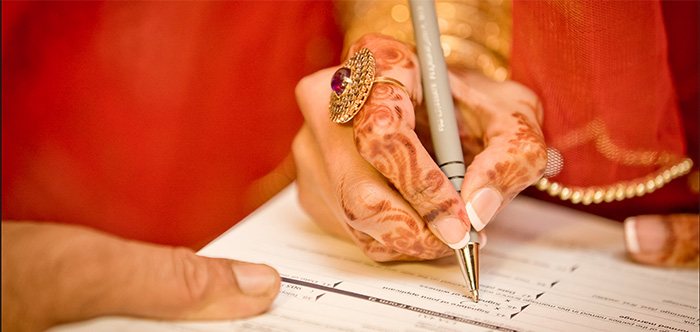
Image result for nikah
Some brothers and sisters have asked me to comment on a practice that is increasingly reported of travelling Muslim scholars and teachers of Islam in the West, and those who travel to the West as teachers and preachers. This is the practice of contracting secret marriages in the places these scholars visit or pass through.
The first thing to be said is that people generally do not make a secret of actions and relations except when they have some sense that these actions and relations, if known, would be disapproved of. Those who take the responsibility of public teaching of Islam must know that they are seen as representatives of the religion and looked up to as role models. Not only the words they preach but also their actions and lifestyle influence the decisions and actions of others; before God they are liable for that influence and for its consequences in the lives of others. Preachers, teachers, and other public figures in the community, have a responsibility to ensure that their conduct adheres to the ideal of those who fear even to displease God, let alone wilfully disobey His commands or those of His Messenger, upon him be peace.
Every Muslim knows that good deeds repel evil ones. God has said so in His Book: “Verily, the good deeds remove the evil deeds”. (Surah Hud 114) The effort of preparing for prayers and doing the prayers through the day helps to sustain God-wariness, to prevent failures and shortcomings from becoming established habits with consequences hard to undo. We strive after good thoughts, words and deeds in order to disable and annul temptation, so that we acquire, so far as God wills, something to negate/counter the harms and wrongs that we accumulate to our account over a lifetime.
But how many of us are mindful that the converse is also true: that evil deeds can negate, undo or outweigh good ones? The following is reported by `Abd al-Razzaq in his Musannaf:
Ma`mar and Sufyan al-Thawri narrated to us from Abu Ishaq, who narrated from his wife saying that she called among a company of women on `A’ishah [ra]. A woman said to her: O umm al-mu’minin, I had a slave-girl, whom I sold to Zayd ibn Arqam for 800 with deferred payment of the price. Then I bought her from him for 600 and I paid those 600 on the spot and I wrote him 800 as debt. `A’ishah said: By God!How evil is what you bought! How evil is what you bought! Tell Zayd ibn Arqam that he has invalidated his jihad with the Messenger of God, peace be upon him, except if he repents. (Abd al-Razzaq, al-Musannaf, 8/185)
Note here the strength and presence of mind of `A’ishah [ra]. In her indignation against this legal trick to do what God’s law fiercely condemns and pronounces as illegal (namely, loans on interest), she does not exaggerate or lose her balance of judgment. She does not hesitate to say of Zayd that, by taking part in this transaction, he has annulled his effort of jihad. But she also remembers to say, ‘except if he repents’. Some wrongs (like riba) are indeed so heavy in their nature and their personal and social consequences that that they may annul one’s good deeds. Yet, until death is known to be imminent, the door of repentance is not closed to any sinner, and God has said that He loves to forgive.
Secret marriage is one of several kinds of violation by men of the rights and dignity of women. I have been informed that it is increasingly common for Muslim preachers in Europe and America and for those visiting the West to marry women in secret and for a short period, after which they, presumably, end the marriage, before going on to contract another marriage of the same sort somewhere else. This is a violation of the laws and good purposes of marriage, and a vicious exploitation of women whose circumstances oblige them to enter into such contracts. The wrong is analogous to riba, which is a violation of the laws and good purposes of lending money, and severely injurious to those whose circumstances force them to borrow in this illegal way.
Full article 

Thursday, 6 October 2016

Father stares at the hand and foot of his five-year-old, severed as a punishment for failing to make the daily rubber quota, Belgian Congo, 1904

A Congolese man looking at the severed hand and foot of his five-year-old daughter who was killed, and allegedly cannibalized, by the members of Anglo-Belgian India Rubber Company militia.

He hadn’t made his rubber quota for the day so the Belgian-appointed overseers had cut off his daughter’s hand and foot. Her name was Boali. She was five years old. Then they killed her. But they weren’t finished. Then they killed his wife too. And because that didn’t seem quite cruel enough, quite strong enough to make their case, they cannibalized both Boali and her mother. And they presented Nsala with the tokens, the leftovers from the once living body of his darling child whom he so loved. His life was destroyed. They had partially destroyed it anyway by forcing his servitude but this act finished it for him. All of this filth had occurred because one man, one man who lived thousands of miles across the sea, one man who couldn’t get rich enough, had decreed that this land was his and that these people should serve his own greed. Leopold had not given any thought to the idea that these African children, these men and women, were our fully human brothers, created equally by the same Hand that had created his own lineage of European Royalty.


Thursday, 23 May 2013

In Cairo, desperate Egyptian men search in vain for Syrian brides


On the outskirts of the vast Egyptian capital, Egypt ends and the latest Syria enclave begins. Women tie their headscarves in a distinctly Syrian way. They buy Syrian spices and trinkets from vendors whose shops are now tables lined along the streets. There is a constant murmur of stories about the desperate circumstances that forced the residents to flee places such as Homs and Damascus in the past year.
The only sign that one is still in Egypt is the sound of Egyptian men and their mothers, who flock every day in the hopes they can exploit the dashed hopes of the Syrian revolution. Too poor to take an Egyptian bride, the men have heard that Syrian refugees are cheaper, prettier, better cooks and easier to marry.
“I am looking for a Syrian bride,” a 39-year-old painter, his calloused hands showing his struggle to survive, tells a Syrian man selling pita bread and spices outside the local mosque. “They are less complicated.”
The Syrian has heard this a dozen times already that day and doesn’t even respond, but rather points to a professionally made sign in front of the mosque behind him. It says that the mosque “announces that it has nothing to do with the marriage of Egyptian men to Syrian sisters. That’s why there shouldn’t be any questions regarding this issue in any of the offices of the organization. May Allah punish those responsible for spreading these rumors.”
The painter is undeterred. “Maybe there are Syrian women around the corner?” he asks.
The Syrian, who asks that he be identified only as Khalid, just shakes his head.
Before the sign, Khalid said, he fielded the question 100 times a day; now it is only 50. It’s difficult to know if he’s exaggerating.
“They ask us where the office is to buy a Syrian woman, as if they are buying a chicken. They don’t believe us when we tell them it doesn’t exist,” said Khalid, who said he was 26. “Our women are not for sale. We are here because we did not want to be killed.”
Men across the region are now seeking Syrian brides. In Turkey and Jordan, where refugee camps pepper the landscape, the desperation of the Syrians is far easier to spot as rich Persian Gulf men scour the camps to buy brides living in tents. Rape, child brides and temporary marriages are prevalent.
“People are marrying off their daughters for as little as 100 Jordanian dinars ($70) because of the bad circumstances inside the camp in return for money,” said Marwa al Saloumy, who works on women’s issues for a regional advocacy group called Al Zahra.
But in Cairo, where there are no camps, the dashed dreams of both Egyptians and Syrians in the post-Arab Spring world meet on more equal terms. Egyptian men, now poorer as the economy founders, find hope in the desperate Syrians, who can’t live in their own nation because a war that once promised revolutionary change has brought devastation and forced flight instead.
Syrian women say the men instantly spot them by their dress and approach them constantly. Alaa, a woman who fled Damascus three months ago to the Helwan neighborhood that has now become a Syrian enclave, said the harassment has been one of her biggest challenges.
In light of what is happening in Syria, “this is not the time to marry and celebrate and enjoy life,” Alaa said. And because of it, “Egyptian women now are starting to hate Syrian woman.”
That Egyptian men believe they could marry someone for less is changing marriage across Egypt. Men are demanding more of women and are willing to offer less, women report, and the standards for taking a bride are falling. Where an Egyptian man was once expected to provide a home and prove he can work before he could marry, now many believe they can have a Syrian bride for as little as $45.
The men come to the areas where Syrians have congregated all day, hoping to escape forced marriages or no prospects at all. They go to the mosque, to the makeshift Syrian vendors, to apartment complexes where Syrians are known to live. They approach one stranger after another, asking for a woman in the same tone they would ask directions – security guards at apartment complexes, Muslim clerics, anyone whose accent identifies them as Syrian.
For the Syrians, defending the women in their community has become a means to maintain their dignity even as they are living in dire circumstances.
“The thugs of Bashar Assad have spread these false rumors,” explained Khalid. “He has destroyed our nation and now he is destroying the reputation of our women.”
According to the United Nations High Commissioner for Refugees, there are nearly 70,000 Syrian refugees living in Egypt, most in and around Cairo, all arriving in the last year.
But it is unclear how many Egyptians have taken a Syrian bride. Instead, it is a crisis built on rumor.
One regional women’s organization reported recently that 12,000 Syrian women have married Egyptian men in the last year. But according to the Ministry of Justice in Egypt, the official number of marriages between Egyptian men and Syrian women between January 2012 and March 2013 is 170, with 57 of those nuptials between January and March 2013, according to an Al Ahram online newspaper report.
Moreover, neither side wants to admit they are partaking. Syrians here find such claims insulting, and Egyptian women don’t want to admit that their men could find Syrians more attractive.
Some Muslim clerics have urged Egyptian men to marry Syrian women as an act of charity, and there are even rumors that top members of the Muslim Brotherhood, the secretive religious society through which Egyptian President Mohammed Morsi rose to prominence, have taken Syrian women as second wives.
Earlier this month, the National Council of Women condemned the push to marry Syrian women, urging Egyptian officials to intervene. It even set up a hotline for Syrians to call and complain.
The number doesn’t work.
Egyptian matchmakers say they keep getting requests for Syrian women but refuse to oblige. They say they do not want to create yet another problem for Egyptian women – another obstacle to marriage.
Nashwa Soltan has worked as a matchmaker for a decade. For the first time, in the last year, two of every 10 men she meets ask for a Syrian bride.
“He has difficult demands,” Soltan said, referring to one such man she is working with. “He is a 54-year-old widower and he has three children, two of them are in college and the third is in sixth grade. And he wants a beautiful woman in her 40s who doesn’t have children and who doesn’t want to have any children.
“He wants someone to cook for his kids and wake up early for him and his children. He wants a servant,” Soltan said.
Soltan tried to hook him up with three Egyptian women, but the Egyptian women always turned him down.
“He tells the women from the first date that he won’t change anything in the house and that each one of his children likes certain types of food and he is expecting her to cook for each one of them,” Soltan said. When he asks to only see Syrian women, Soltan said she refused.
The painter, who refused to give his name, appeared to be just as unlucky. After the sellers lectured him on why he was on a fool’s errand, he walked quietly around the corner where no Syrian women awaited him.
Frustrated, he walked away. The Syrians vendors smirked as though they had won a fight.
“We still have our dignity” Khalid explained.

Read more here: http://www.mcclatchydc.com/2013/05/14/191195/in-cairo-desperate-egyptian-men.html#.UZoe1LVwrp4#storylink=cpy
Source

Monday, 25 February 2013

India's Muslims grapple with wedding racket


 Until recently, Hyderabad was hotspot for a disturbing form of sexual tourism, practiced mainly by visitors from Islamic countries, especially in the Arab world.
Seeking a short-term liaison, but wanting not to violate religious prohibitions against adultery, such visitors enter into brief, arranged marriages for a fee – often with girls young enough to be their granddaughters.
"In 90% of cases the women are as young as 15 and 80% of the time they are divorced within a week of the wedding ceremony," Bina Hassan, a women rights activist who has campaigned against this practice for years, told Khabar South Asia. "In rare cases the same girl is married numerous times, [though] usually the Arabs look for only virgins."
Many people have benefitted from such arrangements. The men can claim that they had not sinned according to Islam, which permits polygamy. Meanwhile, financial proceeds go to the girls' families, the agents who negotiate the deals, and the qazis (priests) who officiate.
For the brides, however, the results can be grim. After being deserted by their temporary husbands, they often find themselves without a home to return to. Their parents feel a sense of social stigma and want nothing to do with them. A real marriage is out of reach.
Community moves to end practice
Over the past two years, the Muslim community in Hyderabad has worked together with the government in order to halt such marriages and better protect local women. The results have been impressive. In 2012, only two such weddings were reported – compared to 58 during 2011.
Elders on the state Waqf Board played an instrumental role, government sources say.
"These weddings have been going on for decades, but no steps had been taken. The government decided to work through the Waqf Board because merely banning these weddings would not have produced any result. We needed the co-operation of the Muslim population," Andhra Pradesh Minister for Minorities Welfare Mohammed Ahmadullah told Khabar.
Waqf Board chairman Mohammad Saleem said one incident in particular galvanized opinion. "The straw that broke the camel's back was an incident in May 2012 in which a 73-year-old United Arab Emirates national became the centre of public ire when he tried to desert his bride of two days," he told Khabar.
According to journalist Omer Farooq, "the issue is quite dead now. The racket no longer flourishes."
Poverty cited as underlying cause
The grim economic picture for Muslims residing in Hyderabad's old-city quarter provides a context for the proliferation of dubious marriages. Packed into a medieval walled city, residents have the lowest literacy rate for women and a per capita income far lower than the Andhra Pradesh average of Rs. 71,540 ($1319).
The computer software industry – which gave the city its new nickname of "Cyberabad" – has had little impact on the urban Muslim community. "It's a ghetto, where people live in grimy conditions without access to even running water," Waqf Board general secretary Rumaan Idris Ali told Khabar.
For some families caught up in such dire conditions, black market weddings appeared to provide a way out.
In one case, according to assistant commissioner of police S.K. Rao, a 14-year-old girl (name withheld) was married in 2008 to three different men, all of them as old as her grandfather.
"The girl was pretty and looked older than her real age. Today she works as a construction labourer in some other city," Rao told Khabar. "We were helpless because her family was supporting these marriages."
Mussrath, 16, was married to a man in his 50s but dumped after three days in a local hotel. Her father then fixed her marriage to 70-year-old man, Rashid Ali, from Dubai. "She was taken to the same hotel, used and divorced," Rao said.
Mussrath's father found a third groom – 63-year-old Ahdul Rehman Abdullah from Oman – before her mother alerted the police.
Stories like this are becoming far less common, Waqf Board general secretary Ali said. Thanks to community vigilance, he said, young girls are no longer preyed on by racketeers.
But the discarded wives require rehabilitation. "They lack the means to put up legal fights. So the government must take up their cases," he said.
Racket moves to Mumbai
While sham marriages are becoming a thing of the past in Hyderabad, the problem is far from being resolved in India as a whole, authorities say. Rather, racketeers have simply moved their operations to other locations.
Mumbai, in particular, appears to be the new destination of choice for "grooms" seeking a no-strings-attached wedding.
The city's police on December 28th cracked an operation involving agents that brought young girls from Hyderabad to take advantage of the unreformed situation in Mumbai. In the suburb of Dongri, police rescued 12 girls – some as young as 13 – who were being paraded before Arabs by agents who had brought them in by overnight train.
"The girls were promised Rs. 200,000 ($3,700), out of which the agents would keep half," Assistant Police Commissioner (Women's Cell) Savithri Waslankar told Khabar. "Their aim was to have as many weddings as possible in the span of a few weeks so that they could make enough money to return home."

Wednesday, 21 November 2012

Child Sexual Exploitation is Not an Ethnic or Cultural Crime


In her oral evidence to the Home Affairs Committee, the deputy children's commissioner, Sue Berelowitz, said: "... What I am uncovering is that the sexual exploitation of children is happening all over the country. As one police officer who was a lead in a very big investigation in a very lovely, leafy, rural part of the country said to me, there is not a town, village or hamlet in which children are not being sexually exploited."
It was therefore a welcome opportunity when parliamentarians were able to debate the very sensitive subject of 'Child Sexual Exploitation.' An opportunity to debate protecting children from becoming victims of the most abhorrent abuse.
I was dismayed when the focus of the debate was deflected away from this and entangled instead with issues of race and religion. Tory MP Kris Hopkins insisted that "Time and time again it's a white girl being raped by Muslim men".
It seems that Mr. Hopkins had completely disregarded evidence presented to the Home Affairs Select committee in which the deputy children's commissioner when questioned on this point had stated this was not an issue of race or religion, this was an issue of methodology and was simply 'one' type of sexual abuse taking place. A point made also by the assistant chief commissioner of Greater Manchester police and the judge presiding over the recent exploitation case in Derby.
Separately, and in a wider context it is equally important to emphasise methods to define this debate. There are many methods which Mr. Kris Hopkins and others neglect to mention when taking their misguided arguments on race and religion: the trafficking of vulnerable young girls who are forced in to prostitution by criminal gangs, more recently we see with Jimmy Savile and others who have used their position and power to satisfy their grotesque and perverse needs. We learned of the abuse taking place in care homes such as North Wales, or cases of affluent men travelling to the Far East to satisfy their perverse desires, then there are methods deployed by Internet groomers, or the cases of abuse carried out by Catholic priests.
The common factors and themes which run through cases of child sexual exploitation are not race or religion but that the perpetrators are male and prey upon vulnerable young victims.
Arguments which point to Asian perpetrators seeing young white females as 'easy meat' do not take note that sadly such females are rarely from a happy, secure family life and are usually from the most vulnerable group in our society. A sexual predator does not consider the race and religion of their victims, those who are preyed upon are targeted because of their vulnerability.
The brutal exploitation of vulnerable young victims raises important and worrying questions which must be openly and honestly debated. We should be asking ourselves how these victims came to be in such exposed positions and why their families and local agencies were
unable to protect them.
The number of young girls in our society who lack a family structure which can protect them is increasing. Statistics show that a third of the victims are in care, while others are from poor backgrounds and lack self esteem or the empowerment to change their lives. Sadly it is these factors which make them more vulnerable on the radar of an exploitative sexual monster. Whether these young victims are white or of another ethnicity does not make them more or less vulnerable.
Kris Hopkins and the others in favour of his argument risk pandering to the whims of the BNP and other far right groups. This is not an ethnic or cultural crime. Child exploitation, grooming or child abuse of any other kind is not uniquely or predominantly carried out by one ethnic or religious group. Nine out of ten of those on the sex offenders register are white British.
Yesterday's debate should not have been about the ethnicity and religion of the abuser, nor should it be an opportunity to tarnish an entire community.
This is a debate about the vulnerability of victims, let's not forget about them.

Monday, 1 October 2012

Daughters of the brothel


Filmmaker Gautam Singh explains how he came to make Daughters of the brothel.

India's handwritten magazines have long fascinated me. But while researching the subject for a blog, I came across one in particular that stood out. Jugnu is a 32-page monthly magazine that has been written and published by the sex workers of the Chaturbhuj-sthan brothel in Bihar, near the border with Nepal, for the past 10 years. 

Home to about 10,000 women and children, the whole area - named after the Chaturbhuj-sthan temple, which is located inside - is essentially one large brothel. Historians believe it was first established during the Moghul era. Prostitution has become a family tradition there - passed down from generation to generation. 

Intrigued, I contacted the magazine and as more details emerged about this extraordinary publication and the women behind it, I realised that this story was much bigger than a blog.

The magazine had been set up by a group of sex workers led by one girl - Naseema. Born into Chaturbhuj-sthan, Naseema was abandoned by her mother and raised by a woman she calls her 'grandmother'. Although not actually related to her, this woman used the money she earned as a prostitute to raise Naseema and send her to school. Naseema became the first girl in the brothel's 300-or-so-year history to receive an education.

When she returned to Chaturbhuj-sthan it was not to sell her body. With the help of local banks, Naseema established small industries inside the brothel - making candles, matchsticks, bindis and incense - offering many prostitutes an alternative form of employment. And she set about persuading the sex workers to send their children to school. Now almost every child in Chaturbhuj-sthan is in full-time education. 

More than 50 former prostitutes now work with Naseema, who taught them how to read and write. As well as running the magazine - which is sold across India and also sent to subscribers elsewhere - Naseema and the other women work to prevent others being trafficked, mainly from neighbouring Nepal and Bangladesh, into prostitution. In the last year alone, they have been able to send at least 20 new girls safely back home.
But their work has brought them many enemies; the most feared being Rani Begum. As chief of the brothel, Begum's finances have suffered a blow as a result of Naseema's activities. Her thugs have publicly harassed and beaten Naseema and the other women who work with her. Naseema has also had to fight pimps, as well as some police officers and clerics who were unhappy about her work. 

With a clearly identifiable hero, a suitably sinister villain and plenty of action guaranteed as they face off against one another, I felt I had come across a story worthy of a novel. I was hopeful that we could produce a perfect film, but shooting inside a brothel was never going to be easy. I deliberately chose a very small crew of just three people so that we might remain as invisible as possible. We used a Canon 7d camera. Its small size and light weight meant that we were able to move quickly from one place to the next - something that was to prove useful when Begum's thugs were sent to threaten us.

Before starting the shoot, I met Begum, hoping that this would reduce the likelihood of any problems arising at a later point. About 65 years old, she lives in a huge mansion inside Chaturbhuj-sthan. Polite and courteous, she sought to portray herself as somebody running a kind of welfare institute for destitute girls and referred to her brothel as a 'social heritage'. A former dancer herself, she stressed that every girl in the brothel is taught classical music and dance.

Begum grew less friendly when I started questioning her about Naseema and her work, but nevertheless promised not to trouble us as long as we filmed indoors. One day, however, while eating lunch, some men came to tell me that Rani Begum wanted us to leave. We eventually had to call the local police to enable us to complete our shoot.

For me, the most emotional scene in the film is when we meet Roma. A 19-year-old Bangladeshi girl, Roma thought she was coming to India to marry a friend of her brother-in-law. She was rescued from the brothel by Naseema and taken to live in a government shelter. But her family still refuses to allow her to return home for fear that she will give them a bad name. We were able to watch the heartfelt telephone conversation between Roma and her family as she pleaded with them to take her back.

And then there is the story of Boha Tola - a red light area in the neighbouring Sitamarhi district that was burnt down when local government officials conspired with villagers to eradicate it. Unofficial sources say that at least 100 women, men and children went missing as a result of the fire. As they were never officially registered by the government, no effort was made to find out what had happened to them.

Naseema and some of the other women recorded the incident on their mobile phones and gave me the footage to use exclusively in the film. They told horrifying tales of gang-rape, children being thrown onto fires and police brutality. Some of the women from Chaturbhuj-sthan went on hunger strike to show their solidarity with the people of Boha Tola, but the hunger strikers and their supporters were all put in prison. 

Now 32 years old, Naseema is an amazing character who is proud to call herself "a daughter of the brothel".

Wednesday, 28 March 2012

Bangladesh's ''teenage'' brothels hold dark steroid secret


Seventeen-year-old prostitute Hashi embraces a Babu, her "husband", inside her small room at Kandapara brothel in Tangail, a northeastern city of Bangladesh. Many young and inexperienced prostitutes have "lovers" or "husbands" who normally live outside the brothel, occasionally taking money and sex from them in exchange for security in this male dominated society. She earns about 800-1000 taka daily ($9.75 - $12.19) servicing around 15-20 customers every day. Hashi is one of hundreds of mostly teenage sex workers living a painful life of exploitation in the brothel.
(Reuters / Andrew Biraj)


TANGAIL, Bangladesh, March 19 (Reuters) - Their faces painted heavy with make-up, teenage girls in short, tight blouses and long petticoats loiter in squalid alleys, laughing and gesturing to potential clients who roam Tangail town's infamous red light area in the early evening.

There is no shortage of men looking for "company" in Kandapara slum, a labyrinth of tiny lanes - lined cheek-by-jowl with corrugated iron shacks - a few hours drive northeast of Bangladesh's capital, Dhaka.

But with rates as low as 50 taka (60 U.S. cents), the need to attract as many customers as possible is desperate - prompting a rising, yet dangerous, trend of steroid abuse among adolescent sex workers to "enhance" their appearance.

"There is a huge difference between my appearance now and the malnourished look of my childhood," says Hashi, 17, who was lured into the sex trade by a trafficker when she was 10 and sold to Kandapara's brothel, where she began taking steroids.

"I am healthier than before and fit to serve a lot of customers in a day. Sometimes up to 15," she says, placing a large black bindi, or dot used by Hindu women, between her perfectly shaped eyebrows.

She sits in her tiny room with a bed, a cooking stove and posters of Bollywood stars taped across the wall.

Hashi is one of around 900 sex workers - some as young as 12 - living a painful life of exploitation in Kandapara, not only bonded by debt and fear of stigma, but compelled to take the steroid, Oradexon, which brings more income but leaves dangerous side effects.

COW FATTENING DRUG

Also known as Dexamethasone, Oradexon treats inflammation and allergies in humans and is used by farmers to fatten livestock.

Charities say the over-the-counter drug is taken by 90 percent of sex workers in Kandapara and the other 14 l egalised brothels across this impoverished South Asian nation.

The girls are first forced to take it by their madams, or "sardarnis", who run the brothels.

It increases their appetite, making them gain weight rapidly and giving the appearance that these poorly nourished teens are in fact healthy and older - attracting clients who prefer girls with "curves".

It also helps sardarnis keep the police away. The legal age for sex work in Bangladesh is 18.

The girls then continue to consume it, saying that it keeps them "strong and healthy", which in turn will help them get more clients in a day so they can earn enough to survive.

"My sardarni forced me to take a tablet. She beat me up and stopped giving food. She threatened me and reminded me about my loans," says Hashi, who has a four-year-old son staying with relatives, whom she has not seen for two years.

"In this brothel, customers always look for healthy girls. I take Oradexon. I need customers so I can pay my bills and loans. If I don't get any customers one day, I cannot eat in the next day. I wish to save some money for my son."

The story is the same with most of Kandapara's teenage sex workers, or "chukris".

Sold for as little as 20,000 taka ($245) by their poor, rural families to traffickers, they are then traded on to brothel sardarnis, who are former prostitutes themselves and keep the teenagers in bonded sex work.

The girls speak of being with up to 15 men in one day, but say their earnings are pocketed by their sardarnis, who tell them they have to work to pay off the money paid for them.

Many girls have been in Kandapara's brothel for years, yet due to their illiteracy, they have no idea whether their debts have been cleared and what their rights are.

Others, who have been left by their sardanis because they are too old or not-profitable, are in principle free to leave but choose not to, fearful of the social exclusion they will face in the conservative, Muslim society outside of Kandapara.

BATTLE WITH BROTHELS

Oradexon, they say, keeps them going, even though there are known risks associated with its long-term use.

The steroid can cause diabetes, high blood pressure, skin rashes and headaches and is highly addictive, according to social activists.

It also weakens the immune system and leaves patients more susceptible to illnesses. There have been reports of young sex workers dying from over-use of the drug.

The small white pill is easily available in Kandapara's slums. It is sold without prescription for 15 taka (18 U.S. cents) for a strip of 10 at the tea and cigarette stalls blaring Bangladeshi pop music that populate a maze of open-sewer lanes.

"Steroids are life-saving as well as life-destroying drugs which are used by sex workers in poor countries," said Shipra Gowshami, a lawyer and human rights activist w h o works with sex workers in brothels in the central Bangladeshi town of Faridpur.

"A lack of awareness, easy availability and malpractices of quacks are some of the prime causes of why these drugs are being abused," Gowshami said.

In 2010, ActionAid Bangladesh began a campaign to promote awareness of the drug among sex workers. But they say they are facing a long fight in persuading not only the brothels to stop using it but also authorities to regulate it.

"There have been attempts to raise awareness on the negative impact of the use of such medicine but brothel owners, madams and pimps are a long way from withdrawing such practices," said Farah Kabir, country director for ActionAid Bangladesh.

"We have an uphill battle, yet it can be won. There needs to be greater regulation in the sale of such drugs. Government and the state must play an active role."

(Writing by Nita Bhalla; Editing by John Chalmers and Paul Tait) source