Friday, 20 January 2023


Tuesday, 27 September 2022
My Child Has Wandered off the Straight Path
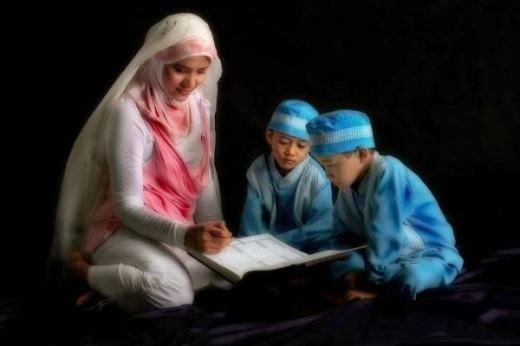
I’ll admit it. I used to be complacent. A decade ago, my children were young and happily attending Islamic school. They were memorizing Qur’an, socializing with other Muslim kids, and willingly joining us for salat in our home and activities in the masjid. In those days when I would hear about a Muslim teen in our community who had started dressing immodestly. . . or one who had been caught with a boyfriend or girlfriend behind the school. . . or one who consistently skipped prayers . . . I thought, alhamdullilah my kids are not like that.
If I’m being completely honest, deep down inside I also sometimes thought, What did their parents do wrong to get such a misguided child? This assumption, of course, implied that I was doing something right. That my children’s current acquiescence to the rules of their faith was my doing. That my husband and I could take all the credit for their innocence and love of Islam.
So often in life we find that the very thing we judge others for – the thing we smugly think could never happen to us – will come back to bite us. And in my case, sadly, it did.
My daughter wore hijab until she was seventeen. Then one day she removed it, not with hesitance or regret, but with grim determination. In retrospect, I guess I should have seen it coming. She had been dropping hints for a long time. She had cried about the tactless and hurtful comments about her Islamic dress that she’d heard from non-Muslim peers and complete strangers. She had complained numerous times about the inconvenience of wearing modest swimwear at the beach because all the material weighed her down, and she felt she looked like a “freak” amongst her bikini-clad contemporaries. She had argued countless times that Muslim men had it easy: they could blend in with Western society and wear almost anything they wanted. They usually did not face the same harassment that Muslim women did. No matter how many times I tried to explain the reasoning behind Islamic rulings, remind her of Allah’s wisdom and love, and encourage her devotion to her faith, my words increasingly fell on deaf ears.
Still, the fact remains that I was surprised and heartbroken when my daughter decided to remove her hijab. Even more concerning, her faith started slipping away bit by bit – missed prayer by missed prayer – over the subsequent months. I tried many times to change her mind, but ultimately, I felt powerless to stop the downward spiral. At this point, my intelligent, strong-willed daughter was listening only to her peers, social media influencers, and even the books she read in school. All of these made her feel like her faith was a prison that she needed to escape.
I was a teen once. I remember the allure of the “freedom,” “independence” and “glamor” that the world promises to individuals who follow their whims and desires. I realize that as an adult, it is far easier to embrace modesty, humility, and submission to God; but for many adolescents in the modern world, adhering to Islam can indeed feel like grasping a burning coal, as our Prophet (peace and blessings be upon him) predicted.
Eventually, due to my daughter’s deviation from the Straight Path, I realized that my children’s guidance was not in my hands. Yes, I have a responsibility to do my best to be a good Islamic role model and teacher, but my efforts are not necessarily enough to secure my children’s hearts to Allah. Only He SWT can guide, and He is the Turner of Hearts. “Verily, you [O Muhammad] guide not whom you like, but Allah guides whom He wills. And He knows best those who are the guided” (Quran 28:56).
I grieved privately for months. Finally, I hesitantly opened up to some close Muslim friends about my experience. I was immensely relieved when they confessed similar stories: many of them also had teens who were struggling to practice, or barely practicing, or not practicing at all. Of course, I was not happy to hear this news, but I admit it gave me some solace to know I wasn’t alone. Those parents,my friends and contemporaries, were excellent Muslims. They prayed and worshiped as a family, led a wholesome life, set a good example, and invested in Islamic schools, homeschooling, and Qur’an lessons. And yet, many of their teenagers had still drifted from their deen. It was a tragedy, yes, but clearly, it wasn’t entirely the fault of us parents.
Talking with other moms, I also realized that the Muslim community’s reaction to misguided youth is, generally, very unhelpful. The teens feel so judged and unaccepted that they stop attending Islamic events and start avoiding practicing Muslims altogether. One friend’s daughter noticed that when she stopped wearing hijab, some of the “aunties” who had known and loved her for years were suddenly cold and distant. In part, I can’t blame them. They were probably saddened to see a young woman abandon an important act of worship. Perhaps they were even worried that she would influence their daughters and encourage them to stop dressing modestly. I don’t entirely fault them, but I do know the community’s rejection hurts teens deeply and pushes them even farther away from the deen.
Whether you can relate to my situation or not, if you are a Muslim parent, I have some words of advice. These are words from a distraught mother whose own child has wandered off the Straight Path and whose constant prayer is for her child’s repentance.
Don’t get complacent. If your young children are enthusiastically practicing their faith, that is wonderful. But do not mistake that for a guarantee of future adherence. No matter how much they seem to love Islam now, still make dua for your children’s guidance on a daily basis. Their faith will likely be tested in the teen years, and peer pressure is perhaps worse than ever because of social media.
Never be arrogant if your children are “good Muslims.” If they love Islam, and if they continue on the Straight Path, it is a blessing from Allah, not a bragging right.
Don’t condemn people silently or, even worse, backbite them verbally. We know that speaking badly about someone is like “eating the flesh of your brother,” according to the Prophet (peace and blessings be upon him).
Keep in mind: we never know who might stray from the Straight Path. It could be me, or you, or any of our children. We all must work continuously to maintain and strengthen our faith. Even the Prophet (s) who was the most perfect human and the most beloved by Allah SWT, continually made the dua: “O Turner of Hearts, keep my heart firm on your deen.” If the Prophet (s) supplicated Allah SWT to help him keep his faith strong, who are we to be complacent about our iman?!
Supplicate for any wayward child. The best thing you can do for a youngster who has stopped practicing is to make sincere dua for them. Do it with compassion, sincerity, and humility. Know that each prayer we make for another person is answered by an angel saying, “And the same to you.” By making heartfelt dua for another child, then, we are also protecting our own, insha’Allah.
Continue to treat them like your brother or sister in faith. Even though they might not look or act like a “proper” Muslim right now, they still have a seed of iman in them, insha’Allah. We do not know what lies in another person’s heart. Errant Muslims still deserve our kindness. Indeed, perhaps because of their precarious situation, they need even more of it.
Be supportive of that child’s parents. Do not treat them differently, nor presume that their child’s behavior is their fault. Remember that some of the strongest Muslims of all time had family members who did not embrace Islam. Prophet Nuh had one son who remained a disbeliever, refused to board the ark, and eventually drowned. Even Prophet Mohammad (s), whose beautiful example inspired countless individuals to accept Islam, could not convince his uncle Abu Talib to acknowledge the truth.
Guidance is in the hands of Allah SWT, and a person’s current behavior does not necessarily reflect the quality of their upbringing. Remember that many forces are working against Muslim parents’ best intentions. Keep in mind that teen rebellion is a common – if not justified –phenomenon.
Do not assume this is the end of their story! Insha’Allah their period of disobedience, rebellion, and confusion will end, by the grace of Allah. Insha’Allah their parents’ fervent du’as will be answered, and these children will repent and turn back to the Straight Path. Perhaps today’s misguided teen will become tomorrow’s pious adult who knows exactly how to reach confused Muslim youth because she has been in their shoes. There is always hope, insha’Allah, and a believer is always optimistic about Allah’s mercy and guidance.
May Allah SWT guide our children, forgive our shortcomings, and protect our ummah from anything that turns us away from His love and forgiveness. Ameen.
Monday, 5 September 2022
Don't Curse Your Children - Mufti Menk

Anas ibn Malik (RA) said,
I served the Prophet for ten years, I lived with him for ten years and not once did he rebuke me. Not once did he say the word ‘uff’. He never said to me why did you do this or why didn’t you do that.
Friday, 2 September 2022
How to pass with all A* - Mufti Menk

Prophet Ibrahim a.s. made this Dua, asking Allah s.w.t. to bless him with righteous offspring.
رَبِّ هَبْ لِي مِنَ الصَّالِحِينَ
Rabbi hab lii minas-solihiin.
“My Lord! Bless me with righteous offspring.”
(Surah As-Saffat, 37:100)
Wednesday, 31 August 2022
Raising Emotionally Responsible Sons

Allah’s Messenger kissed Al-Hasan ibn `Ali while Al-Aqra` ibn Habis At-Tamimi was sitting with him. Al-Aqra` said, “I have ten children and have never kissed one of them.” The Prophet cast a look at him and said, “Whoever is not merciful to others will not be treated mercifully.” (Al-Bukhari)
Monday, 22 August 2022
Dua for our children

Dear Allah,
When I complain of my child, remind me of the test that Adam and Hawa عليه السلام faced when Qabil killed Habil,
When I complain of my child, remind me of Nuh عليه السلام as he watched his child die in the waters when Allah ﷻ sent the floods,
When I complain of my child, remind me of Hud عليه السلام whose son refused to believe in Allah and remained with the non believers,
When I complain of my child, remind me of Ibrahim عليه السلام who was asked to leave Ismail عليه السلام as a newborn infant on the burning sands between Mount Safa and Mount Marwah,
When I complain of my child, remind me of when You ﷻ commanded Ibrahim عليه السلام to sacrifice his only son after almost 100 years, for Your pleasure,
When I complain of my child, remind me of Yaqub عليه السلام whose sons left Yusuf عليه السلام to die in a well, yet Yaqub عليه السلام held on to the belief that his son was still alive,
When I complain of my child, remind me of the mother of Musa عليه السلام, who was commanded to place her newborn baby in a bassinet and in the dangerous waters of the river Nile,
When I complain of my child, remind me of our mother Maryam عليه السلام, who gave birth to Isa عليه السلام alone under a date tree,
When I complain of my child, remind me of our beloved Prophet Muhammad ﷺ who buried all of his beloved children in his lifetime, with the exception of Fatimah رضي الله عنه ,
When I complain of my child, remind me that until today there are people who are struggling to conceive.
🤲 Ya Hayyu Ya Qayyum, my child is an Amanah that you have blessed me with. I am grateful for this blessing, and I pray every single day that this Amanat will be the coolness of my eyes, as well as a bearer of the pillars of Islam.
Ya Allah bless my sisters who are praying for children with pious, healthy and beautiful children.
Ya Allah answer the prayer of every mother/guardian/parent for her child.
Allahumma ameen!
Wednesday, 18 May 2022
How to be a good parent to Muslim children growing up in twenty-first century Britain?

From Yahya Birt's Fb page, I found it very beneficial alhamdulilah.
An old friend whose children are much younger than mine asked me how to be a good parent to Muslim children growing up in twenty-first century Britain. I was a bit flummoxed by the question as I’ve never considered myself to be any sort of parenting model. As a father, I am decidedly a work in progress: I still make parenting mistakes even into my third decade as a father. However, after mulling over it for a couple of months, these are some of the rules of thumb that have worked for me. Maybe they will work for you.
1. Don’t squash your child into a preconceived mould of what a good Muslim should be, but facilitate their own journey of discovery. Good parents nurture: they are not dictators.
2. Prepare your children for the world as it is not how you would like it to be. You have to prepare them to be resourceful and resilient.
3. Focus on the fundamentals of faith: on God, the Prophet, and the Hereafter in their youth. Build that bond and connection with the faith, with the mosque, and with pious and holy people, with the gatherings of remembrance and learning.
4. Establish your own prayer and worship if you wish to establish it in your children. Let them see that dua is the first resort of a believer who puts their trust in God.
5. Make the child used to seeing giving in action, helping others; give them money to give to others from a young age. Make them see generosity, hospitality, service and compassion as the Muslim's bread and butter, and their salt and pepper.
6. Try to establish love and attachment to the Quran from a young age. Listening to Quran recitation is an important part of this.
7. If you break your child’s spirit in pursuit of inculcating self-control you will break their confidence. Don’t be your child’s eternal life raft and never be their jailor: focus on teaching them how to swim.
8. Always remind your child their faith must come to centre on their own relationship with God, not on parental approval or disapproval. The latter are props to be kicked away as their faith matures and their understanding grows.
9. Under-confidence is a bigger issue among young Muslims, boys especially, than is egotism. Let us recognise bravado as a sign of lack of confidence rather than of arrogance.
10. Our established systems of moral education (tarbiyah) were not built for Muslim minority status or the structural Islamophobia of the postcolonial period. They need to be rebuilt from scratch with wisdom and love to become fit for purpose.
11. No educational institution, religious or secular, will give everything your child as an individual needs to grow. Be prepared to change things around in the best interests of your child. Be ready to work in active partnership with your child's educators and to challenge them constructively if they are not doing right by your child. You can't leave them at the school and madrasa gates, do nothing else and just hope for the best. That is a failure of parenting.
12. If you find a teacher who inspires your child hang on to them. They are a priceless commodity. Even in adulthood, many of us struggle to distinguish between our interest in a subject and poor teaching -- this is doubly true for children. Teachers have the power to switch us on or off many subjects, either secular or religious, until we solidify our own motives for learning various subjects.
13. Consider holiday time an opportunity to explore the history and culture of Muslims; such educational opportunities are there even in our home countries in the West if travelling abroad is beyond your means.
14. Stay close to your extended family if you are blessed to have one. A child brought up in an extended family is more rounded and confident. The nuclear family structure combined with the current economic requirement for dual income households doesn’t add up to attentive parenting.
15. Keep your kids off smart phones for as long as possible -- at least until they gain a love of reading books. Make book reading with your children a daily practice. Focus on making it enjoyable for them not onerous. If they master the art of long-form concentration and capacity for subtle and extended argument or great prose and sophisticated character studies in terms of nonfiction and fiction book reading they will retain an advantage few others will possess in the digital age.
16. Don’t try as parents to present a united parental front to the children, but demonstrate to them the art of disagreeing and then compromising within a family setting. Teach them to use words and reason to convey what is on their minds.
17. A home without any arguments is one where someone is usually keeping quiet and making all the compromises.
18. Don’t go to bed without making up with your children after an argument. Don’t let things fester.
19. Always strive for open communication with your children above all. Never penalise honesty, especially when they confess to wrongdoing or to having doubts. That way your child will feel safe to tell you what’s really on their minds. This openness is a blessing not a test.
20. Tell your children that doubt is part of faith, and that you will always be there to help answer any question they have, no matter how tough or awkward it might be. If you don’t know the answer yourself, tell them you don’t know, but that you are willing to go away and find out more. Or direct them to someone who does know.
21. Try to teach your children as many practical life skills as possible. Schools do not cover this adequately in my experience.
22. Encourage your children to eat the same food that you eat from a young age. In other words, eat together, not separately. Resist the temptation to give them children’s meals. This is just marketing and the food is normally bad for them.
23. Try to offer them a balanced plate of food. Reduce carbs and sugar, and get them used to vegetables and fruit. Don’t become a household that is reliant on fried foods or a heavy meat diet. Try to source meat and poultry that is organic, halal and cruelty-free (this is particularly important in the case of chickens who are mostly kept in cruel conditions).
24. Encourage them to love the outdoors and sports. Let them muck around in puddles and get muddy when young. Don’t keep them cooped up. Barring a heavy storm with heavy wind and rain, there’s no such thing as truly bad weather but only a wardrobe unable to adapt to Britain’s temperamental weather.
25. Encourage your children to love plants, animals, and nature. Have plants in your home, and even if you have a small yard put some pots in it. Grow some tomatoes or strawberries so that they can see where food comes from. Cats make ideal pets. They are affectionate but also independent and clean. They retain a sense of their wildness and this is important for children to experience.
26. If a parent has to assert their authority by saying that Islam teaches children to respect their parents then usually something has gone wrong. The same goes for shouting.
27. Model good manners to your children. Good manners are gold, but only with the right motives. They are a means to an end, not an end in themselves.
28. If you model good listening to your children, they will become good listeners too, insha’Allah.
29. Help your children to learn to navigate friendships. This is particularly important for girls, who seek out deeper friendships than boys do at a younger age. The most important lessons they have to learn are that friendships come in different shapes and sizes, that they are based on reciprocity and can’t be one-sided, that friends should respect your boundaries, and not to blame yourself for dynamics in friendships that are beyond your control.
30. You never stop being a parent. However your children do become adults, and so the relationship does become more equal and this is natural and to be expected.