Showing posts with label Pakistani men. Show all posts

Thursday, 30 March 2023

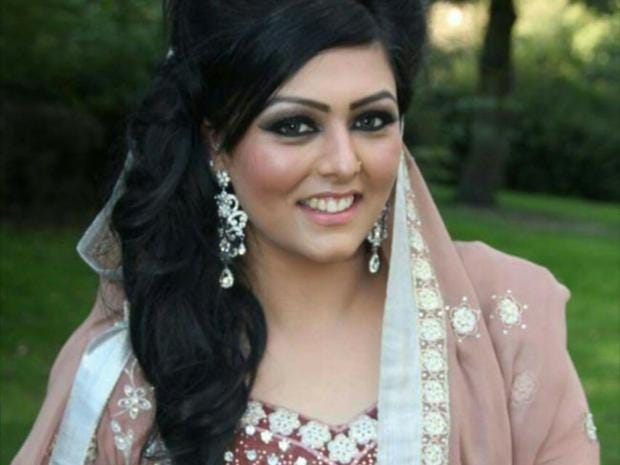
Uncle who murdered niece and dumped body 'like rubbish' jailed for life


An uncle who murdered his 20-year-old niece before dumping her body "like rubbish" has been ordered to serve a minimum of 25 years of a life sentence behind bars.

Repair man Mohammed Taroos Khan, 53, killed Somaiya Begum in an attack at her home in Binnie Street, Bradford, on June 25 last year, Bradford Crown Court was told.

Her decomposing body was found 11 days later wrapped in a rug, tied up with string, on land used as a dumping ground on Fitzwilliam Street, Bradford.

Prosecutor Jason Pitter KC  said she was “dumped and left to rot and decompose on wasteland like rubbish, such that she was not recognisable”.


He said her body was so decomposed it was not possible to find a cause of death but there was an 11cm long metal spike embedded in her chest which had punctured her lung.


Miss Begum had been living at the property with another of her uncles and her grandmother under the terms of a forced marriage protection order, following attempts by her father, Mohammed Yaseen Khan, to force her to marry a cousin from Pakistan “by threat of violence”, a jury heard.

However, the judge refused to speculate on the motive behind the brutal killing.

Khan had denied murder but admitted a charge of perverting the course of justice by disposing of Miss Begum’s body and burning her mobile telephone.


However, he was found guilty of murdering her on Tuesday.

Sentencing Khan to life in prison on Wednesday, Mr Justice Garnham said: “It is not possible to identify a motive for this dreadful attack by you on an innocent young woman.

“It is said you did not support her forced marriage to the cousin in Pakistan.

“It is said you did not share the view of your brother, Yaseen, about the role of women or the obligation of Somaiya to obey her father.


“Moreover, it is pure speculation to consider whether this murder was part of some appalling family agreement.”

He told Bradford Crown Court: “All that matters for present purposes is that the jury have found you guilty of the heinous crime of murder.

“I decline to speculate on your motive and I reject the prosecution’s suggestion that I should treat this as any form of so-called honour killing."

The grey-haired defendant sat in the glass-fronted dock wearing a grey fleece and a black body-warmer and flanked by two security officers as the judge outlined the callousness with which he disposed of his niece’s body.

Mr Justice Garnham told him: “You showed absolutely no respect for the dead body of your niece in the way you dumped it unceremoniously, wrapped in carpet and covered in scrap material, amongst rubbish on waste ground.

“You left it there to rot in the summer heat and, when it was found, Somaiya’s face had been eaten away by maggots.

“Inevitably the loss of this bright, vibrant young woman is felt acutely by other members of her family.”

The judge described Miss Begum as “an intelligent young woman of real spirit and courage” and recalled that her uncle, Dawood Khan, had referred to her in court as the “light of his life”.

The jury heard that Miss Begum’s family had already been split in two by a previous dispute before her father’s attempts to force her to marry when she was 16.

Link

Thursday, 17 March 2022

Abandonment of newborn girl child a sign of Pakistan's repressive mentality


Pakistan is plagued with its frenzied obsession for a male heir and in the process scores of girl babies are abandoned in the country which speaks volumes of Pakistan's repressive mentality. The recent incident in the Mianwali district of Punjab province in Pakistan unveiled the unfortunate state of affairs of a girl child in the country.

A seven-day-old infant was gunned down by her father named Shahzeb because his first child was a daughter instead of a son. The cruel father shot his baby five times, reported ARY News. The news has been circulating on social media. Users have shared pictures of the infant that can be seen dead. The government in Pakistan is also notorious for skipping such heart-wrenching instances.

Pakistan's societal preference is nothing new as the newborn girls in Pakistan often go missing. Scores of infants are left in white metal Edhi cradles and the more unfortunate ones either get tossed in the nearby trash dumps or are conveniently buried elsewhere, reported The Daily Times. The requirement for the time is to apprehend the culprits and put them behind bars. These deplorable incidents might make headlines however this is not enough as action needs to be taken against those who transpire such horrific crimes.

According to the last year's 'Global Gender Gap Report 2021', Pakistan ranked 153 out of 156 countries on the gender parity index, that is, among the last four. It ranked seventh among eight countries in South Asia, only better than Afghanistan. Pakistan's gender gap has even widened by 0.7 per cent points in 2021 compared to 2020.Notably, since the Imran Khan government came to power in August 2018, Pakistan's Global Gender Gap Index has worsened over time. In 2017, Pakistan ranked 143, slipping to 148 in 2018.The report indicates that Pakistan needs 136 years to close the gender gap, with its existing performance rate. These statistics show that overall progress in reducing the gender gap is stagnant in Pakistan in four areas: economic participation and opportunity; educational attainment; health and survival, and political empowerment.

Link

Tuesday, 25 June 2019

What Being Malala's Father Taught Me About Feminism


Long before my daughter, Malala Yousafazi, was born, long before we began fighting for girls’ rights to education together, and long before the Taliban’s brutal attack on her brought the world’s attention to her story, I made a decision.

Growing up in a village in Shangla, northern Pakistan, I was surrounded by patriarchy. I had five sisters and a brother and I saw how we boys got better shoes, more clothes, and tastier cuts of chicken than the girls. I saw how my mother couldn’t go out unescorted and, on documents like doctors’ prescriptions, was never referred to by her name – Maharo Bibi – but as mother of Ziauddin, or wife of Rohul Amin. And, worst of all, I saw how I got to go to school, while my sisters stayed home, crippling their future.

I was very determined that if I ever got to be a father, I’d be different.

When I married my wife, Toor Pekai, we chose to build an egalitarian family, respecting each other as equal partners and raising our daughter Malala the same way we raised our sons, Khusal and Atal. I didn’t hear the word feminist until I was 45, after the attack on Malala led us to move to the city of Birmingham in the U.K. But it was feminism I had been trying to spread in my family, and in my community, for years.

I believe fathers have a crucial role to play in the fight for women’s rights. Of course, when your rights are being violated — at home, at work, anywhere — your voice is the most powerful to challenge your oppression. And so women’s voices are the most important in feminism. But in patriarchal societies, a father’s voice is perhaps the next most important tool to galvanize change.

We have seen great moments in history, from the Suffragettes, to #MeToo, and wonderful global organizations and local organizations, who are working for gender equality, and for the rights of women and girls. But in patriarchal societies – which even many Western countries still are –, one platform, one organization, is universal: the family. When a father begins a journey into feminism, believing in the worth of his daughters, he can change his whole family’s future.

I’m not sure why I chose to start that journey, while other men accept the values passed down to them for centuries. Maybe it’s because I was bullied as a child, for my dark skin and my stammering problem, so I was angry about any kind of discrimination against someone for the way they are born.

But I am sure of one thing: patriarchy is sheer stupidity. Fathers have a great interest in dismantling it. And we as campaigners need to communicate that to them.

Life within patriarchy is a sad, frustrated life, for everyone. I have seen families in Pakistan where a father and mother have one boy and five or six girls. Because of social norms, the father and his one son go out to earn for the whole family. The burden falls to them, while all his sisters have to stay back at home, not sent to school, unable to do jobs, just waiting to get married. A guy sacrifices his life for a foolish norm, and girls don’t see their potential unlocked. And, even in countries like the U.S. and the U.K., while girls are educated and often have the same opportunities as boys, issues like pay inequality, sexual harassment and misogyny continue to damage girls’ careers and personal lives. Unhappiness breeds unhappiness.

Fathers who help unlock their daughter’s potential, standing up for their rights and raising them to believe they have them, bring prosperity and happiness to their entire families. Worldwide, according to our data at the Malala Fund and the World Bank, if we gave all the girls in the world free, quality education for 12 years, we would add between 15 and 30 trillion dollars to the world economy. It really is win, win.

These arguments are powerful, and the arguments for patriarchy are weak. That is why the Taliban shot Malala in 2012 as she and I campaigned against their ban on girls going to school. They knew that one girl with a voice can create more change than their guns and bombs.

The attack was the worst thing that could happen to a family and remembering it is traumatic. Malala is not just my daughter, she is my comrade, my soulmate – jani, in Urdu, my nickname for her. To see her on the verge between life and death was terrible. But it did not affect our commitment to equality. If anything, it made us more sure that our fight is worthwhile.

Now, as Malala campaigns around the world without me and studies for her degree at Oxford University, I miss her deeply. Her first week in her dorm room, I peeked in and shed a few tears while she wasn’t there, thinking about how independent she has become.

But in my heart, I was so happy to see her move freely and confidently around the world, no longer needing me as an escort. Good parents should want their children to be as independent as early as possible.

Within my family, we have broken the chains of patriarchy. Because of that, all of us — not only Malala and Toor Pekai, but my sons and I too — are free.


Link

Monday, 26 March 2018

Women In Pakistan Dared To March — And Didn't Care What Men Thought


We were hundreds of women, marching on the streets of Karachi, Pakistan.

We shouted slogans. '"Aurat aiee, aurat aiee, tharki teri shaamath aiee!" (Women are here, harassers must fear!)
We raised our fists in the air, smiling, laughing.
We wore what we wanted to wear: burqas, jeans and designer shades, brightly embroidered skirts, the traditional tunic and baggy trousers called shalwar kameez.
Men gaped, shook their heads, filmed us from passing cars as we walked by, disrupting traffic.
We did not care what the men thought of us.
We were free to stand, walk, dance, with nobody to tell us to sit down, be quiet, be good.
It was the first time in my life that I saw women gathering in public, in strength, in numbers.
This was the Aurat (Urdu for "women") March, the first of its kind in the conservative Muslim country of Pakistan. There were actually three marches — in Karachi, Lahore and Islamabad – all held on March 8, International Women's Day.
Word spread through Facebook and Twitter posts among the various networks of women involved in grassroots work — in education, health, microfinance, women's shelters, workers' rights.

Objectives were ambitious: a demand for the recognition of women's rights and gender equality, and an end to the hideous scourge of gender violence, among other aims.
But the overriding intent was to raise the morale of Pakistani women. The constant drip of misogyny can turn life into a misery, where you are considered a lucky woman if you have a husband who doesn't beat you. The Aurat March wanted to remind women that the bar doesn't need to be set that low.
Before the march began, activists took to the stage and spoke of their struggles and triumphs. Veeru Kohli, a member of the Dalit community in the Thar Desert (low-caste Hindus known by the epithet of "untouchables") related how she escaped a life of slave labor to become a political activist. Kainat Soomro, a victim of gang rape at 13 who is trying to take her rapists to court, described her as yet unsuccessful 11-year fight for justice. An activist from the Christian community excoriated the government for ignoring the scourge of forced conversions, where Muslim men kidnap minority women, force them to convert to Islam and marry them against their consent.
The March brought together women across class, ethnic, and religious lines. University students cheered on older feminist icons. Placards in English and Urdu read "Patriarchy is Fitna (sedition)", "Kebab Rolls not Gender Roles", "Woman is King" and "Stop Killing Women." Children waved orange and yellow flags with the Aurat March logo, and 97-year-old folk singer Mai Dhai sang and banged enthusiastically on a dhol, the traditional Pakistani drum played at weddings, stirring women and men to dance together in a spirit of festivity and celebration.


Monday, 25 September 2017

Christian teenager beaten to death by classmates in Pakistan

mc-moden-boys-government-school.gif

Pakistan hang your head in shame! Utter disgrace!


A Christian teenager has been beaten to death by his classmates in Pakistan. 
Sharoon Masih was the only Christian in his year and was attacked after he apparently drank from the same glass as a Muslim.
The 17-year-old had only been at MC Model Boys Government School Burewala in Punjab for three days before the incident. 

Monday, 12 September 2016

Samia Shahid: British woman who died in alleged honour killing texted friend about fears she would not return alive

samia-shahid.jpg
Beyond horrifying this pathetic 'father' aided his own daughter's rape and murder. So much for being protectors...
A 43-page police report, seen by the Mail Online, by an official connected with the case, concluded her father had held her down while Shakeel raped her. 
In the report, it said the day before she was due to fly to Islamabadfor the week-long stay, she texted her friend with the message: “Pray I come bk alive on 21jul my psyco cuzzan u see” – referring to her former husband.
But forensic and DNA tests confirmed Shakeel, who reportedly had never accepted the divorce, had raped Samia: “The result indicated a perfect match, thereby establishing that the victim was raped by accused Shakeel before she was murdered,” said the report. 
The forensic report also showed a 19mm cut across her neck from where she had been strangled.
The report claimed Shakeel was angry at the divorce and felt she had “dishonoured him and his family”. They had originally married in Pakistan in 2012 where she stayed for a short time before going back to the UK. She then divorced him ex-parte two years later and moved to Dubai to be with Mr Kazam. 

Thursday, 9 July 2015

Filmmaker Wants To Stop Fathers From Giving Up Their Daughters

 
She fights for the rights of women by telling stories about heroic men.
"The struggle to end violence against women has always been carried out by women activists," says Samar Minallah Khan, who makes documentaries about gender-based violence in her native Pakistan.
"Women have worked very hard to bring awareness, but it will never be enough." That's why she brings men into the picture. And her approach has won acclaim from both men and women.
Khan is one of five women honored with a Global Leadership Award by Vital Voices, a group founded by Hillary Clinton after the World Conference of Women in Beijing in 1995. At the presentation ceremony, held at the Kennedy Center last month, a packed house of women gave her a standing ovation when she dedicated the award to the men in her life: "my amazing supportive and loving father, my husband, my brothers and my son."
Khan's films focus primarily on the practice of swara, where a daughter is given away as compensation for a crime. Swara happens mainly in poor, rural areas.

Tuesday, 30 June 2015

“THE WORLD EXISTS ON HOPE” – MUKHTAR MAI

 IMG_6635
Ramadan Mubarak.
Many of you know the story of Mukhtar Mai, one of my personal heroes.
In 2002, Mukhtar, a Pakistani village woman, was brutally gang raped by four men of a powerful neighboring tribe, on the order of a local council; the attack was said to be punishment for an alleged affair that her young brother had with a girl from another tribe. To humiliate her further, Mukhtar was forced to walk home, nearly naked, as villagers looked on. People expected her to commit suicide; she thought about it. But instead, Mukhtar took the rapists to court. Initially, six men were sentenced to death for the rape. Then in 2011, the Pakistan Supreme Court overturned all but one of the convictions and the men were freed; they continue to live in her neighboring village.
I first met Mukhtar seven years ago when she was in Washington, D.C. for a Vital Voices event. I was asked to be her translator when she was invited to speak with Hillary Clinton at the inaugural Women in the World Summit in 2010; unfortunately she had to cancel at the last minute due to illness. In April we had the chance to meet again when she was in town for a Developments in Literacy (DIL) fundraiser.
She smiles when she greets me, remembering that we had met before; she laughs as she shares some of her stories; but it’s her eyes – her eyes can’t hide the unfathomable pain that she’s endured. Her voice is soft, I sit right beside her to hear her. She seems timid, a bit withdrawn. But Mukhtar Mai has the courage of a warrior, and a voice that has challenged centuries of brutality and injustice against women.
We talk about her typical day, her schools, her children, life for women in Pakistan, her fears, her dreams, who inspires her, what makes her so strong.
Allah jin sey kaam laina hota hey, leta hey,” (loosely translated, ‘God chooses certain people to do certain things’).
Mukhtar runs the Mukhtar Mai Women’s Organisation. It includes a resource center, which deals with 500 cases of violence against women each year, and includes legal support, a hotline and a mobile emergency unit; a shelter, which started in Mukhtar’s bedroom with women sleeping beside her; and two schools, which provide free education, books, uniforms and supplies; the schools are for both girls and boys until primary, and for girls until high school.
In 2003, she used funds she won from her case to start a school for girls, the first in her village. Illiterate herself, she understood that only education could bring about change.  She laid the bricks with her own hands, she tells me proudly, and enrolled herself as her first student; she made it through primary school, she laughs, then got too busy running her organization. Now the school has 700 children; the second in a neighboring village has 300.
People used to slam the door in her face when she tried to encourage families to send their daughters to her school; now their only wish is for their girls to attend. “If they miss the bus, the parents themselves bring their daughters to school. One way or another, they have understood that girls should get an education,” she says smiling. Visiting the schools is the brightest part of Mukhtar’s day. The kids crowd around her, they all want to shake her hand; sometimes three hands hold on to hers, she says smiling. “The kids love me; the children are very happy at school. And we feel the same way. We consider them our own kids.”
The children of her rapists attend her school too.
Mukhtar got married in 2009, and has two kids of her own, a daughter who is almost five and a son who is three; she also adopted her sister’s daughter, 9. We share stories, and stresses, about our children. She fears for their security. “For myself I don’t worry; whatever happens to me will happen; I worry for my children.” She also worries that her kids are not taking school seriously; since it’s located next to their house and their mother is always there, they don’t see it as a place to study.  Mothers’ worries are always the same – our children’s safety, well being, and education.
Her other big stress is funding for her schools; for the past six years, it’s been very difficult to get funds; DIL helps with some of the teacher salaries. “I’ve been so tense; I don’t want the schools to close down. I hope this mission continues.” She has faith that she will get through this difficult time too.
Mukhtar has big dreams, even if limited resources. “I want to open schools all over Pakistan,” she says, “wherever there isn’t a school.” She also wants to make a college for girls so they can continue studying. “One wishes for so many things, our dreams never stop. But what happens is what Allah wants to happen; if He wishes, then this will happen too.”
We talk about her case, and if things have gotten better for women in Pakistan. She’s frustrated that laws for women are made on paper, but not implemented. “If no one gets punished, there’s no justice. A country that does not have an effective justice system, that country will perish.”  Maybe her kids will see justice, she says, even is she doesn’t. And adds, “Omeed pay dunya kaim hay,” (the world exists on hope).Hakumat mai nai, lekin Allah pey to hai (not in government, but [we have faith] in God).
I ask her what gives her so much strength. “First of all, Allah,” she says, “what Allah wants done, he enables it to happen.” She also gains courage from her mother; and from the support of all of us. “I know that the whole world’s duas are with me,” she says.
I set aside my notebook, hold her hands, and ask her how she’s really doing. She says, unconvincingly, that she’s ok, Allah ka shukr. Adding, “Aik cheez insan key andar ajai, phir wo jatee nahi” (one thing if it gets inside you, then it never leaves you). She hasn’t been able to sleep well in 13 years. “But you have to go on; you still have to laugh; no one likes someone who cries all the time. Zindagi to gozarnee hai”(You have to continue to go on with your life).
I assure her that she’s not alone, that we’re by her side; I tell her that I will share her story during Ramadan, and that we will give generously to make sure her schools stay open; I promise her that I will pray for her children, and ask her to pray for mine.
To learn more about Mukhtar Mai’s work and to donate to her efforts, please visit:http://www.mukhtarmai.org

Monday, 5 January 2015

Pakistan needs laws against misogyny, not blasphemy


 The national narrative regarding blasphemy in Pakistan is that the offense is unpardonable: Once you utter words that disrespect the Prophet Muhammad, his companions or the Quran, only death or life imprisonment awaits you.
But earlier this month, Junaid Jamshed, an influential Islamic preacher, sought an alternative outcome. Accused of blasphemy by members of a different Islamic sect for remarks he made in a video posted on Facebook, Jamshed released a subsequent apology video, in which he pleaded ignorance and asked for forgiveness.
Jamshed’s case has attracted international attention and opened debate about whether blasphemy is pardonable. The week after the events, Dawn, Pakistan’s leading English newspaper, published a blog post outlining how Advocate Ismaeel Qureshi, the creator of Pakistan’s blasphemy law, has acknowledged the possibility that the regulation rests on an error in theological interpretation. Religious clerics and talk-show hosts on television devoted much airtime to discuss the blasphemy law and Jamshed’s apology video.
But one aspect of this episode ignored in the debate is the misogyny Jamshed displays in the alleged blasphemy video.
In the clip, Jamshed, speaking in front of a small group of men, tells them a story about how Ayesha, one of the wives of Muhammad, would often feign being ill to receive attention from him. The moral of the story, according to Jamshed, is that if Muhammad could not reform women’s crooked ways, then ordinary men do not stand a chance.
The message is simple: Even under the holiest of influences, women, by the simple virtue of being women, cannot be “fixed.”
Whether Jamshed committed blasphemy under Pakistani laws — and whether there is room for a pardon — is for the Pakistani courts to decide. But in this particular instance, Jamshed must be held accountable for more than the alleged blasphemy. And it is the moral responsibility of Pakistan’s media and civil society to call him out for imparting misogynist views to an unsuspecting audience.

Thursday, 26 June 2014

How can we stop honour killings?


 Farzana Parveen was killed on May 27 by relatives for marrying against her family's wishes [AFP]


Disturbing cases of extreme violence against women from around the world have come to the fore in the past few weeks. Farzana Parveen's murder in Pakistan highlighted the country's dismal record of women killed in so-called honour killings. According to the Pakistani Human Rights Commission, 869 women were murdered in 2013 in what were said to be "honour killings". 
Sensationalist media quickly picked up Parveen's story and blasted the familiar stereotypes and misrepresentations, sidelining a much-needed open discussion on misogyny. 

The so-called honour killings is one manifestation of violent and criminal practices against women that seem to persist in places such as Pakistan, Afghanistan and several other Muslim-majority countries. Some are quick to seek the causes of this deplorable act in religion, when in fact Islam stands clearly against it. Therefore, it is important to expose the faulty logic behind such accusations and openly discuss violence against women and honour killings in the context of Islam as well as in the context of perceived social norms of honour


Understanding the 'honour code'
It is important first to consider the concept of honour itself. Renowned philosopher Kwame Anthony Appiah'sanalysis of honour and his idea of moral revolutions can be particularly useful in this case. His book The Honour Code explores the processes that ended three abominable practices related to honour: duelling in Britain, foot-binding in China and slavery in the British Empire. According to Appiah, what ended these practices "wasn't the moral arguments ..., it was the willingness to live by them."  

Islam and reshaping honour 
After drawing lessons from history, reshaping honour is what Appiah suggests as a way to successfully move forward in the ongoing battle against honour killings. 
In other words, those willing to eradicate honour killings should pursue a strategy of collective shaming: to shed light on how such cases are bad publicity for the country, and demand the government'saccountability for keeping Pakistan "a ship permanently poised on the verge of failure". 

Religion is also a key factor in campaigning against honour killings. For example, Islam plays a very important role in Pakistan, including it in its constitution. Therefore it is encouraging to hear a fatwa by the Pakistan Ulema Council, declaring "Killing one's daughter and humiliating them is a sign of ignorance."(However, as one critic put it, clerics need to be more vocal and consistent in opposing every form of bigotry.) 

In the battle for shifting perceptions of honour in those Muslim communities where it causes bloodshed, it is of fundamental importance to demonstrate the fact that Islam in no way condones honour killing. 

For example, there are two verses in the Quran - An-Nur and Maryam, which were revealed to defend the honour of Prophet Muhammad's wife, Ayesha and Prophet Isa's mother, Maryam respectively. In fact, Islamic laws regarding sexual morality teach us that God protects woman's honour, and that the Quran holds both men and women equally responsible for adultery. It is clear that the idea of violence against women to protect honour is in no way justice prescribed by the Quran, but instead stems from socially constructed notions of patriarchy. Therefore, Islam can help us against honour killing as a religion that protects women from violence and condemns those who hurt them. 
Appiah rightly points out that Islam is "an ally" in the fight against "honour killings", and offers us a proposal to consider: Shaming communities where this practice occurs for disgracing Muslim ideals instead. Given the Western media hysteria surrounding cases like Farzana's, it is not difficult to see how the actions of a few Muslims stain the perception of Islam by non-Muslims. 

In this regard, it is important to distinguish between an act that is "Islamic" and an act perpetrated by a Muslim. As Myriam Francois-Cerrah points out in her article on Islamophobia: "Although Pakistan is a Muslim majority country, to assume Islam is the central motivating factor in the behaviour of all Pakistanis, is a form of cultural racism."

Friday, 6 June 2014

My beautiful motherland is sinking under a growing tide of blood and broken bodies


I was 17 when I first understood how little a woman's life is worth is in Pakistan. How the 'love' of a brother and a mother can lead to a woman, a girl, being hunted with brutality, killed and buried in an early grave.

I met Sania (not her real name) when I was 16 and staying in my grandfather's village in Pakistan Kashmir. She had travelled to our village with her family from rural Punjab to visit some people. I remember Sania. She was 16. She was wearing a red scarf. She had beautiful almond-shaped eyes and whenever she was asked a question she would cover her mouth with the red scarf, look down and then whisper. Like most girls her age she was painfully shy.
Sania appeared curious to meet a Pakistani woman around her age from the west. Because of her shyness we communicated mostly through smiles and she spent a lot of time giggling at me.
The following year when I returned to the village and asked after everyone, I remembered Sania and asked how she was. My aunt raised her finger to her lips and told me to hush. She then pulled me inside the house and sat me down.
"She's dead. Her brother killed her. She was in the kitchen at the time. He entered the kitchen and told her that she was a shameful woman and had brought shame and disgrace on the family. He accused her of looking at a man. He then stabbed her over and over. We heard that she was stabbed at least 20 times." 
Sania's brother had killed her in the family home and nobody did a thing to stop him. The police had arrested him but he was released a few days later because their mother had forgiven him. A mother had forgiven her son for killing her beautiful daughter with the almond-shaped eyes. He was free to live his life while Sania was in the ground, covered by the soil of a country that continues to betray women like her.