

Ibn Arabi, also known as Muhyiddin Ibn al-Arabi (1165–1240), is one of the most influential figures in Islamic mysticism and spiritual philosophy. Born in Murcia, Spain, during the Golden Age of Andalusian Islam, his profound thoughts have had a lasting impact on the Islamic world and beyond. Revered by many as Shaykh al-Akbar (the Greatest Master), Ibn Arabi's works delve deeply into the nature of existence, God, and human potential, making him a towering figure in Islamic intellectual and spiritual traditions.
Early Life and Education
Born into a well-established family in al-Andalus, Ibn Arabi had access to some of the finest scholars of his time. His early years were marked by traditional Islamic education, which included studies in Quran, Hadith, jurisprudence, and other Islamic sciences. However, his life took a significant turn when he encountered Sufi masters who would ignite his journey into the realms of mysticism.
One key moment was his meeting with the famous philosopher Averroes (Ibn Rushd). This encounter highlighted the contrast between the rationalist school of thought and the mystical, intuitive path Ibn Arabi would embrace. Ibn Arabi's spiritual journey was fueled by profound experiences of divine presence and revelations, setting him apart as a seeker of direct knowledge of God through mystical means rather than through pure reason or scholastic theology.
The Unity of Being (Wahdat al-Wujud)
Perhaps the most well-known and debated concept associated with Ibn Arabi is Wahdat al-Wujud, often translated as "the Unity of Being." While Ibn Arabi himself did not coin this term, it reflects his philosophical and metaphysical view that all existence is ultimately one, and everything in the universe is a manifestation of the Divine. In his view, God is the only true reality, and the world and all beings are reflections or expressions of God’s existence.
This notion radically shifts how one perceives creation. The world is not separate from God, but rather a dynamic and continuous unfolding of the Divine. Ibn Arabi explains this using the metaphor of mirrors, where the universe and all beings are reflections of God's infinite attributes. Each individual reflects a unique aspect of the Divine, and through self-awareness and spiritual refinement, a person can realize their deeper connection to God.
The Perfect Man (al-Insan al-Kamil)
Central to Ibn Arabi's teachings is the concept of the Perfect Man (al-Insan al-Kamil). He believed that the ultimate purpose of human life is to attain perfection by embodying the divine attributes in one’s character and being. The Perfect Man is a person who has realized the full potential of their existence by aligning their soul with God’s will and becoming a mirror of divine qualities such as mercy, justice, and wisdom.
In this way, Ibn Arabi viewed Prophet Muhammad (peace be upon him) as the archetype of the Perfect Man. Muhammad was the most complete manifestation of the divine attributes, making him the highest example for believers to emulate. Ibn Arabi’s interpretation of the Perfect Man is a call for spiritual and moral excellence, encouraging individuals to strive for self-awareness, ethical conduct, and closeness to God.
The Bezels of Wisdom (Fusus al-Hikam)
One of Ibn Arabi's most famous works is Fusus al-Hikam (The Bezels of Wisdom), which is considered a masterpiece of mystical philosophy. In this book, Ibn Arabi discusses the wisdom of different prophets, drawing from their stories in the Quran to illustrate various aspects of the human journey toward God. Each prophet represents a particular quality or manifestation of divine wisdom, and through their lives, Ibn Arabi explains how believers can realize these attributes within themselves.
The work is a deep, allegorical exploration of the human soul's journey to God, and its complexity has been the subject of extensive commentary by scholars for centuries. The Fusus serves as a spiritual guide for those seeking to understand the deeper meanings of divine wisdom and the nature of the relationship between God and humanity.
The Meccan Revelations (Al-Futuhat al-Makkiyya)
Another monumental work by Ibn Arabi is Al-Futuhat al-Makkiyya (The Meccan Revelations), a vast and comprehensive text that spans several volumes. It is a mixture of autobiography, philosophical discourse, mystical insight, and spiritual instruction. In this work, Ibn Arabi covers a wide array of topics, including cosmology, theology, metaphysics, and spiritual psychology.
What makes the Futuhat especially unique is Ibn Arabi’s attempt to present a cohesive system of knowledge that integrates all aspects of Islamic sciences with spiritual insights. It serves as a record of his mystical experiences, many of which he claims were revealed to him during his time in Mecca, where the work takes its name from. The Futuhat remains a cornerstone text for those studying Sufism and Islamic mysticism.
Controversy and Legacy
Ibn Arabi’s ideas, particularly his concept of Wahdat al-Wujud, have sparked debate among scholars and theologians. While many view him as a saint and a spiritual genius, others have criticized him, accusing his views of bordering on pantheism (the belief that God is synonymous with the universe). This critique has led to a divided reception of his works, particularly among more orthodox Islamic scholars.
Despite the controversy, Ibn Arabi’s influence is undeniable. His thoughts and teachings have shaped the development of Sufism, particularly in regions such as Turkey, Persia, and the Indian subcontinent. Many Sufi orders, including the Naqshbandi and Shadhili orders, hold his works in high regard, and his ideas continue to inspire spiritual seekers today.
Ibn Arabi’s Enduring Relevance
In today’s world, Ibn Arabi’s teachings hold profound relevance. His philosophy of unity, tolerance, and spiritual self-realization speaks to a modern audience grappling with questions of identity, purpose, and the nature of existence. His emphasis on love as the path to God and his view that all of creation is an expression of divine beauty resonates with those seeking spiritual depth and a greater understanding of the interconnectedness of all life.
Ibn Arabi’s works encourage introspection and self-awareness, teaching that each individual carries within themselves a reflection of the divine. His call to realize the “Perfect Man” is not just a lofty spiritual goal, but a reminder that by cultivating compassion, wisdom, and love, we can come closer to embodying our true, divine potential.
Ibn Arabi remains one of the most influential mystics and philosophers in Islamic history. His writings continue to inspire spiritual seekers and scholars, offering profound insights into the nature of God, existence, and the human soul. Though his works are often challenging and complex, they offer a timeless message: that the path to understanding God lies in understanding ourselves, and that every human being has the potential to reflect the divine. Through his teachings, Ibn Arabi invites us to explore the deeper mysteries of existence and to embrace the unity that lies at the heart of all creation.
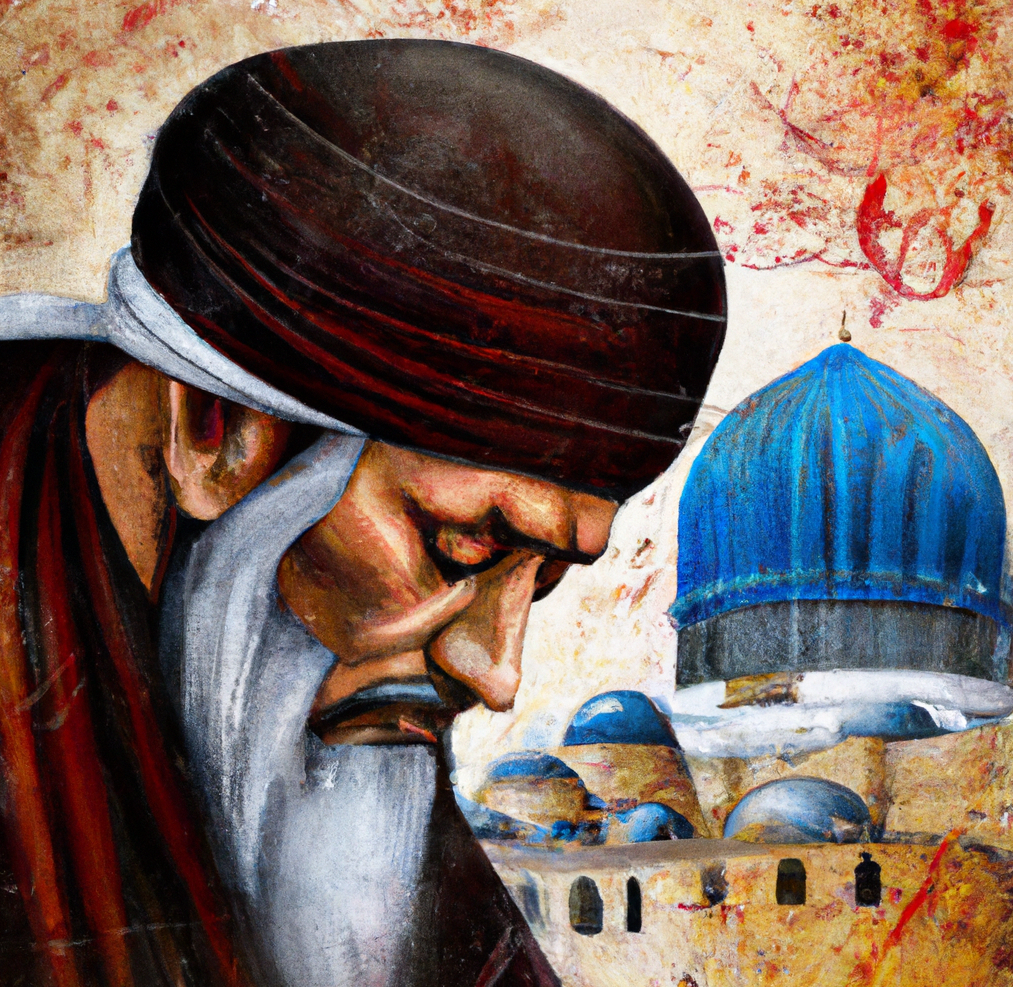
Ibn Al-Arabi, also known as Muhyiddin Ibn Arabi, was a prominent Muslim mystic, philosopher, and poet who lived during the 12th and 13th centuries. His profound teachings have had a lasting impact on Islamic spirituality and philosophy. Ibn Al-Arabi's works explore the nature of reality, the concept of divine love, and the unity of all existence. In this blog post, we delve into the life and teachings of this influential figure, shedding light on his spiritual journey and the wisdom he left behind.
Early Life and Education:
Born in Murcia, Spain in 1165, Ibn Al-Arabi grew up in a society rich in intellectual and spiritual traditions. He came from a family of scholars and received a comprehensive education in Islamic sciences, including Qur'anic studies, jurisprudence, theology, and philosophy. His thirst for knowledge and spiritual understanding led him to travel extensively throughout the Islamic world, seeking wisdom from various scholars and Sufi masters.
The Concept of Oneness:
At the core of Ibn Al-Arabi's teachings is the concept of Wahdat al-Wujud, or the Unity of Existence. He believed that all of creation is a manifestation of the divine, and that every being reflects an aspect of God. According to Ibn Al-Arabi, the divine essence is limitless and transcends all boundaries, existing in everything and everyone. This mystical understanding of reality emphasizes the interconnectedness of all things and the importance of recognizing the divine spark within each individual.
The Language of Love:
Love occupies a central position in Ibn Al-Arabi's philosophy. He saw love as the fundamental force that sustains the universe and unites humanity with the divine. For Ibn Al-Arabi, love was not just an emotion but a transformative power that could lead to spiritual realization. His concept of divine love, known as Ishq, emphasized the intense longing and desire for union with God. Through love, one could attain a state of annihilation (fana) in God and experience a profound sense of unity and ecstasy.
Metaphysical Cosmology:
Ibn Al-Arabi developed a complex metaphysical cosmology that incorporated both Islamic theology and Neoplatonic philosophy. He viewed the universe as a vast network of interrelated meanings, where each level of existence reflected a different aspect of the divine reality. According to Ibn Al-Arabi, the physical world was a shadowy reflection of the higher realms, and human beings possessed the potential to ascend through various stages of spiritual realization to attain proximity to God.
Influence and Legacy:
Ibn Al-Arabi's teachings had a significant impact on Islamic philosophy, mysticism, and literature. His works, such as the famous "Fusus al-Hikam" (The Bezels of Wisdom), continue to be studied and revered by scholars and seekers of spiritual truth. Ibn Al-Arabi's ideas also influenced subsequent Sufi orders, poets, and philosophers, shaping the development of Islamic thought throughout the centuries.
The life and teachings of Ibn Al-Arabi provide a profound insight into the depths of Islamic mysticism and philosophy. His exploration of the Unity of Existence, the language of love, and the interconnectedness of all things continue to inspire individuals on their spiritual journeys. Ibn Al-Arabi's legacy as a visionary and mystic has left an indelible mark on the intellectual and spiritual traditions of the Islamic world, reminding us of the transformative power of divine love and the pursuit of unity in a diverse and interconnected world.

