Monday, 21 July 2014


Sunday, 20 July 2014
Protests against Israeli Terror from around the world
Comment: I think for years Israel has taken advantage of the collective guilt the world and especially Europe feels due to the Holocaust to continue their oppression, but for how much longer? Public opinion is changing. Now is the time to continue to protest and push for sanctions, boycotts and divestment.
More than 150k Jews in NY protest against Israel the press is silent.
More than 150k Jews in NY protest against#Israel the press is silent. 
This is Marseille, France where protestors risk arrest and imprisonment to protest.

Belfast, Northern Ireland.

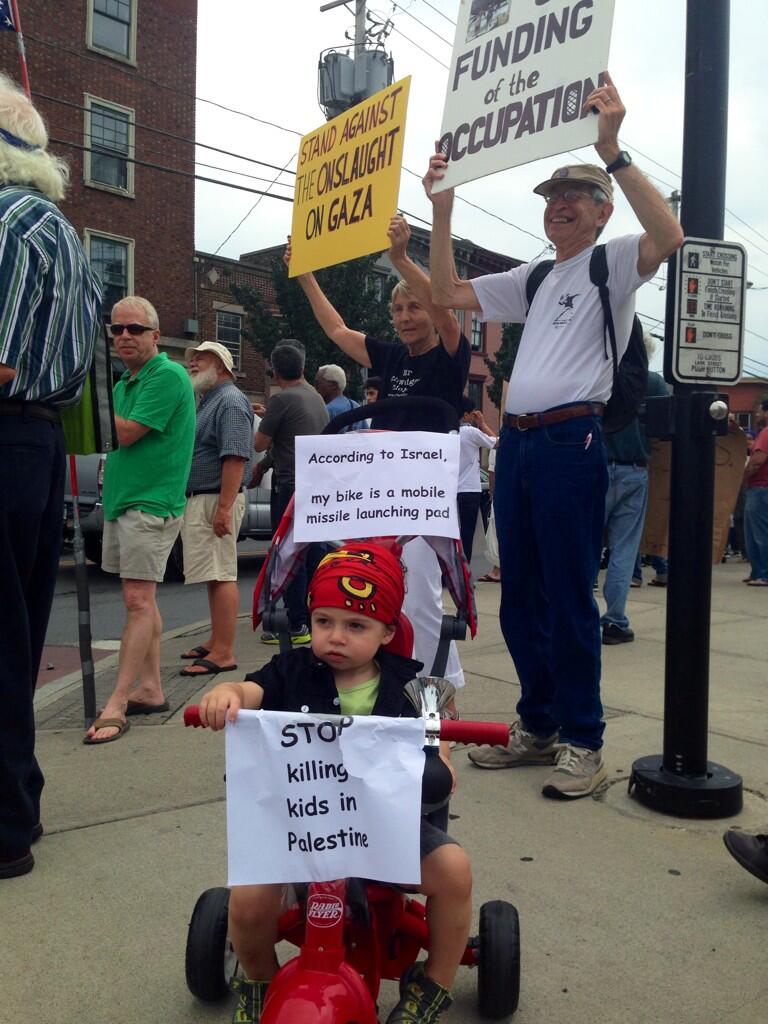
Albany, NY, USA
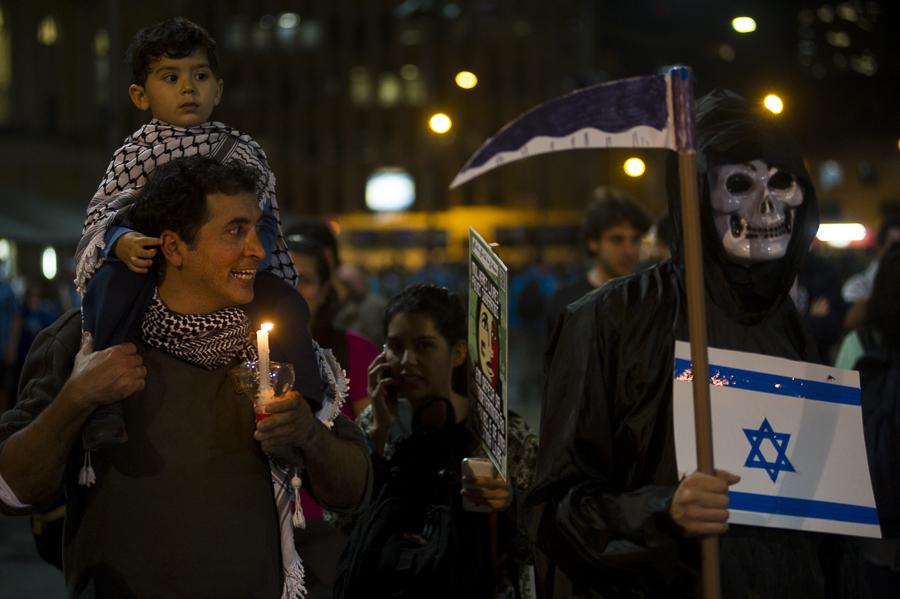
Germany for#FreePalestine

Belgium says NO to Zionist attacks on Gaza.

Glasgow, Scotland#WorldWithGaza

Anti-Israel protesters defy French ban on demonstrations

Cape Town, South Africa.#WorldWithGaza

Milan Italy#WorldWithGaza

Aligarh, India#WorldWithGaza

Porto Alegre, Brazil#WorldWithGaza
And I was marching alongside 100,000 protestors in London, a rally which the BBC barely mentioned. Shame on you BBC!

More than 150k Jews in NY protest against Israel the press is silent.
More than 150k Jews in NY protest against
This is Marseille, France where protestors risk arrest and imprisonment to protest.
Belfast, Northern Ireland.
Albany, NY, USA
Germany for
Belgium says NO to Zionist attacks on Gaza.
Glasgow, Scotland
Anti-Israel protesters defy French ban on demonstrations
Cape Town, South Africa.
Milan Italy
Aligarh, India
Porto Alegre, Brazil
And I was marching alongside 100,000 protestors in London, a rally which the BBC barely mentioned. Shame on you BBC!
Saturday, 19 July 2014
Ramadan Reflection Day 18: No Woman Left Behind

A man once come to the Prophet Muhammad, peace and blessings be upon him, asking for financial support. The Prophet asked him what he owned in his home and other than a blanket that he and his wife used to sleep on, they owned a plate. The Prophet asked him to bring the plate and then following one of the congregational prayers, he asks the people in attendance who would purchase the plate. He received a bid for it and then asked who would give more for it. The money that was raised was then used to purchase the blade of an axe. The Prophet then put a piece of wood in it to serve as its handle and gave it to the man so that he could cut his own wood and sell it to make money. His solution was long-term, not just in the moment.
Since Ramadan began, I've seen and been in contact with numerous women who are in need of support and help. Amongst them are three women whose husbands have been unfaithful to them, a woman who became pregnant and then abandoned by the man who impregnated her, a convert on the verge of homelessness whose family has disowned her and local community won't invite her into their homes let alone provide her with support, and a survivor so frustrated with the lack of resources available to her that she is starting to doubt her faith because she doesn't understand why Muslims haven't built a support system for people in her situation. For each one of these women, there are thousands more who need our help. And for each one of these women, there are hundreds of thousands of us who can help.
#MBC1 - #OmarSeries - Ep14 - English Subtitles
Thinking about truces/treaties difficult decisions that have to be made. #hudaibiyya #propheticexample
Friday, 18 July 2014
Thursday, 17 July 2014
Mob of 200 Women Murders Serial Rapist In Indian Slum, Every Woman Who Lives There Takes Responsibility
So I think these women are awesome. And Usha Narayane should be given a Padmashri.

The trial of a woman accused of organizing a lynch mob that killed a known rapist and murderer in India has been ongoing since 2004, but ten years later, the same issues that caused it are still prevalent in the country.
According to The Hindu, Usha Narayane is still on trial for allegedly organizing the massive mob that killed Akku Yadav. Since the incident, Narayane has denied that she organized the mob or that she was even there when they killed the serial rapist, but she has not come out against the killing, acknowledging that the hundreds of women from the Kasturba Nagar slum who take responsibility for Yadav’s murder did the right thing.
Reports say that on August 13, 2004, Yadav was brutally murdered by a mob of women who ambushed him at a courthouse while he was under police protection. The hundreds of women of the Kasturba Nagar slum all accused Yadav of rape, murder, and a slew of other crimes, and although the evidence against the man was overwhelming, local police refused to do anything about it. Many women claimed that when they reported their rapes to police, they were either laughed at or told that they deserved to be raped. When Yadav was actually arrested for three separate murders, he was let go each time. Yadav also continuously terrorized the community, abused the women, and continued his chain of sexual assaults for years without any police intervention.
Two weeks prior to his death, Yadav reportedly approached Narayane, who at 25 was an outspoken advocate for the women in her community, and threatened to rape her.
"He raped only poor people whom he thought wouldn't go and tell, or if they did, wouldn't be listened to,” said Narayane, who herself was educated and set to take a managerial position in the north of India prior to the incident. “But he made a big mistake in threatening me. People felt that if I were attacked, no woman would ever be safe."
The week before the lynching, Yadav disappeared from the area after hearing chatter that action was going to be taken against him. Hundreds of residents proceeded to destroy his home, and at that point, police took him into custody to protect him, the alleged serial rapist and murderer, from harm.
The women of the slum heard that Yadav was going to be given a hearing for accusations against him, but the belief was that he would once again be granted bail. Fearing for their safety, a group of 200 women went to the courthouse on the day of his hearing and brutally murdered Yadav. The rapist had two police officers protecting him when the women entered the courthouse wielding knives, but they fled out of fear for their own lives. The 200 women proceeded to cut off Yadav’s penis, repeatedly stab him, and throw stones at him until he was dead on the floor. Five women were immediately arrested, but ultimately, they were released when every single woman from the slum claimed responsibility for the attack.
Narayane said that while the mob attacked Yadav, she was actually collecting signatures for a petition against the serial rapist, but police still arrested her and accused her of planning the lynching.
"It was not calculated," Narayane said. "It was not a case that we all sat down and calmly planned what would happen. It was an emotional outburst. The women decided that, if necessary, they'd go to prison, but that this man would never come back and terrorise [sic] them."
The trial is still going on to this day, even though Narayane was reportedly released from custody in 2012. Sadly, as The Hindu’s Mythili Sundar writes, the mistreatment of women by India’s male dominated society, especially as thousands of rape cases are dismissed by authorities every year, is still as strong today as it was in 2004.
“What can be done to dent the rigid frame of patriarchal values? A change in thinking should begin at home,” writes Sundar. “Girls should be encouraged to speak, ask questions. Schools should include in their curriculum lessons on equal treatment of boys and girls. They should conduct activities encouraging equal participation. Stereotypes should be broken and boys should be sensitized [sic] on gender issues. Even if the programmes [sic] succeed marginally, the impact will be huge in the long run.”
- See more at:Wednesday, 16 July 2014
Tuesday, 15 July 2014
A Woman's Story About Being in the Mosque

Says Shyema:
"It was already a long day. The night before I only got a few hours of sleep. Most nights in Ramadan end up that way for many Muslims because of the short period between our nightly prayers and waking up to eat before dawn. Whereas my fasts were going by with surprising ease the days before, yesterday I found myself terribly sluggish and fighting an unusually pronounced headache, while simultaneously hoping my colleagues at work would ignore the loud conversations my stomach was having with itself. The humidity didn't help on the way back home, and if matters couldn't have gotten worse, the subway got stuck right before my stop. With the crowd and heat, I was almost certain I would pass out (I didn't). When I finally made it out, I rushed home to cook for my roommates and finished just in time for prayer. After we broke fast together, I promptly passed out on the couch. Not even an hour later at 10pm, my roommate, Shazia, woke me up to go for the nightly prayer. I contemplated skipping out and just praying at our apartment, considering how little energy I had, but I also didn't want her to go alone. I forced myself up and got ready while my other roommate, Amina, made me a cup of coffee to go. This is what Ramadan is all about, I thought. It's about denying the self, sharing these moments in worship with the community, and strengthening your personal bond with your Lord. The fatigue swiftly turned into excitement as we made our way to the mosque.
Unfortunately, that feeling quickly faded.
As soon as we began heading upstairs where we had normally prayed in the past, a man called after us, redirecting us back to pray in a dark corner on the first floor instead. We followed his gestures towards the area and quickly realized it had no air conditioning. We finished our first prayer and found ourselves wiping away beads of sweat from the extreme humidity and heat.
"Let's go to the third floor," Shazia suggested. "It's empty and has air conditioning." The other two ladies sitting with us overheard and told us that women were actually told to pray in the basement next to the bathroom. However, because of the recent unbearable heat, they were given the current space on the first floor, which was just barely more tolerable. Shazia was determined though, and to her credit, it was really hard to focus with drops of perspiration rolling down our backs. We attempted to make our way back up and this time, another gentleman in a white thobe shot up, wagging his finger. "No! Women are not allowed up there," he said in an all too condescending tone that made everyone around look our way. Shazia tried to explain to him that it was too hot where we were...and then came the cherry on top: "Sisters, your place is here," he said pointing to the first floor oven, "or the basement--not anywhere else." And just like that, he killed my Ramadan spirit.
Monday, 14 July 2014
Pakistan police investigate after young woman dies during exorcism

Comment: I get a lot a messges about possesssion and balck magic etc. please be careful of trusting 'pirs' and other self-proclaimed religious healers. Please look for scientific/medical explanations and consults respected imam in your local community.
Police in Pakistan have launched a murder inquiry after a young woman was reportedly beaten to death by a Muslim holy man who was trying to “exorcise demons” from her.
Reports said the 24-year-old woman from Lahore, Zeenat Bib, had been suffering from undiagnosed problems for some time and that her family had taken her to several doctors.
Her condition had not improved and so her family decided to take her to a local pir, or Sufi elder, who they believed could confront “the demons tormenting her”.
Police told the Express Tribune newspaper that the young woman’s cousin, Shahbaz, had taken her to the healer, identified as Pir Afzal. During his so-called treatment, the pir is alleged to have tied her up with ropes and began to beat her.
“When Zeenat Bibi started screaming in pain, Shahbaz tried to stop him but the pir told him that the blows were not hurting her,” a neighbour told the newspaper.
At that point, the young woman fainted and efforts to revive her failed. The pir then told the nephew to take her to hospital, where she subsequently died.
Such incidents are not rare in large swathes of South Asia, especially in rural areas, where knowledge about mental health issues is still growing and where resources to tackle such problems are often scarce. When mainstream doctors are unable to help, people will often turn to an alternative.
In 2012, a 13-year-old girl was killed in Cheecha Watni, around 160 miles form Lahore, after a pir tried to rid her of “demons”. Reports said the teenager suffocated after cotton was pushed into her nostrils and her throat was blocked.
In the current case, police have reportedly arrested the nephew of the young woman and are looking for the pir.
Saturday, 12 July 2014
Subscribe to:
Posts (Atom)