Thursday, 4 January 2018


Wednesday, 3 January 2018
FGM in Sri Lanka: It's never 'just a nick'
For decades, female genital mutilation (FGM) has been practiced in Sri Lanka. However, to those outside the practicing communities, this information elicits shock and disbelief. Secrecy about FGM in Sri Lanka is both imposed and internalised. Women who have experienced FGM strongly fear retaliation for speaking out. There is a lack of freedom to discuss, question and explore alternative views within practicing communities.
In December 2017 a news story broke the public silence on FGM, opening a contentious debate. Spokespersons for some sections of the Muslim communities in Sri Lanka confirmed the practice of cutting but have taken pains to make a distinction between FGM and "female circumcision". They argue that what happens in Sri Lanka is "just a nick" of a girl's clitoris that does not constitute mutilation. This distinction is not recognised by the World Health Organisation ; the types of FGM it classifies include forms described as "just a nick".
Based on personal testimonies of women, our work shows that FGM is practiced within the Moor, Malay and Dawoodi Bohra ethnic communities in Sri Lanka.
The practice appears to vary regionally, and there are clerics who denounce FGM, those who promote it, and also those that say it is mandatory. This means there are also sections of the communities abandoning the practice, with some reporting that FGM is diminishing with each generation and could possibly die out. Some women are opting to not get it done to their daughters or pretend to have it done to save face within their families and communities.
Read more
More information at IslamAwareness
Tuesday, 2 January 2018
Happy New Year! The Gregorian and the Islamic calendar

A very happy 2018 to everyone! Many youngsters are not aware that in most countries of the world, we follow the Gregorian calendar. This includes many Islamic countries.
I thought it would be a timely reminder to these youngsters that Muslims also follow the Islamic calendar. While the Gregorian calendar was adopted in October 1582, the Islamic calendar is going on continuously from the beginning of Islam.
The Islamic months are:
Muharram
Safar
Rabi' al-awwal (Rabi' I)
Rabi' al-thani (Rabi' II)
Jumada al-awwal (Jumada I)
Jumada al-thani (Jumada II)
Rajab
Sha'ban
Ramadan
Shawwal
Dhu al-Qi'dah
Dhu al-Hijjah
For example, the date today is 15 Rabi-Ul-Akhir 1439. Rabi-Ul-Akhir is also known as Rabi' al-thani (Rabi' II).
You can learn more about Islamic calendar here.
Monday, 1 January 2018
'Honour' killings in Karachi shock Pakistan's largest city
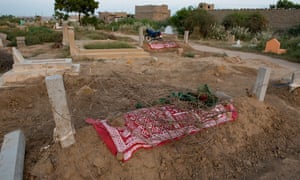
Ghani had tried several times to get permission to marry her, but was rebuffed. Eventually, the pair fled, with cash and jewellery she had stashed away.
They had made it to Hyderabad, three hours west, when Bakhtaja’s father called and said the families had agreed to the marriage and would let them return safely. It was a trick.
The fathers had, in fact, come to a settlement. Muhammad Afzal, Ghani’s father, had pledged to give Hikmat Khan, Bakhtaja’s father, two of his own daughters, a cow, and PKR 500,000 (£3,538) for the wedding. They meant to keep the agreement a secret.
But an older relative, Sirtaj Khan, got wind of the deal and exposed it to the community, insisting that the couple be put to death. Instead of braving the supposed public embarrassment, the fathers agreed with Khan to make an example of their children.
“He is an evil-minded person,” one local resident said of Khan.
While the fathers and two uncles were subsequently arrested, Khan fled for Kunar in Afghanistan. Ghani and Bakhtaja’s story was retold by neighbours, relatives and police.
In Karachi, murders within the family, though rarely publicised, are becoming more common, said Zia Ur Rehman, a journalist with the News who broke the story.
Advertisement
“Immigrants bring their own culture, rules and other things with them when then they move to urban centres,” he said. “In Karachi, instead of going to regular courts, some tribal people adopt their own traditional way of justice.”
Bakhtaja and Ghani are buried 10 metres apart in the local cemetery, their graves dug between shrubs and covered with red cloth still not faded by the sun and dust. Ataullah, a gravedigger, said the bodies were charred from burns when they were lowered into the ground.
Female relatives of the couple, who were not available for interviews, were “removed” from their houses when punishments were meted out, neighbours said. After the murder, Bakhtaja’s mother told human rights defenders: “I forgive him,” meaning her husband.
“The women are vulnerable and scared. They want their men back,” said Rahman, of Aurat Foundation. The arrest of the culprits left the women without financial support. Yet they don’t seem to condone the actions of their husbands.
“The girl’s mother is in a very bad state. She has stopped speaking,” said one relative who wished to remain anonymous.
Ten days after the murders, Karachi was hit by heavy monsoon rains that flooded the streets with muddy water and wrought havoc on the city. Dozens of people were electrocuted. It was God’s punishment for killing the teenage couple, the local women told each other.
Read more.
See more on this at Islam Awareness
Sunday, 31 December 2017
Ahed Tamimi: Who am I?
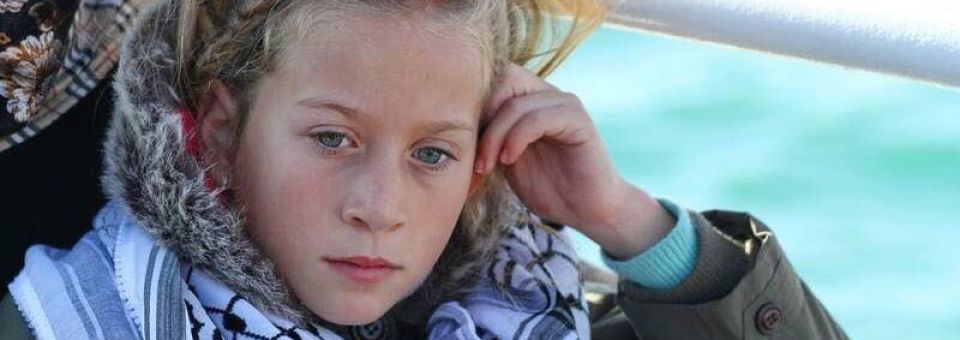
Who am I?
I am a Palestinian girl.
Before I was born, the occupation took most of my village’s lands to build a new settlement called Halamish.
Then they arrested my father. When my aunt went to visit him, one of the soldiers pushed her over the stairs of the court and she died.
Since I was little the settlers of Halamish keep stealing more and more of our lands to expand the settlement.
Our home has demolition order because it is in Area C. The settlers are allowed to build on our land, but not us.
In 2005, the settlers made the spring of our village part of the settlement and prevent us from using it, even though many of us are farmers.
All these things happened with great support from the Occupation army and government.
When the people of the my village started to resist the injustices with protest marches, my father was arrested again.
My mother was arrested too. My uncles, aunts, brothers, cousins - all of them were arrested too.
My cousin Mustafa was killed by the Israeli army. My uncle Rushdi was killed by the army too!
Later, an Israeli sniper shot my mom in the leg and she couldn’t move for long time.
Almost every week, the army breaks into our homes to arrest one of my family or to confiscate our laptops or phones.
During our marches, they shoot us with tear gas rubber bullets - my cousin is in hospital badly injured because he was shot in the face the week before.
A few days ago, two soldiers came to our house to take positions to shoot at the demonstrators from my village. I stood with my family to prevent them, the soldier pushed me and I slapped him.
And now I am in jail!
My mother and my cousin are in jail too!
The occupation government and media call me a terrorist.
Do you know who I am?
And what would you do if that was your life? Or the life of your child?
Friday, 29 December 2017
Wednesday, 27 December 2017
The Feds Say These 'Crusaders' Wanted To Murder Muslim Immigrants In Terror Attack. Here's What Their Bomb Would've Done.

As President Donald Trump derided the way federal courts had handled terrorism cases on Wednesday, federal prosecutors filed court documents illustrating the damage that some of his supporters could have inflicted in a terrorist attack they allegedly plotted against Muslim immigrants in Kansas.
Patrick Stein, Gavin Wright and Curtis Allen were arrested a little over a year ago in an FBI sting. The trio, allegedly part of a domestic terrorist group called “the Crusaders,” was charged with plotting a terrorist attack against Muslim immigrants for the day after the presidential election that they hoped would “wake people up.” They allegedly amassed a huge stockpile of weapons and prepared bombs they’d use in an attack targeting an apartment complex that housed Muslim immigrants.
“The only good Muslim is a dead Muslim,” Stein allegedly said during one meeting. “If you’re a Muslim I’m going to enjoy shooting you in the head.”
All three are awaiting trial. Last month, a federal judge ruled that one of the men who had requested bail was a “strong threat to society” and a “danger to the community” and should be kept in custody until trial.
An attorney for Wright said that the group “feared that then-President Obama would declare martial law if Donald Trump won the election” and that “massive social unrest would occur” no matter who won.
Federal prosecutors indicated in a court filing on Wednesday that the FBI’s Laboratory’s Explosives Unit had constructed and set off a 300-pound car bomb using fertilizer to show the damage that the bomb the men were allegedly building could have created.
Tuesday, 26 December 2017
Yasmin Mogahed on divorce and step-children

It’s ironic. Over the years, our community has absorbed a lot of cultural toxicity and called it Islam. One example of this poison is in how we define the value of a woman. We’ve, of course, absorbed the notion that a woman’s value is defined by her appearance; but we’ve also absorbed another toxic notion that has no basis in Islam. That is the notion that when a woman has been previously married, her value decreases. This notion has come due to a combination of many un-Islamic views:
1. Un-Islamic Myth: ‘Divorce is a sin or curse.’ This is an un-Islamic belief from other religions that hold divorce to be forbidden or sinful. Some pagan rituals even expected widows to burn themselves to death after their husbands died. The underlying belief being that a woman is defined by her husband. Therefore, becoming single after marriage is akin to dying. Sadly, we see some by-products of this barbaric belief in our own communities such as looking down on divorced women and even considering widows to be “cursed” or “bad luck” to have around.
Islamic stance: Divorce is not a sin or curse. The majority of the women our Prophet (pbuh) married, including Khadijah (RA), were divorced or widowed. These are the mothers of the believers and the best of women. For example, Umm Salamah declined a proposal from both Omar (RA) and Abu Bakr (RA) as soon as her waiting period was over. In our Deen, the value of a woman is no way diminished by being previously married. This poisonous notion came from un-Islamic and Pagan cultures. Not Islam.
2. Un-Islamic Myth: ‘Those are another man’s children.’
Islamic stance: When our Prophet (pbuh) proposed to Umm Salamah (RA), she said: “O Messenger of Allah! It is not because I do not want you, but I am very jealous, and I fear that you might experience some wrong mannerism from me for which Allah would punish me. I am old and have children.” The Prophet (pbuh) replied in the authentic narration:
«أمَّا مَا ذَكَرْتِ مِنَ الْغَيْرَةِ فَسَوْفَ يُذْهِبُهَا اللهُ عَزَّ وَجَلَّ عَنْكِ، وَأَمَّا مَا ذَكَرْتِ مِنَ السِّنِّ فَقَدْ أَصَابَنِي مِثْلُ الَّذِي أَصَابَكِ، وَأَمَّا مَا ذَكَرْتِ مِنَ الْعِيَالِ فَإِنَّمَا عِيَالُكِ عِيَالِي»
Islamic stance: When our Prophet (pbuh) proposed to Umm Salamah (RA), she said: “O Messenger of Allah! It is not because I do not want you, but I am very jealous, and I fear that you might experience some wrong mannerism from me for which Allah would punish me. I am old and have children.” The Prophet (pbuh) replied in the authentic narration:
«أمَّا مَا ذَكَرْتِ مِنَ الْغَيْرَةِ فَسَوْفَ يُذْهِبُهَا اللهُ عَزَّ وَجَلَّ عَنْكِ، وَأَمَّا مَا ذَكَرْتِ مِنَ السِّنِّ فَقَدْ أَصَابَنِي مِثْلُ الَّذِي أَصَابَكِ، وَأَمَّا مَا ذَكَرْتِ مِنَ الْعِيَالِ فَإِنَّمَا عِيَالُكِ عِيَالِي»
“As for the jealousy that you mentioned, Allah the Exalted will remove it from you. As for your being old as you mentioned, I have suffered what you have suffered. And as for your having children, they are my children too.”
Monday, 25 December 2017
How did Victorian Muslims celebrate Christmas?

The Victorian Muslims were not celebrating Christmas in the Christian sense, said Humayun Ansari, professor and author of The Infidel Within: Muslims in Britain since 1800.
They simply wanted to reach out to the community.
In doing so, Ansari said, Quilliam and the early British Muslims were "indigenising" their Muslim identities.
"What Quilliam is doing in these early examples is trying to communicate that Islam is more familiar to the Christians of Britain then they think. He is trying to show that it is not something foreign and alien, but part of the Abrahamic tradition," Ansari told Al Jazeera.
"These early British Muslims were taking elements of British indigenous culture deemed acceptable within the Islamic framework and marrying them with their religious identities. In doing so, they offer a roadmap and blueprint for what an indigenous British Muslim identity might look like today."
In addition to the mosque, the Muslims of Liverpool founded a school, orphanage and a museum.
At school, students were taught a curriculum that integrated Islam with mainstream British education, including music classes.
They took part in literary and debating events titled A night with Charles Dickens, Oliver Cromwell and Ancient Britons.
In the playground, boys played football and cricket.
The Crescent newspaper, edited by Quilliam, regularly published inspiring quotes of notable Brits such as Shakespeare and Lord Tennyson.
Quilliam's role and influence were such that he was given the title of Sheikh Ul Islam of Britain by the Ottomans, and when he left Liverpool in 1908, it seems his community disbanded too.
Today, there are more than 2.5 million Muslims in Britain and, unlike Quilliam's community, they hail from a multitude of ethnic and cultural backgrounds and observe Islam differently.
"The Victorian Muslims were a small community, almost exclusively white English," said Sadiya Ahmed, founder of Everyday Muslim - an organisation which preserves Britain's Muslim heritage.
"Today, we have Muslims in Britain whose families have come from all over the world as well as those who are ethnically English, and this inevitably means they approach Christmas in a number of ways," she told Al Jazeera.
The issue recently came to the fore when Tesco, a supermarket brand, released its festive advertising campaign featuring a Muslim family celebrating Christmas.
Critics threatened to boycott the company because they saw Islam as incompatible with Christmas.
However, others welcome the advert as embracing multiculturalism.
"Some [Muslims] will completely shun it as a Christian festival, believing it has nothing to do with Islam," said Ahmed.
"Others will embrace it as a secular British tradition, putting up trees, exchanging presents and eating a halal turkey on Christmas Day. And then there will be those viewing it as a celebration of the birth of an important prophet of Islam.
"Britain's Muslim community is far more diverse today than it was when Quilliam was alive, and this is why their views on Christmas are equally diverse."
Sunday, 24 December 2017
India: Hindu man killed a Muslim worker, Burned his body and filmed it to raise money and 'Become a Hindu Hero'

The videos began circulating on December 6, the same day that a charred body was found by a passerby who informed the police. The victim was a laborer from the eastern Indian state of West Bengal who worked near the area where he was killed.
A Hindu man got his 12-year-old nephew to film him killing a Muslim laborer in India, in an attempt to raise funds for his anti-Islam camapign, according to police in the northern Indian state of Rajasthan.
The suspect, Shambulal Regar, shared his bank account details along with videos of the murder that mainly circulated on Whatsapp and received 300,000 rupees ($4,665) from more than 700 people across India.
“The accused wanted to become a Hindu hero after killing a Muslim man; his main aim was to collect money after committing the hate crime,” police officer Anand Shrivastava told Reuters.
Police have since frozen his wife's bank account as more than 500 people pledged donations to Regar's legal defense, local media reported. His supporters also staged a demonstration on Thursday. Ensuing clashes injured at least 30 demonstrators and 20 police officers, and there were 50 arrests, authorities told local media.
Regar was arrested the day after the body was found. Regar’s underaged nephew was also arrested last week as police said he was the one who shot the videos, The Indian Express reported.
In one of the videos, which have since been taken down, Regar is seen attacking the man with an iron rod and then stabbing him as he lies on the ground, local media reported. In another, he pours a liquid over the body of the man and then throwing a match on it as he rants about “jihadis.”
According to the police, the man described himself as a proud Hindu fighting against a “love jihad”—a term Hindu hardliners use to accuse Muslim men of marrying Hindu women to convert them to Islam.
The police don't believe Regar knew the victim of his hate crime, the latest in a string of attacks against India’s Muslim minority—less than 8 percent of the country’s 1.32 billion citizens—that has increasingly been the target of Hindu extremists.
Hindu vigilantes have killed at least 11 people this year whom they suspected of killing or eating cows, an animal that conservative Hindus consider sacred, according to data journalism organization IndiaSpend, and cow-related hate crimes have increased.
In one recent instance, a Muslim man was shot dead while transporting cows near the Rajasthan-Haryana border after he and his two aides were attacked by a group of people, as BBC reported in November.
Prime Minister Narendra Modi, who leads the Hindu-nationalist Bharatiya Janata Party, has publicly condemned the cow-related violence, but his critics say he hasn’t done enough to stop the anti-Muslim attacks.
After Hindu vigilantes take the cows from Muslim farmers, these end up in cow shelters that often sell or give the stolen cattle to Hindu farmers, a practice that has seen a steep increase in states governed by Modi’s party, according to a Reuters investigation published last month.
Subscribe to:
Posts (Atom)